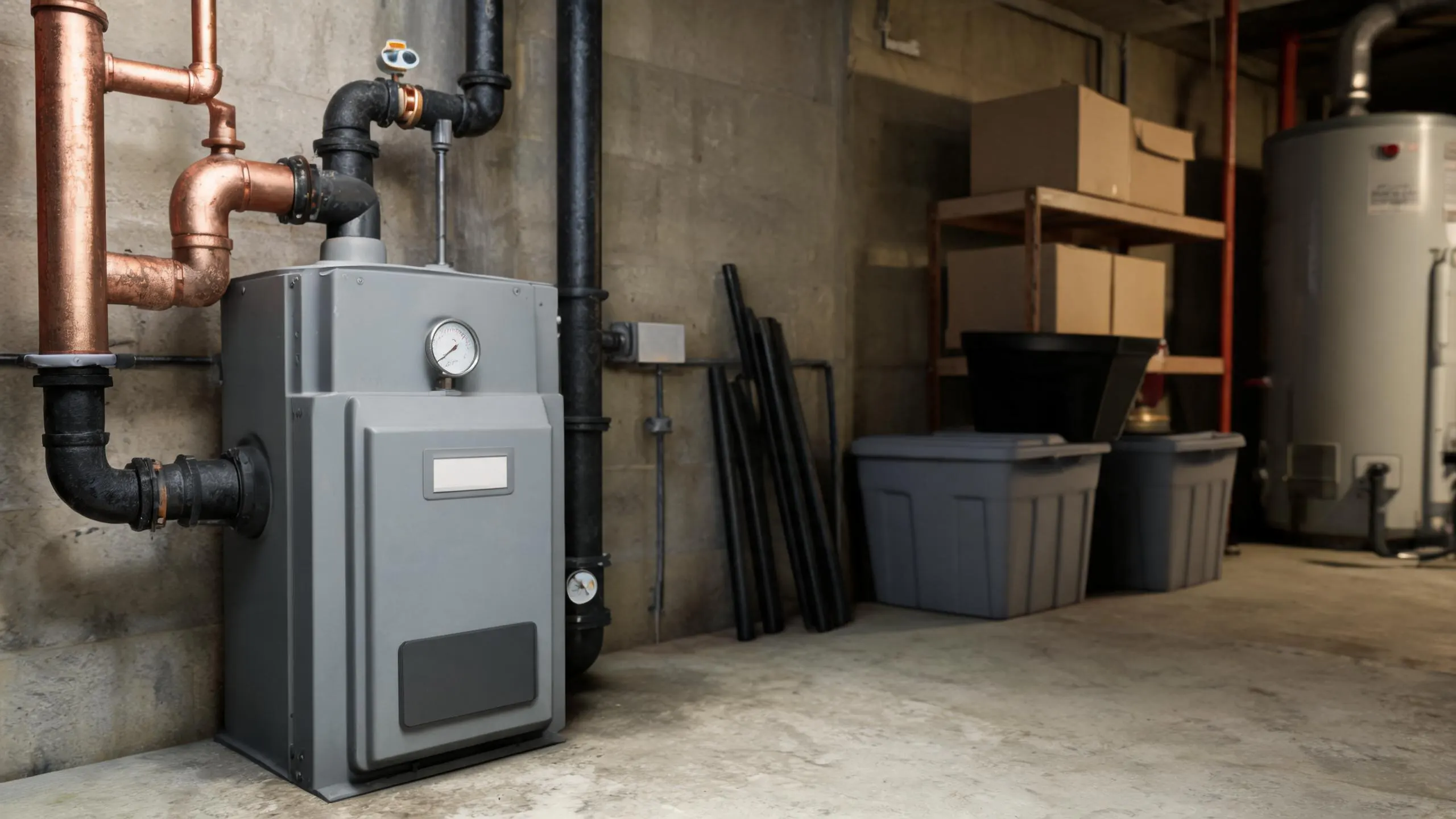
A gray boiler with copper and black iron pipe connections stands against a concrete basement wall, with a water heater and storage shelving visible in the background.

Boiler Repair in Brooklyn, NY

Tell us about the job

Takes about a minute. No obligation.

RepairBoilerKings County, NY
Step 1 of 2

What ZIP code is the job in?

A boiler built for a long winter

Boilers in Brooklyn run from October through April, with overnight lows averaging 29°F in January. That is steady, normal work for a boiler, not strain. A well-maintained unit is built to get through a winter like this one without trouble.


So a breakdown usually points to something specific

If a boiler is acting up, the cause is most likely a part that failed on its own schedule. A pilot that will not stay lit. A pump that has seized. A leak at a valve. The job is finding which one it is, not wondering whether the cold caused it.

A boiler that's kettling, banging or gurgling has lime scale building up around the heat exchanger.

Left alone, that buildup cracks the heat exchanger, and that's a replacement, not a repair.

A repair should come with an age estimate

Half the homes here were built by 1944
Climate zone 4A
Heat runs October through April
Brooklyn boilers start up in OctoberThat first cold snap is when a weak part finally gives out.

Most boiler failures trace back to one of a few parts, and they don't fail for mysterious reasons. A thermocouple or flame sensor wears out from thousands of heat cycles and just stops sensing the pilot reliably. A circulator pump fails because its bearings or seal wear down, usually after years of normal running. A valve sticks or leaks because the seal inside it dries out or the seat corrodes. None of this is about one bad winter. It's wear that was always going to end in a failed part, on whatever week it happened to give out. Mineral buildup inside the heat exchanger is different. That one builds slowly from the water itself, and it's the reason a boiler that's kettling or banging needs looking at before the exchanger cracks, not after.

Get the usual fix

Nothing about this area is especially hard on it. It's most likely the usual problem with the usual fix.

Find a contractor
A man in a dark long-sleeved shirt, cap, and worn tan work pants climbs porch steps toward a dark blue front door, carrying a canvas tool bag.

A pilot that won't stay lit gets worse the longer it runs

A thermocouple that's failing will let the flame drop out more and more often. Each restart puts unburned gas into the chamber for a moment before it catches. Left alone, a weak thermocouple just fails outright, and now there's no heat at all instead of a simple part swap.

A noisy pump is already damaging itself

A pump that's cavitating or running dry on bearings is wearing against metal that was never meant to touch. The noise is the wear happening in real time. Keep running it and the bearing seizes for good, which turns a pump rebuild into a full pump replacement.

Before anyone comes out, a few things are safe to check yourself. Look at the pressure gauge on the front of the boiler. Most systems want the needle somewhere in a marked range, and if it's sitting well below that, low water pressure alone can stop a boiler from firing or heating properly. Check that the pilot light is actually lit, if your boiler has one, since a simple draft or a knocked valve can snuff it out with nothing else wrong. Look at the room thermostat too. Dead batteries or a setting bumped to off has sent more than one service call out for a boiler that was never the problem. If you smell gas at any point, stop checking and get the gas shut off and someone out right away. None of this tells you what's broken inside the unit, but it rules out the easy answers first.

A diagnostic visit starts before any panel comes off. A tech will ask when the trouble started and what the boiler was doing right before, since a pump that whines on startup points somewhere different than one that trips out after it has been running a while. Then it's a pressure check, a look at the flame if there's a sight glass, and testing whatever part looks suspect, a thermocouple, a pump, a valve, with a meter rather than a guess. Most of the time the failed part is obvious once it's tested. What takes longer is checking the rest of the system so the same call doesn't happen again soon after. A tech who only swaps the part that failed and never checks pressure, venting or the heat exchanger is leaving part of the job undone.