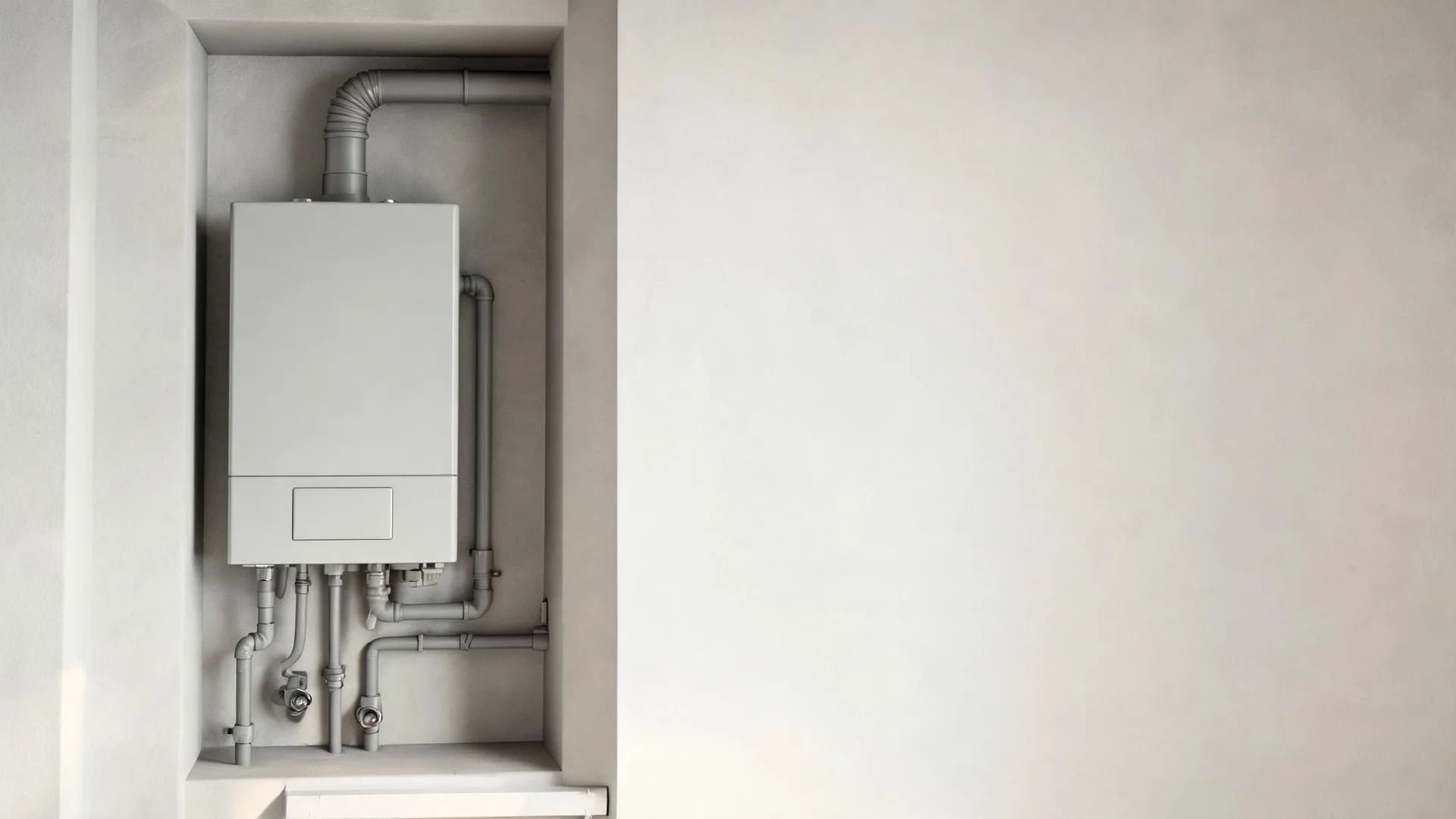
September is when to catch a weak boiler
Heat goes on in October here and runs through April. September is when a boiler that struggled last year gets looked at before it has to carry the load again.

Takes about a minute. No obligation.
Heat goes on in October here and runs through April. September is when a boiler that struggled last year gets looked at before it has to carry the load again.
A boiler can sit fine all summer and still have a worn part in it. The first real cold snap is what pushes a weak igniter or a failing pump past the point where it still works.
Boilers in the Bronx run from October through April, about seven months straight.
A worn part can carry a boiler through most of a Bronx winter before it finally quits.



If your boiler came with the house, ask the contractor how much life it has left before putting money into a major repair. Half the houses here were built in 1955 or earlier, and a boiler that old has likely already been replaced once or is due. A repair call is a reasonable time to find out which one you have. Parts for an older boiler can also be harder to source, which matters if the fix turns out to be more than a simple one.
Problems tend to show up in the first weeks of the season, when the load hits a part that was already weak.
Find a contractor
A boiler leaks slowly before it leaks badly. Mineral buildup inside the heat exchanger makes it work harder to move heat into the water, and that extra strain is what cracks a seal or wears through a joint. Low water pressure from a small leak will also trip a safety switch and shut the whole system down before anything looks obviously wrong.
A circulator pump pushes hot water through the system every time the boiler fires, and the bearings in it wear down with use. An igniter or pilot assembly does the same job over and over for years and eventually stops lighting reliably. Neither failure announces itself ahead of time. The boiler just stops producing heat, or starts short cycling, on a day it's asked to run harder than it has in months.
A boiler that needs attention usually says so in how it sounds before anything stops working. Banging or knocking from the pipes is often trapped air or mineral buildup inside the heat exchanger, and it tends to get worse over a season, not better on its own. A kettling or rumbling noise means scale has built up around the heat exchanger and the water inside it is overheating in spots. Short cycling, where the boiler fires up, runs briefly, and shuts off before the house actually warms, usually points to a failing pressure switch or a thermostat sensing something wrong. If the pilot or igniter won't hold a flame, that part has likely worn to the point of failing intermittently before it fails completely. Water pooling near the base is never nothing. It means a seal or joint has already given way somewhere in the system.
A repair is worth doing when the problem is one part doing one job badly. A pump, an igniter, a pressure switch, a valve. Swap the part and the boiler goes back to being reliable for years. Replacement starts to make more sense when the heat exchanger itself is the problem, since that's the part that actually makes heat, and it isn't swapped out on its own the way a pump or igniter is. It's also worth asking the contractor who comes out whether this is the first repair this boiler has needed or the latest in a string of them. A boiler that keeps finding a new way to fail is telling you something a single fix won't answer.