





White colonial houses with lit windows and dark shutters line a tree-lined street at dusk, bordered by dry-stacked stone walls.

Boiler Repair in Albany, NY

Tell us about the job

Takes about a minute. No obligation.

RepairBoilerAlbany County, NY
Step 1 of 2

What ZIP code is the job in?

Albany County saw 435 severe weather events between 2015 and 2024. Damaging wind caused 350 of those, and winter storms with heavy snow and ice hit 46 times. A boiler itself sits inside, away from hail and wind, but the power it runs on does not. Across New York, 11% of households went at least a full day without power in 2024. A boiler needs electricity to run its igniter and controls even though it burns gas, so when the power drops, so does your heat.

Gas in New York runs $16.03 per million Btu, among the highest rates in the country.

A boiler that's short-cycling or running longer than it should burns through that gas every single day it goes unfixed.

Half these boilers are older than the house's wiring upgrades, if it had any

Half the homes here were built by 1964
Climate zone 5A
Heat runs October through May
Eight Months of Work a YearAlbany County homes run heat from October through May, and that boiler has to fire reliably through 46 winter storms a decade.

Heat goes on in October here and runs through May, eight months straight. Whatever was wrong with a boiler over the summer doesn't show up while it sits idle. It shows up the first week it has to run every day and hold through a cold night. A weak pump, an unreliable pilot, a part that's been struggling, all of that gets tested at once when the season starts. That's why October is when so many of these calls come in, not January, even though January gets colder. By January the system has already proven what it can do.

Get your boiler checked before the next outage finds the weak point

A boiler doesn't take hail or wind damage sitting inside. But a power cut shuts down its igniter and controls just the same. If your heat has gone out during an outage, or a storm knocked something loose you haven't had checked, get it looked at now, before the next one hits.

Find a contractor
A man in a dark long-sleeve shirt and worn brown work pants, seen from behind, carries a canvas tool bag up the steps toward a gray front door, with a potted shrub beside the entry.

What you can check yourself

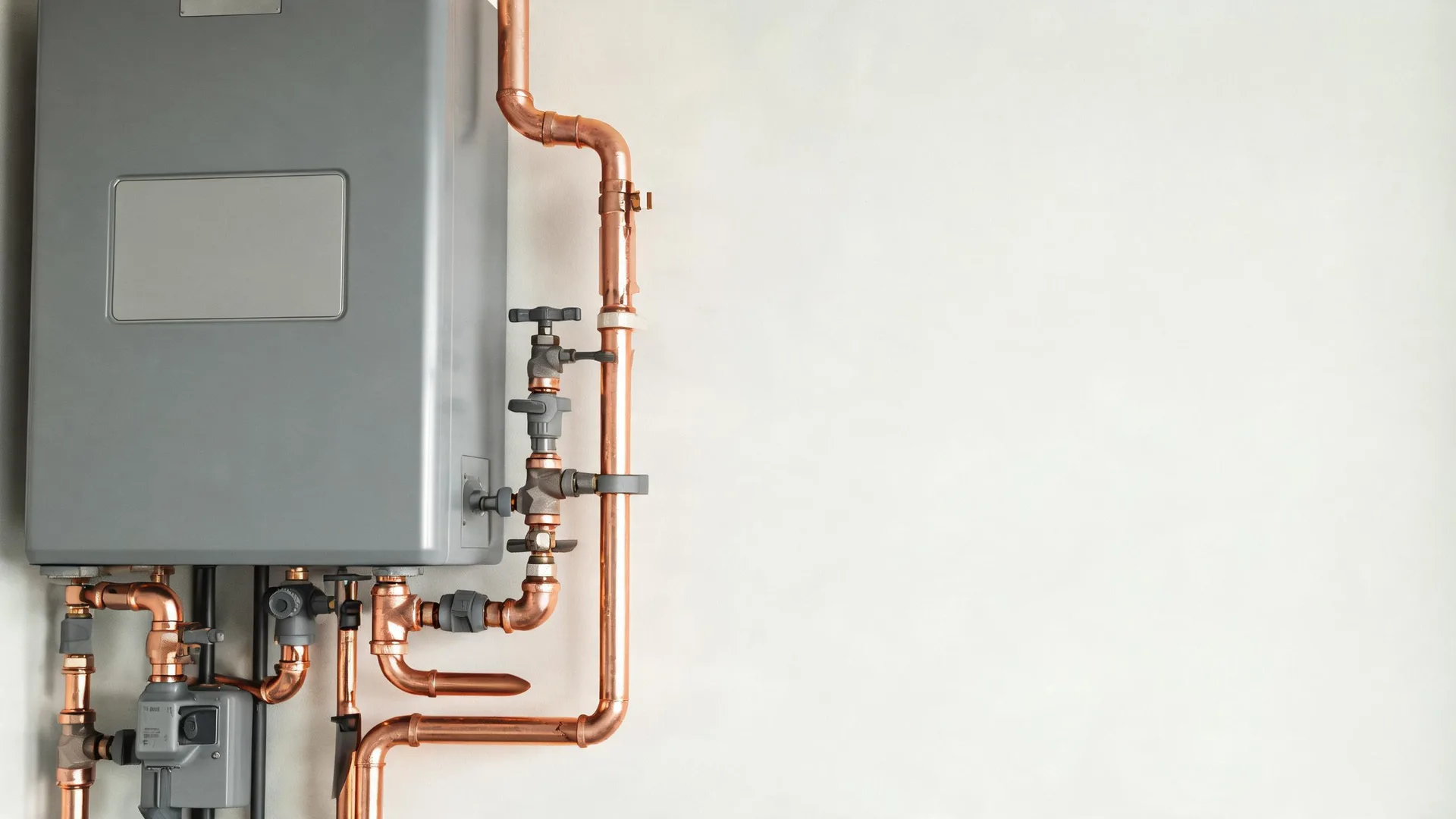
Look at the pressure gauge first. Most boilers want to sit somewhere around the middle of the dial when cold, and a needle sitting at zero or deep in the red tells you something real. Check the water feed valve is open. Look at the pilot light or the igniter window if your model has one, and see if it's lit or firing. Check that the switch on the boiler itself and the one on the wall near it are both on. Listen for a low hum with no heat coming up, that usually means the pump isn't moving water even though the burner is trying to fire.
What to leave alone

Don't open the burner compartment or touch the gas valve. Don't bleed a radiator unless you know the system and how to close it back up without air getting pulled in somewhere else. If you smell gas, don't flip any switches at all, get out and call the gas company from outside. A boiler that's leaking water from the bottom or the relief valve needs a tech, not a tightened fitting, because that's usually pressure or a cracked part telling you something upstream is wrong.

A boiler that's making a bad sound or short-cycling will keep running if you let it, and that's the problem. Short-cycling puts more wear on the igniter and the pump with every start than steady running ever would. A pump that's starting to fail doesn't just quit, it labors, and labored running heats up a motor that isn't built to run hot. Water with the wrong pressure or trapped air lets a heat exchanger scorch in spots it shouldn't, and that's not something that un-happens once the pressure gets corrected. Soot building up on a burner changes the flame, and a flame that's burning wrong keeps putting a harder load on every part downstream of it. None of this looks urgent from the thermostat. It just looks like heat is still coming up, until the part that was struggling finally gives out.

Half the homes in Albany County were built in 1964 or earlier. If yours is one of them, the boiler inside may or may not be original, so it's worth finding out how old the one you have actually is. A tech can usually tell from the data plate on the unit itself. An older boiler working through its last years runs longer to put out the same heat, and that shows up in the gas bill before it shows up as a breakdown. Worth asking the tech not just what's wrong this time, but how much life the unit has left, so this repair doesn't turn into another one next year on a machine that was already near the end.