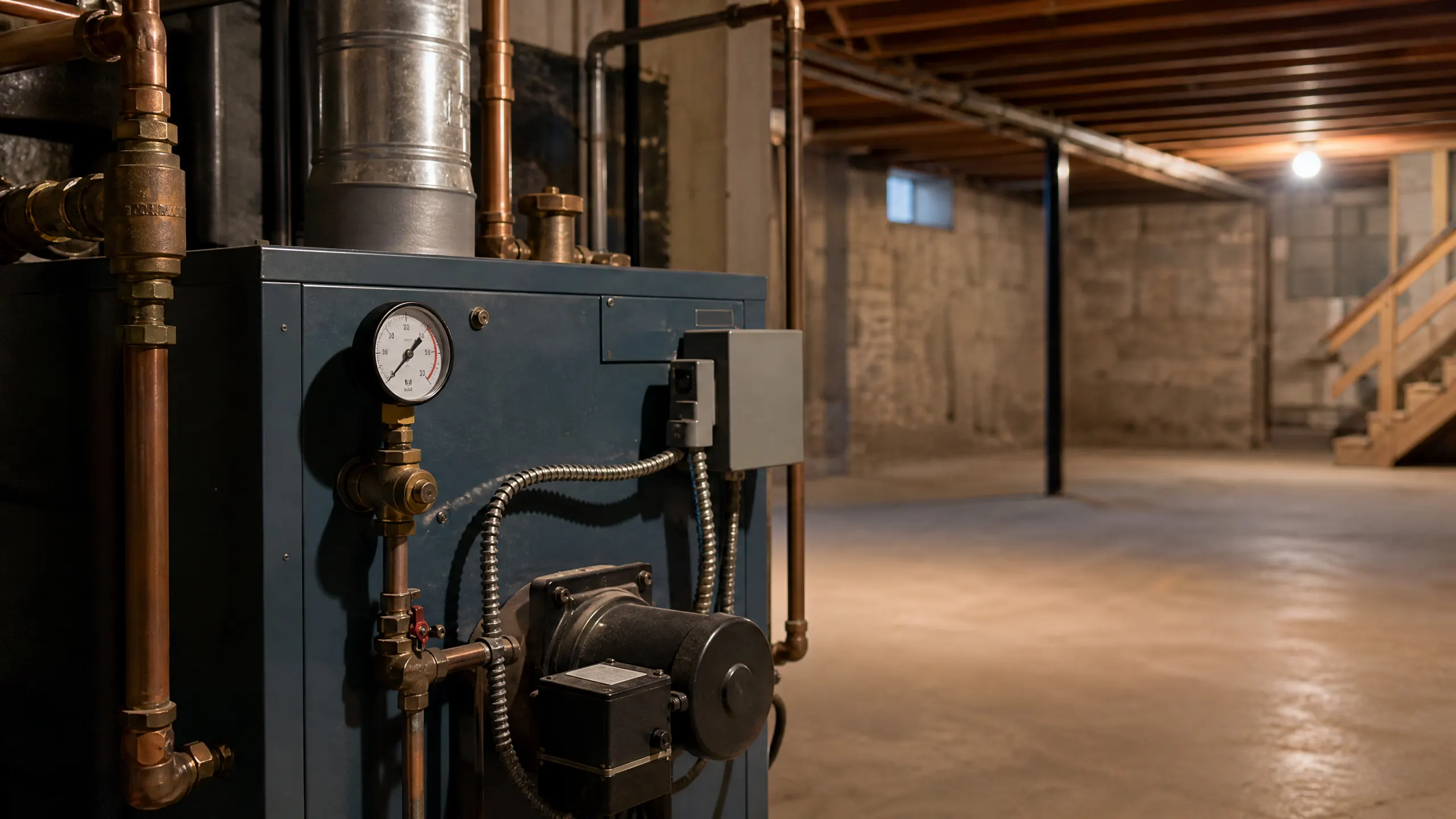




A blue steel boiler with copper pipes and a pressure gauge mounted in an unfinished basement with stone walls and wooden stairs.

Boiler Installation in Watertown, NY

Tell us about the job

Takes about a minute. No obligation.

New system or replacementBoilerJefferson County, NY
Step 1 of 2

What ZIP code is the job in?

Gas here runs $16.03 per million Btu, among the higher rates the EIA tracks state by state. A boiler running on that gas all winter turns efficiency into a real difference on the bill, not a rounding error. An old boiler losing heat up the flue is burning dollars at that rate every time it fires. When you're pricing a new installation, the AFUE rating on the spec sheet matters more here than it would somewhere gas runs cheap. Ask what rating the contractor is quoting and get it in writing.

Utility gas heats 39% of homes in Jefferson County, more than any other fuel.

A gas boiler replacing a gas boiler here is usually the straightforward path, if that's what the house already has.

Nine months of heat a year, down to 13 below freezing, means this boiler doesn't get an off season

Heat runs September through May
Winter nights average 13°F
Climate zone 6A
Watertown's housing is older. Your boiler has to fit the system already in the walls.Half the homes in Jefferson County were built in 1972 or earlier.

Two contractors can quote the same size boiler at different AFUE ratings, and at $16.03 per million Btu that difference shows up on every bill all winter, not just the one. Ask each bidder for the AFUE number on the actual model they plan to install, not a brochure range. If the job includes new controls or an outdoor reset, ask what that adds, since a boiler can run more efficiently than its base rating once it's set up right. Get the final number in writing before you sign anything.

Heat starts in September. Get the boiler in before it does.

Boilers here run nine months a year, September through May. Replace it in August and the install happens on your schedule, with time to set up the controls right and check the work before the first cold night. Wait until the heat's already needed and you're choosing from whatever's available, in a hurry.

Find a contractor

Ask how it's sized, not just what size

A boiler sized off square footage alone can end up too big for the house. An oversized boiler short cycles, turning on and off more than it should, which wears the parts faster and never settles into steady, efficient runs. A contractor should walk the house and do a heat loss calculation, room by room, before quoting a size. Ask to see that number.
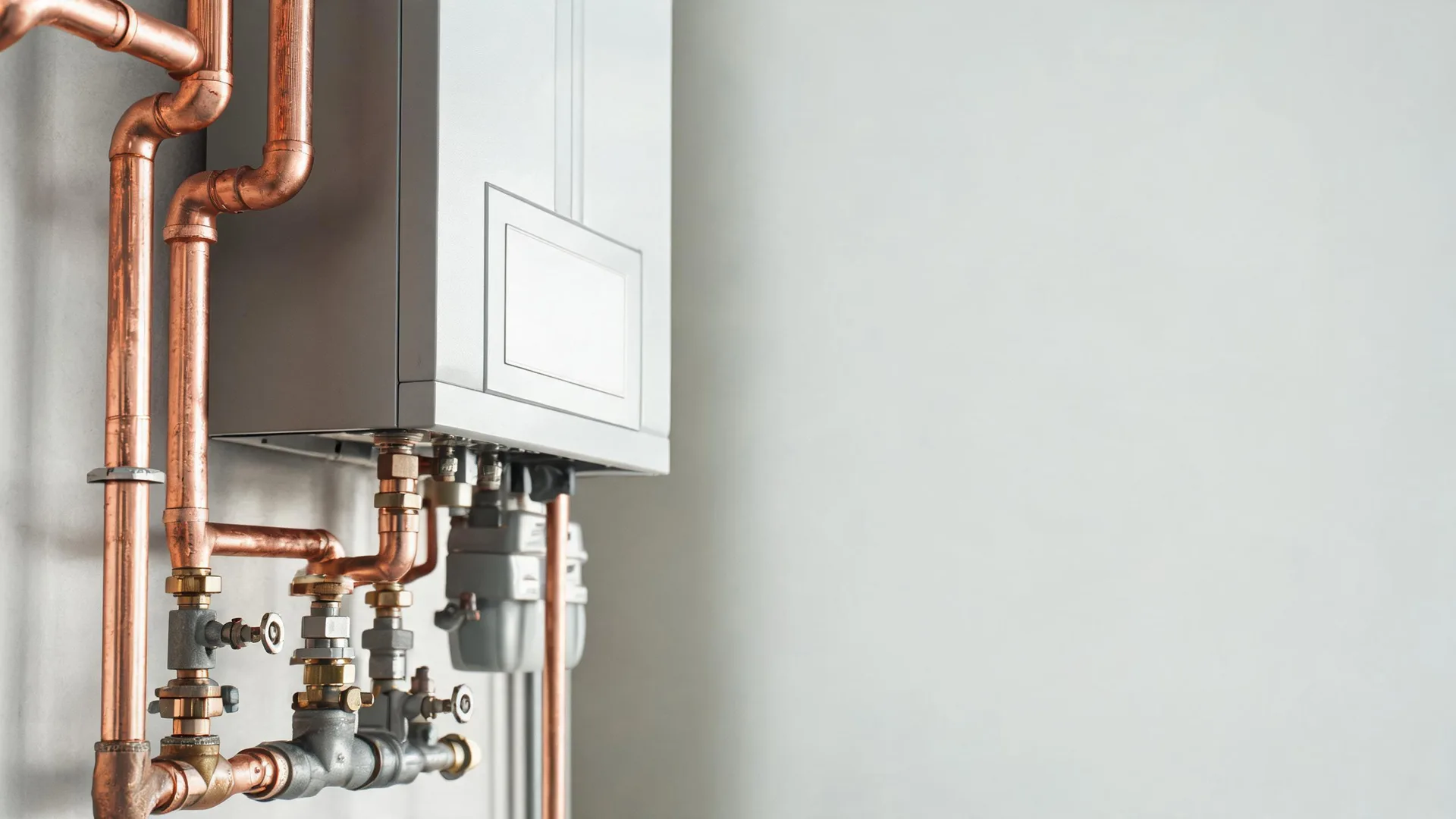
Ask what happens to the existing radiators or baseboard

Radiators and baseboard were designed around a certain water temperature and flow rate. A new boiler has to be set up to match the heat already running through that house, or it will heat unevenly or run longer than it needs to. Ask whether the contractor is keeping the existing piping and zoning as is, or changing it, and why.

A heat loss calculation is what tells a contractor the size to quote, not the square footage of the house. It adds up how fast the place loses heat through the walls, the windows, the roof, on the coldest day it's built to handle, and that number in Btu is what the boiler has to match. Too small and it runs flat out all winter trying to keep up, never getting ahead of the cold. Too big and it short cycles, firing up, satisfying the thermostat fast, shutting off, then doing it again a few minutes later. Short cycling wears out the igniter and the pump sooner than they should wear, and the boiler never runs long enough to settle into an efficient burn. The right size is the one that runs long, steady stretches on the coldest nights and still keeps up.

Installation day starts with the old boiler coming out, along with any piping or venting that doesn't suit the new one. A gas boiler vents differently depending on its efficiency rating. A high-efficiency model usually needs new venting run through a wall or up through the roof, not just a reused flue. The contractor sets the new unit, connects it to the existing supply and return lines, and pressure tests the system before any water goes back in. Controls get wired and set next, the aquastat, any zone valves, an outdoor reset if the job includes one. Once it's filled and purged of air, the boiler gets fired and run through its paces, checking that every zone heats and the water temperature matches what the radiators or baseboard need. A contractor worth hiring walks you through the controls before leaving, not after you've called back confused.