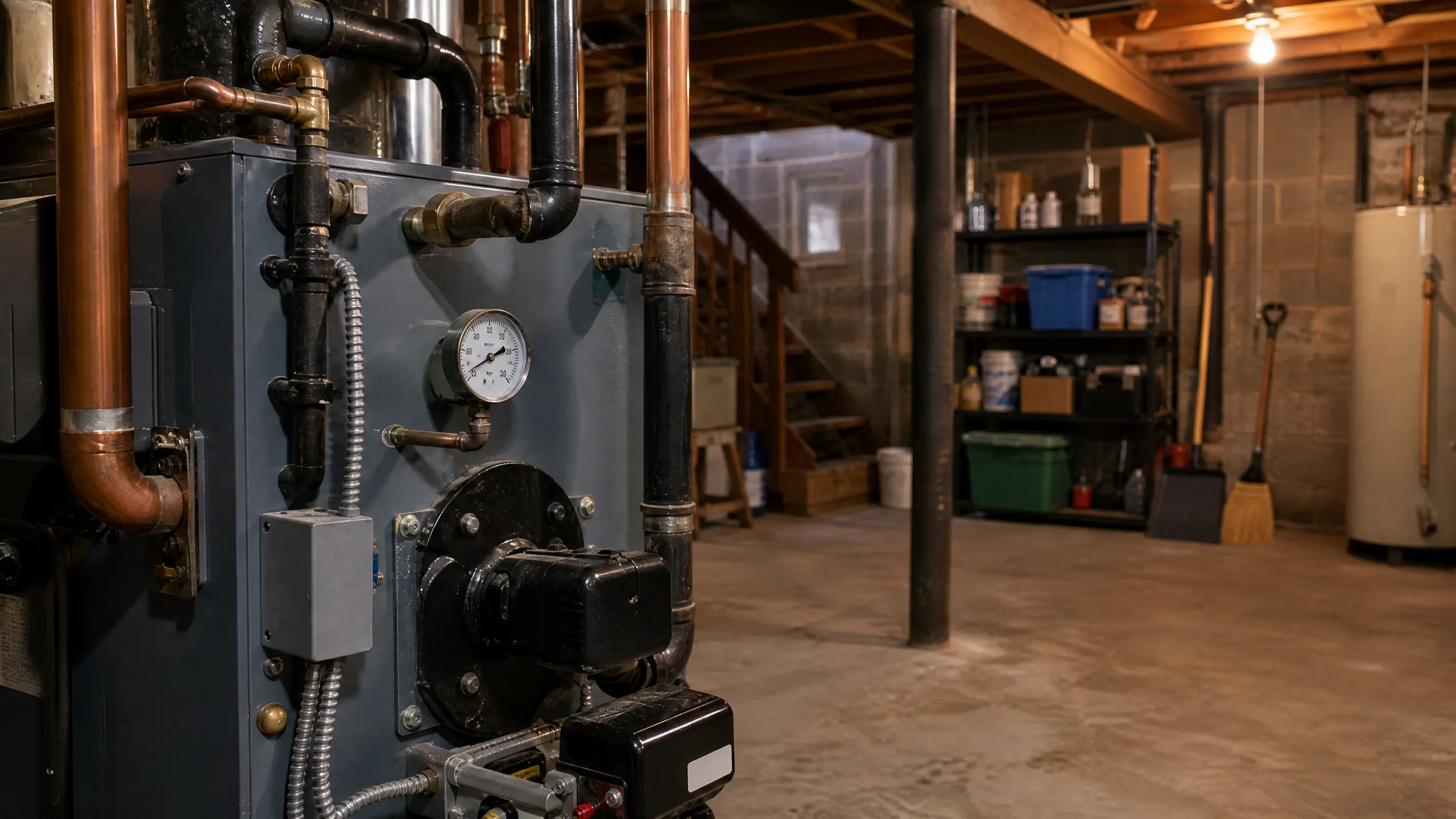



A basement mechanical room with a gray boiler connected to copper and iron pipes, a pressure gauge, and a water heater visible in the background.

Boiler Installation in Staten Island, NY

Tell us about the job

Takes about a minute. No obligation.

New system or replacementBoilerRichmond County, NY
Step 1 of 2

What ZIP code is the job in?

Gas heats 85.1% of homes in Richmond County, and most boilers here run on it. If your old boiler burns gas, putting in another gas boiler is usually the straightforward choice. The gas line and venting are already there, which keeps the job simpler than switching fuels. Oil and electric heat only a small share of homes here, and bottled or LP gas even less. Whatever is already hooked up to your house is a good starting point for what replaces it.

Boilers in Richmond County start running in October.

Replace it in September and the new one is broken in before it has to carry the first cold night.

Gas here runs $16.03 per million Btu, so the fancier boiler isn't the one that pays you back

Heat runs October through April
Winter nights average 28°F
13 winter storms from 2015 to 2024
A standard boiler sized right does the job hereHalf the homes here were built in 1974 or earlier, half in 1974 or later, and neither calls for anything unusual.

Staten Island falls in climate zone 4A, which asks real work of both heating and cooling here. Any gas-fired hot water boiler installed new has to hit at least 84 percent AFUE, a floor set for units built from January 15, 2021 on. That rules out the lowest-efficiency boilers on the market, so the baseline you're quoted is already a decent one. Going above that minimum is a choice, not a requirement, and it's worth asking your contractor what AFUE the unit they're proposing actually carries.

A right-sized boiler is built for a Staten Island winter

Seven months of heat a year, overnight lows averaging 28°F, winters that have brought a storm or worse 13 times in the last decade. None of that calls for an oversized boiler or a premium model. A standard unit, sized right for your house, is built to handle a winter like this one.

Find a contractor

The old boiler comes out once the new one is proven

A contractor doesn't pull the old boiler until the new one is set, connected and firing correctly. That way the house isn't without heat while the swap happens. The old unit gets disconnected from the gas line, the water piping and the vent, then hauled out.
The venting gets a second look

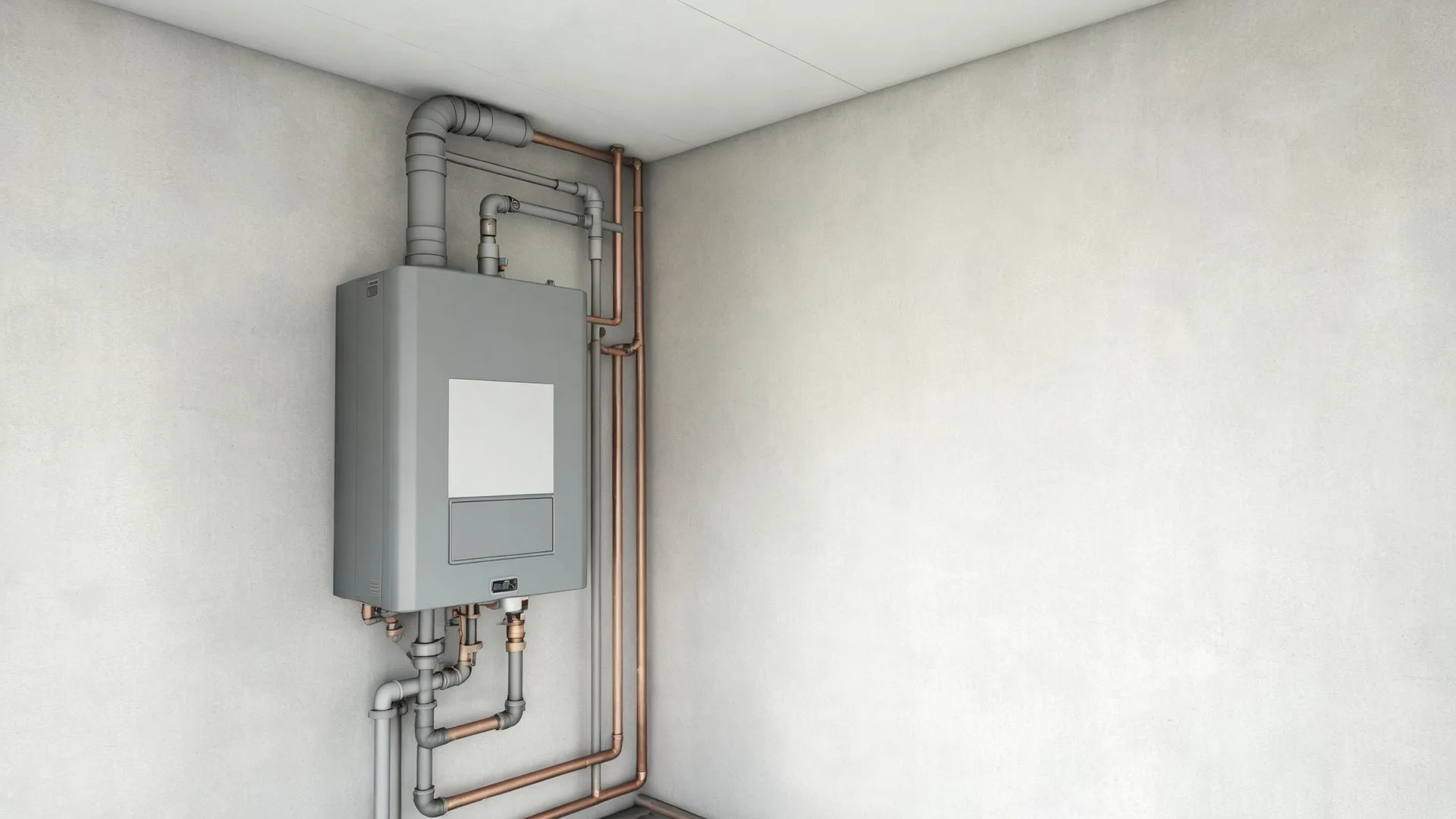
A new boiler is often more efficient than the one it replaces, and that changes what comes out of the flue. A vent sized for the old unit isn't automatically right for the new one. Part of the job is checking that the venting matches what the new boiler needs, not assuming the existing pipe is fine because it worked before.

Ask what AFUE rating the quote is actually built on, not just the brand or model number. Ask how they arrived at the size, since a boiler sized by square footage alone can come in wrong. A proper sizing looks at your radiators or baseboard, your windows, your insulation, not just the floor plan. Ask what happens to the near-boiler piping and whether the circulator gets replaced or reused. Ask about the warranty on the heat exchanger specifically, since that's the part that's expensive to replace later and the one most likely to carry a longer term than the rest of the unit.

Installation day starts with the water drained from the old system and the gas and power shut off. From there the old boiler comes apart, usually in pieces, since most won't fit out a basement door whole. Setting the new one is its own stretch of work. It gets leveled, the near-boiler piping gets connected, the controls get wired, the venting gets tied in. Then the system gets filled and the air gets purged out of the lines, because a boiler running with air trapped inside will make noise and heat unevenly. Once it's filled, the contractor fires it up and watches it run through a full cycle, checking the pressure, the temperature rise, and that every zone is actually getting heat. A boiler that looks finished isn't done until someone has watched it work.