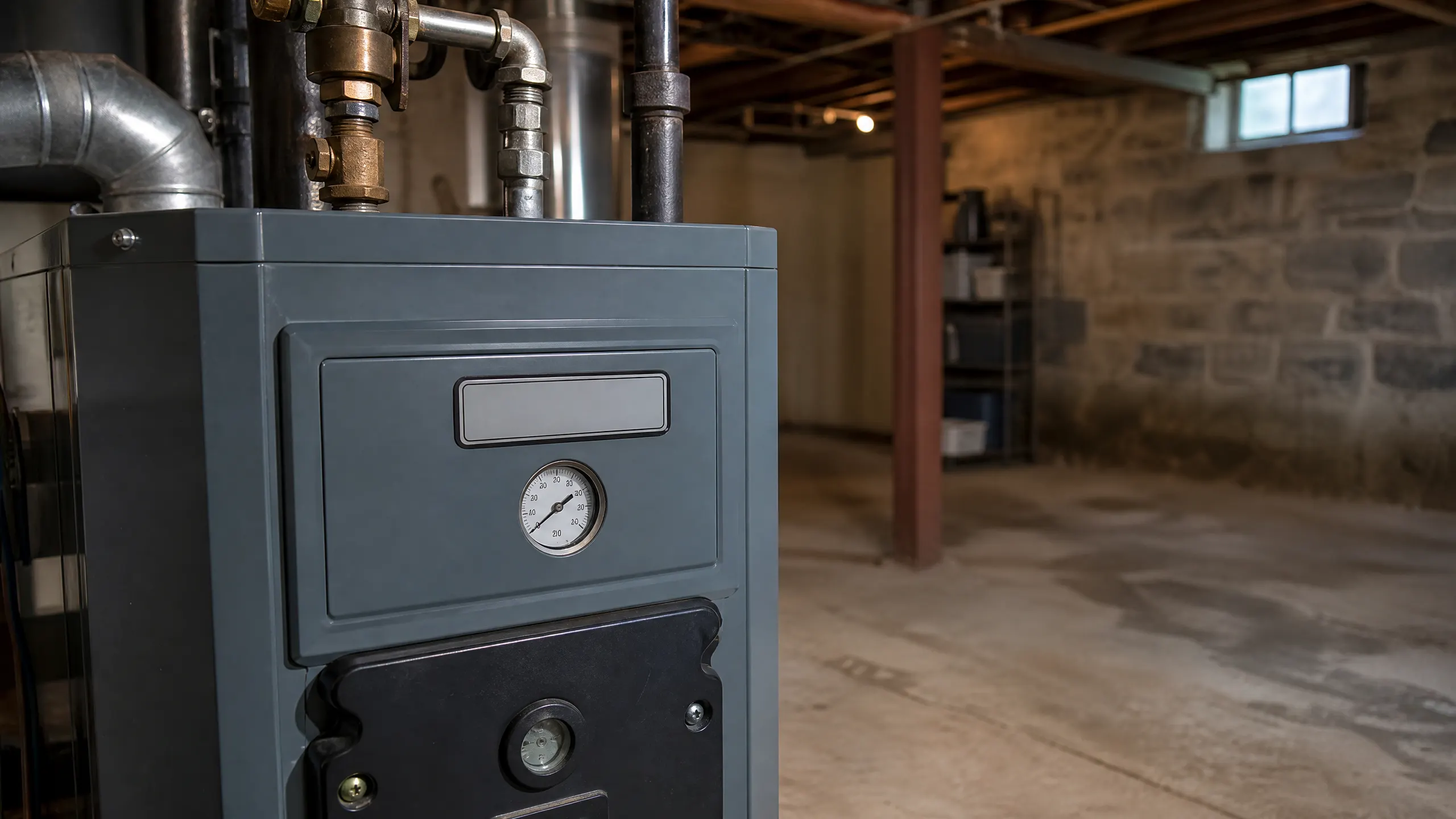


A gray residential boiler with brass pipe connections and pressure gauges installed in an unfinished stone-walled basement.

Boiler Installation in Spring Valley, NY

Tell us about the job

Takes about a minute. No obligation.

New system or replacementBoilerRockland County, NY
Step 1 of 2

What ZIP code is the job in?

Gas heats 84.2% of homes in Rockland County, and most boilers here are gas-fired because of it. If your old boiler runs on gas, putting in another gas boiler is the straightforward swap. The venting is already there, the gas line is already sized for it, and a contractor can match the new unit to what the house already has. Oil heats a small share of homes here too, so if that's what you have, the same logic holds. Either way, matching the fuel you have now is usually the simpler path than switching to something else.

Boilers in Spring Valley go to work in October.

Install before September ends and the new boiler is already proven before the first cold night.

Eight months of heat, zone 5A winters, no reason to size up

Heat runs October through May
Winter nights average 23°F
Climate zone 5A

Half the homes in Spring Valley were built in 1971 or earlier. A boiler going into a house that age is going into whatever piping and radiators were already there, not a blank slate. Old steam or hot water systems have their own quirks, and a contractor sizing the new boiler needs to account for what the distribution side can actually handle, not just the square footage. This is also where a straight swap can go wrong if nobody checks it. Putting in a boiler sized for a new build, in a house with old radiators and old pipe runs, means a system that doesn't match what it's connected to. The fix isn't a bigger boiler. It's one sized to the house as it stands.

The right size boiler, nothing more

A standard gas boiler, sized to this house and not beyond it, is what this job calls for. Gas here runs $16.03 per million Btu, and an oversized unit burns more of it without heating the house any better. Get the sizing right and the rest of the installation is straightforward.

Find a contractor

Ask how they're sizing it, not just what size they're quoting

A boiler should be sized with a heat loss calculation. That means looking at wall and window area, insulation, how many radiators or baseboard zones it feeds. Square footage alone doesn't tell a contractor what the boiler needs to produce. If a quote comes back with a number and no explanation of how they got there, ask. The answer should point to your actual rooms and your actual radiation, not a rule of thumb.
Ask what happens to your existing piping and zones

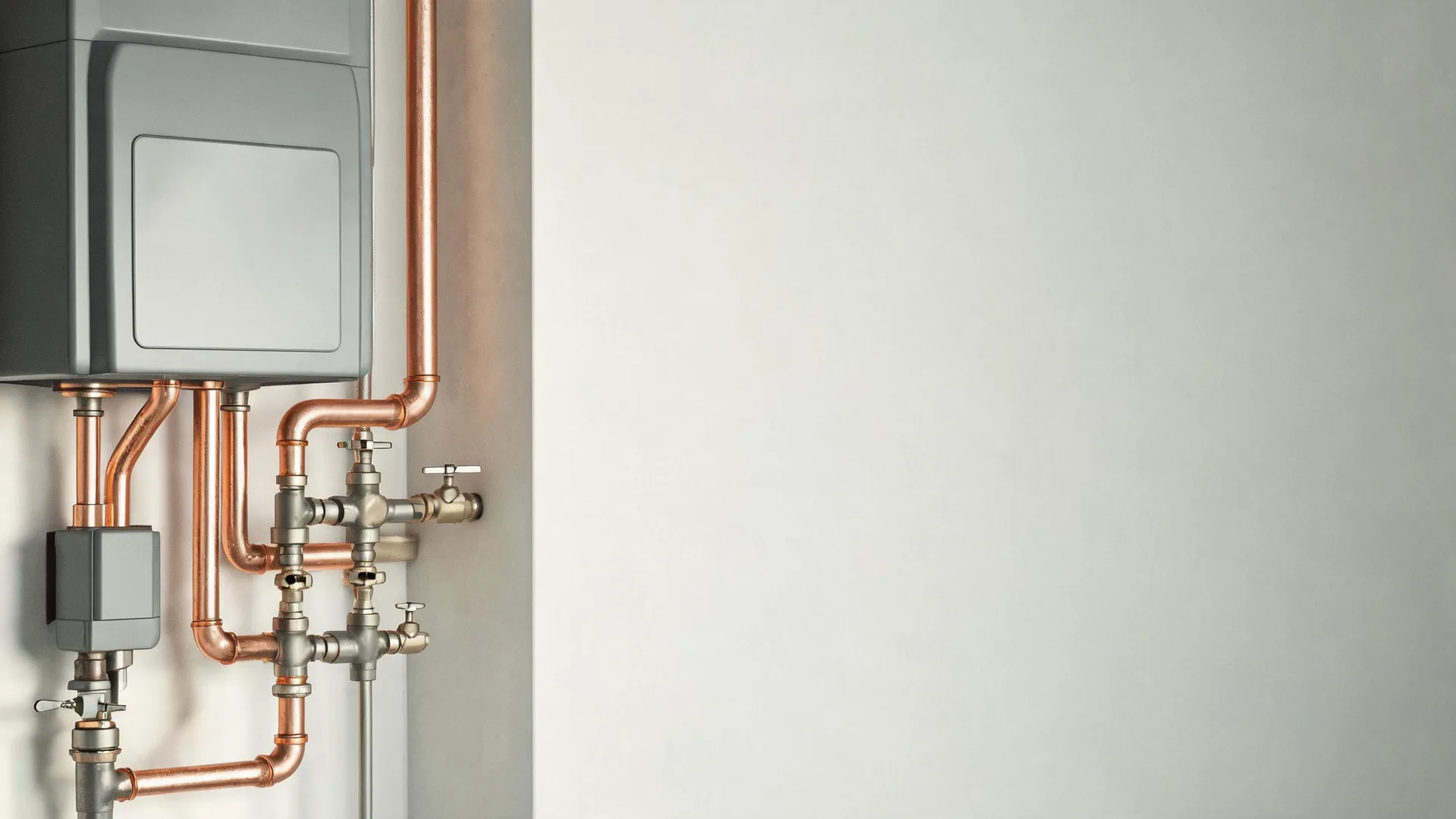
A new boiler has to connect to whatever distribution system is already running through the house. The same pipes, the same radiators or baseboards, the same zone valves or circulators. Ask whether those get reused as is or whether anything needs to change to work with the new unit. A boiler that's a good match on paper can still run wrong if it's paired with old zoning controls or piping that was never meant for it.

A boiler that's too big for the house will short cycle. It fires, heats the water fast, hits the limit, and shuts off before the radiators or baseboards have pulled real heat into the rooms. Then it starts again a few minutes later. That on off pattern wears the components harder than a longer, steady run would, and the rooms still end up uneven, warm near the boiler loop and slow to heat at the far end. A boiler sized correctly runs longer at a lower fire, which is what actually moves heat through the piping evenly. Going bigger doesn't buy margin. It buys a boiler that cycles more and heats worse.

Installation day starts with the old boiler coming out. Draining the system, disconnecting the gas and vent, cutting the unit free from piping that's been sitting untouched for years. That part is often slower than putting the new one in. The new boiler gets set, then connected to the gas line, the vent, the supply and return piping, the zone valves or circulators already running through the house. Electrical and controls get wired in. The system gets filled with water, and air has to be purged out of the lines so every radiator heats instead of gurgling with a pocket of trapped air. Before anyone calls it done, the boiler needs to fire, reach temperature, and shut off on its own, with the installer checking pressure and checking every joint for a leak while it runs. A boiler that hasn't been fired and watched through a full cycle isn't finished, no matter how clean the piping looks.