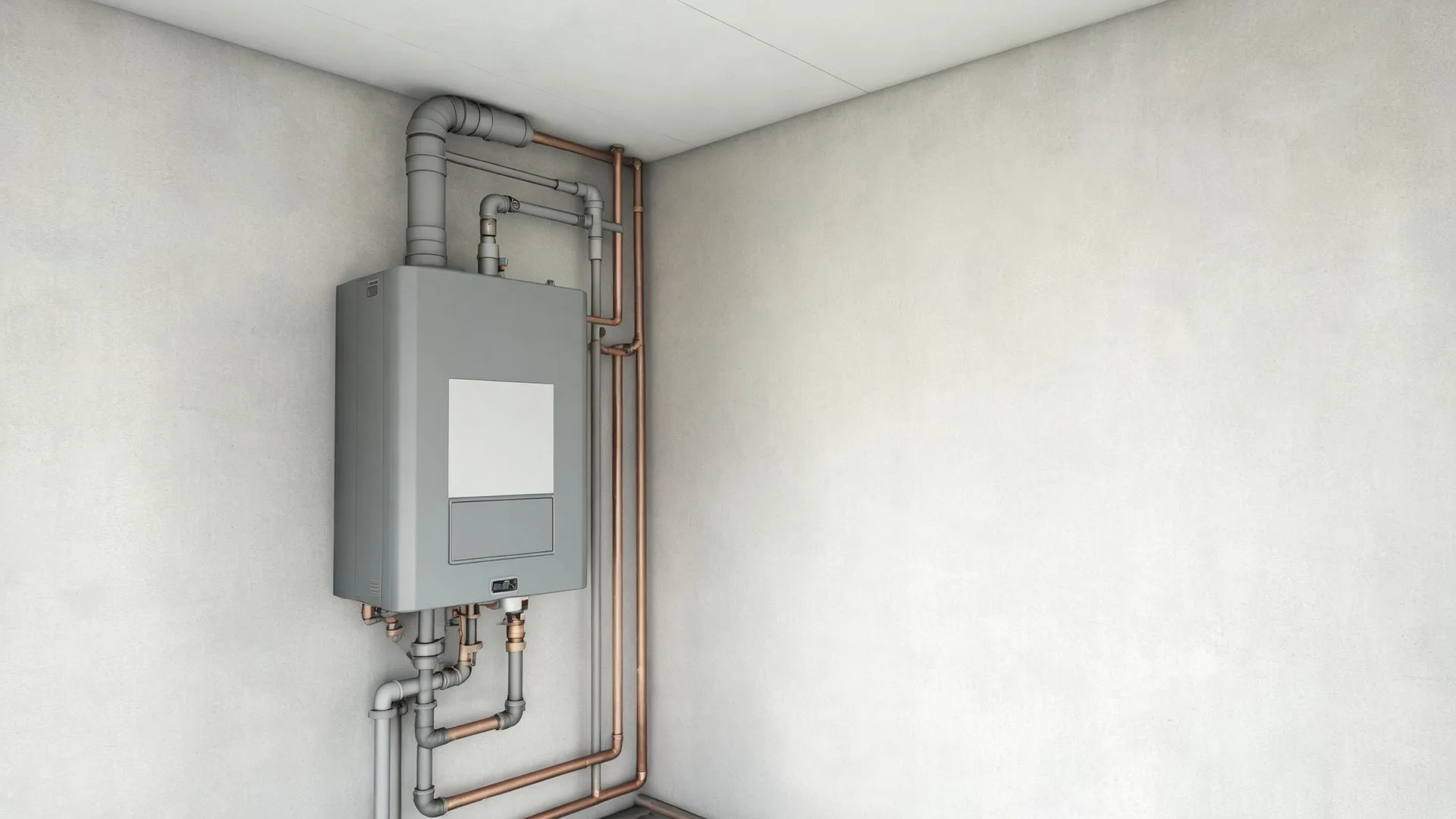
Half these homes were built in 1965 or earlier
Monroe County splits down the middle that way. A house that age still has its original piping and radiators in a lot of cases, or a mix of old and newer work from whoever owned it before.
Takes about a minute. No obligation.
Monroe County splits down the middle that way. A house that age still has its original piping and radiators in a lot of cases, or a mix of old and newer work from whoever owned it before.
Sizing a boiler means matching it to the radiators and pipe runs already in the house, not just the square footage. An installer who gets that wrong ends up with rooms that never quite heat evenly.
Boilers here run from October through May.
Eight months of heat a year means a new system should be sized for the long haul, not the lowest bid.




Monroe County falls under zone 5A in the 2021 energy code, a cool, humid zone where heating carries most of the load. Any gas-fired hot water boiler installed here has to meet that standard: built on or after January 15, 2021, it has to turn at least 84 percent of the gas it burns into heat over the season. That floor rules out the old, inefficient units some homes still have running. A federal tax credit is available toward a qualifying high-efficiency boiler, which helps offset the difference. Given how many months a year this system runs, that efficiency minimum is doing real work, not just meeting a code requirement on paper.
A lot of these systems are going into houses built decades before this boiler was. An installer needs to look at the radiators and the piping that are already there before putting a number on the new unit.
Find a contractor
The efficiency number on the label is measured in a lab, with the boiler matched to the right load. Oversize it for the house and it short cycles, firing on and off instead of running a long steady burn. Short cycling wears the heat exchanger and ignition parts faster, and the boiler never actually hits the efficiency it's rated for.
Every boiler loses some heat up the vent. The rating is really a measure of how little gets away. A higher number means more of what you're paying for ends up in the radiators instead of the exhaust, which matters most on a system that's going to run for months at a stretch.
Sizing a boiler comes down to how much heat the house actually loses, not how big the old unit was or how many square feet are inside. An installer works that out room by room, checking the walls, the windows, the ceiling height, and the radiators or baseboard already in place, then adds it up into a heat loss number. That number tells them which boiler to put in. Go too big and the boiler short cycles, firing on and off in quick bursts instead of settling into a long steady run. Short cycling beats up the heat exchanger and the ignition system well before their time, and it leaves rooms feeling uneven even though the boiler is plenty powerful. Too small, and it runs constantly on the coldest days and still can't keep up. The right size is the one matched to the house, worked out before the unit is picked, not after.
Heat goes on in October here and stays on through May. That's eight months where a failed boiler means no heat and a scramble to find whoever can come fastest, not whoever does the best job. Replacing it in September, before the first cold night, means picking the installer and the unit on your own timeline. It also gives the heat loss calculation and the sizing work the time they need, instead of rushing to get a house warm again. A boiler put in under pressure is more likely to get matched wrong to the radiators already there.