



A single-story light gray house with dark shingled roof and black shutters, viewed from a low angle across a green lawn with blurred shrubs in the foreground and trees under an overcast sky.

Boiler Installation in Oswego, NY

Tell us about the job

Takes about a minute. No obligation.

New system or replacementBoilerOswego County, NY
Step 1 of 2

What ZIP code is the job in?

Gas ran $16.03 per million Btu across New York homes in 2024. A boiler that wastes heat burns through that fuel faster, and in a state at that price, waste costs more than it would somewhere cheaper. The efficiency rating on a new boiler matters here in a way it wouldn't in a state with lower gas prices. Two boilers rated differently will show it on the gas bill, not just on paper.

Half the homes in Oswego County were built in 1971 or earlier.

A boiler going into one of those houses needs sizing for the house it's actually heating, not a standard number.

Eight months of heat, and nights that stay near 17 degrees, mean this boiler doesn't get an easy season

Heat runs October through May
Winter nights average 17°F
33 winter storms from 2015 to 2024

Oswego County falls in climate zone 5A, a cool zone where the heating load is what matters most. Any gas-fired hot water boiler installed here now has to meet a federal minimum: at least 84 percent of the gas it burns has to become heat over the season. That floor rules out the older, less efficient models still sold in some parts of the country. It doesn't mean every boiler on the market qualifies, so the one going into your house still has to be checked against that number, not just against the lowest price quoted.

At these gas prices, the efficiency rating is the number that pays you back

At $16.03 per million Btu, the efficiency rating on the boiler you pick decides what this winter costs you, not just the one after. Ask for that number before you pick a model.

Find a contractor
A man in a dark long-sleeve shirt and tan work pants carries a waxed canvas tool bag up concrete steps toward a blue front door of a gray-sided house, with potted shrubs nearby.

A boiler sized wrong never runs right

A boiler too big for the house cycles on and off instead of settling into a steady run. Short cycles like that mean the heat exchanger never evens out, the burner fires more often than it should, and the parts that start and stop the most wear out first. A boiler too small runs long and still can't catch up on the coldest nights, so it never gets ahead of the load. The right size isn't the biggest one you can afford. It's the one that matches what the house actually loses in heat.
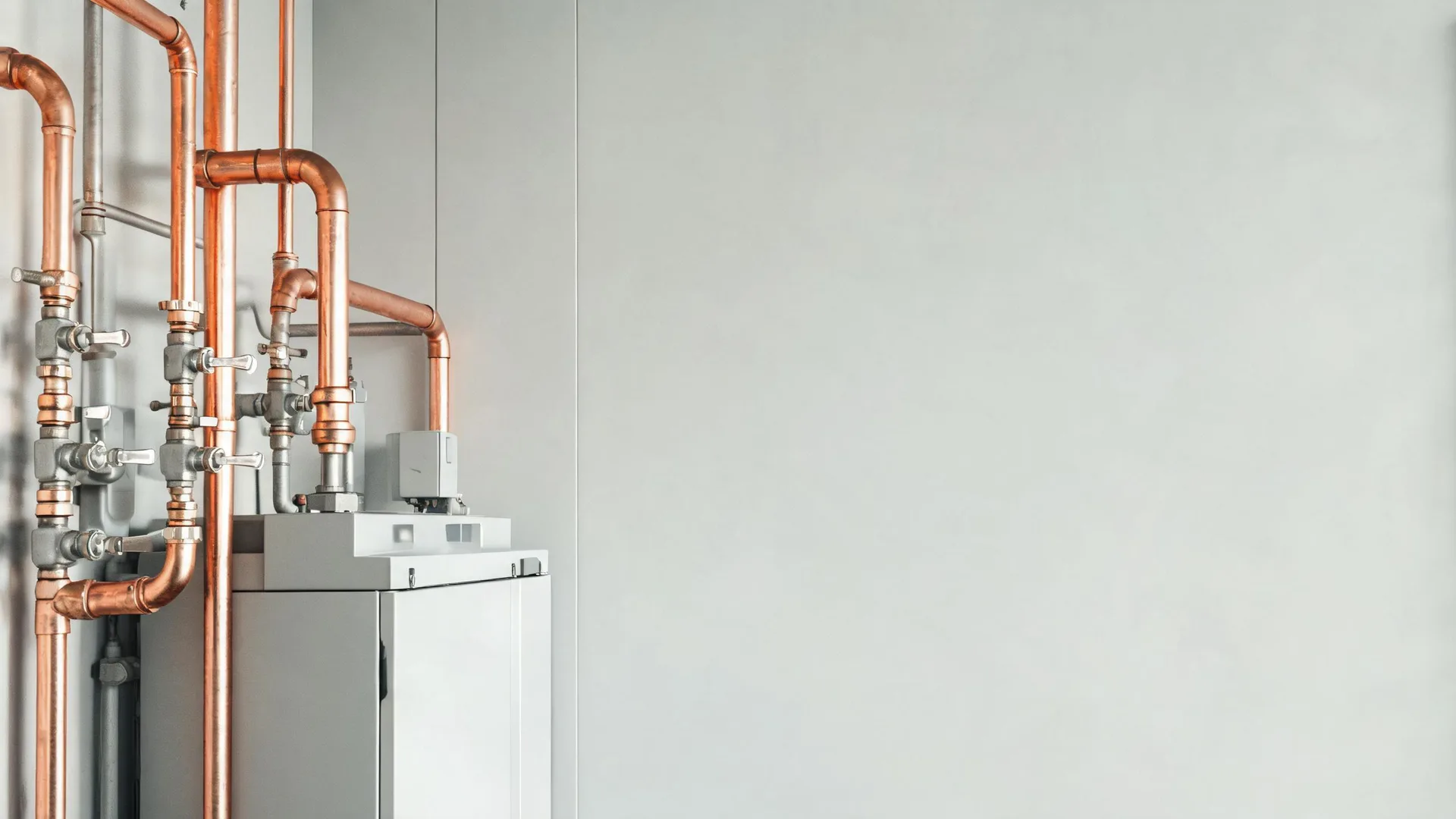
Sizing comes from the house, not a chart

A contractor works out the right size by doing a heat loss calculation on the actual house: the square footage, the window area, how much wall and ceiling is losing heat, and how well the place is sealed up. That number is what the boiler has to be able to replace on the coldest day of the year, nothing more. Pulling a size off the old boiler's nameplate just repeats whatever mistake was made the first time, if there was one. The load calculation is the only way to know before it's installed instead of finding out that winter.

Two boilers can carry the same efficiency rating and still be different machines to live with. Ask what the heat exchanger is made of, because cast iron and stainless steel age differently and fail differently. Ask whether it's a sealed combustion unit that draws air from outside through its own intake pipe, or one that pulls combustion air from the room it sits in. Ask how it modulates, meaning whether the burner can throttle down on a mild day or just fires at one rate every time. A boiler that only knows full blast cycles more, and every cycle is wear on the ignition system and the circulator. Ask what the warranty actually covers on the heat exchanger versus the rest of the unit, since that part is the expensive one to replace. None of this shows up on a spec sheet at a glance. It shows up in how the contractor answers when you ask.

Gas heats 41 percent of the homes in Oswego County, more than any other fuel. That's why most of what's already on this site, and most of what a contractor here installs, is a gas-fired boiler. If your old system ran on gas, replacing it with another gas boiler means the gas line, the venting, and the fuel setup are already there. Switching fuels means new infrastructure, and that's a bigger job than swapping one boiler for another. For most homes here, matching what's already in the house is the straightforward path, as long as the new unit is sized and rated for what your house actually needs.