White colonial houses with lit windows and dark shutters line a tree-lined street at dusk, bordered by dry-stacked stone walls.

Boiler Installation in Oneida, NY

Tell us about the job

Takes about a minute. No obligation.

New system or replacementBoilerMadison County, NY
Step 1 of 2

What ZIP code is the job in?

Gas here runs $16.03 per million Btu

New York paid $16.03 per million Btu of natural gas in 2024. A boiler that runs through a cold Oneida winter burns through that gas every day it's cold outside, so the efficiency rating on the unit matters more here than it would somewhere with cheaper gas.


Efficiency is the number to compare

When you're sizing up boilers for this job, the AFUE rating tells you how much of that gas turns into heat in your house versus going out the flue. At New York's gas prices, a few points of AFUE difference between two boilers is worth working out before you pick one.

Boilers in Madison County run September through May, nine months of the year.

Get the new one in during August, before the heat season starts, so the install happens on your schedule.

Most Madison County homes heat with gas, so a gas boiler is the straightforward swap

41.2% of homes heat with gas
Heat runs September through May
Winter nights average 16°F

Half the homes in Madison County were built in 1964 or earlier. If yours is one of them, this boiler almost certainly isn't the first one that house has had. There may be cast iron radiators, old piping, baseboard added on later. Whatever's there, the new boiler has to be sized to that house, not to a generic one. A contractor should work out the heat loss for your particular walls and windows before settling on a size. A boiler too big for the house short cycles and wears out early. One sized right is the one that lasts.

Zone 6A sets the minimum efficiency a new boiler here has to meet

Madison County sits in zone 6A, a cold climate with winter running long. Any gas-fired boiler built on or after January 15, 2021 has to hit at least 84 percent AFUE to go in here, so that floor is set before a contractor shows up with options. Ask about the federal tax credit for high-efficiency boilers too. It can offset some of the cost of a unit that clears the minimum by a good margin.

Find a contractor
A man in a dark long-sleeve shirt and worn brown work pants, seen from behind, carries a canvas tool bag up the steps toward a gray front door, with a potted shrub beside the entry.

The boiler itself is one line item

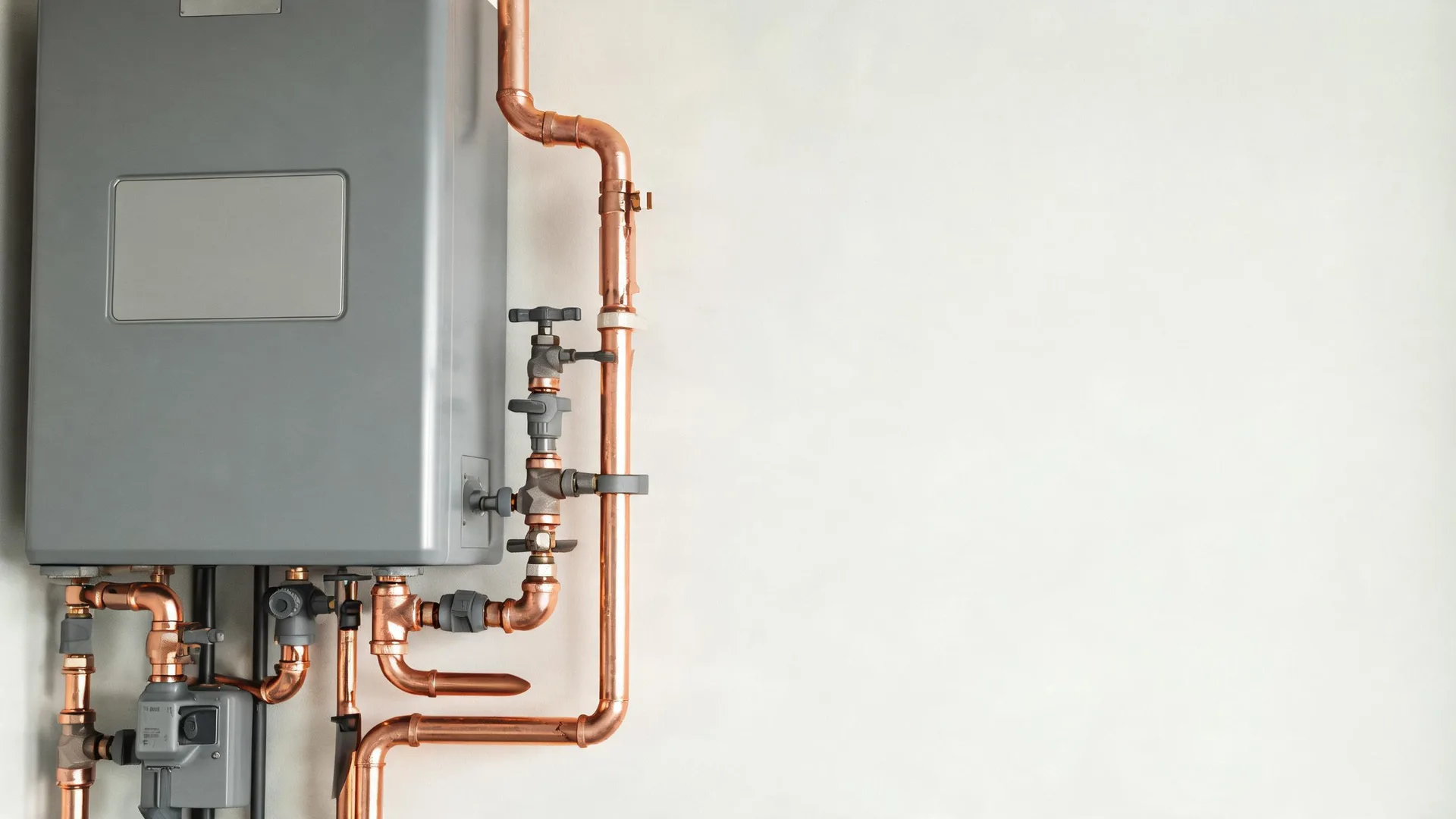
Cast iron sections versus condensing stainless steel, the venting each one calls for, the pump, the expansion tank, the controls. Boilers with the same output can price out differently because of what they're built from and how they're meant to vent. None of that gets settled until a contractor has looked at what the job actually needs.

What it takes to connect it costs more than the box

A straight swap, where the new boiler sits where the old one sat and uses the same gas line and the same venting, is the cheapest version of this job. Add a chimney liner, a new vent through the wall, gas line work to feed a bigger unit, or rerouted piping to reach old radiators, and the labor and material climb well past the boiler's own price tag.

Ask each contractor what happens to the exhaust. A condensing boiler pulls so much heat out of the flue gas that what's left is cool enough to vent through plastic pipe out a wall, and it drips condensate that needs someplace to drain. A cast iron boiler runs hot enough to need a real chimney or metal vent, no plastic involved. That single difference changes where the unit can go and what the installer has to build around it. Ask too how they're pricing the controls, because a boiler that modulates its output to match the cold outside is a different animal from one that's just on or off, and the piping has to be set up to let it do that. And ask what warranty covers the heat exchanger specifically, separate from the rest of the unit, since that's the part that fails first if the water chemistry isn't right.

The old boiler has to come out before the new one goes in. The water gets drained, the piping disconnected, the gas line and flue connection cut loose, and the old unit hauled out. Setting the new boiler in place is the easy part. The piping has to be sweated or threaded back together, the gas line checked for the right pressure, and the vent run and sealed so nothing leaks. After that the system gets filled with water and purged of air, because trapped air causes noise and keeps the boiler from heating evenly. A good installer fires it up and watches it run through a full cycle before calling the job done, checking the flue for proper draft and making sure the controls bring it up to temperature the way they should.