White colonial houses with lit windows and dark shutters line a tree-lined street at dusk, bordered by dry-stacked stone walls.

Boiler Installation in Olean, NY

Tell us about the job

Takes about a minute. No obligation.

New system or replacementBoilerCattaraugus County, NY
Step 1 of 2

What ZIP code is the job in?

The boiler itself isn't the whole job

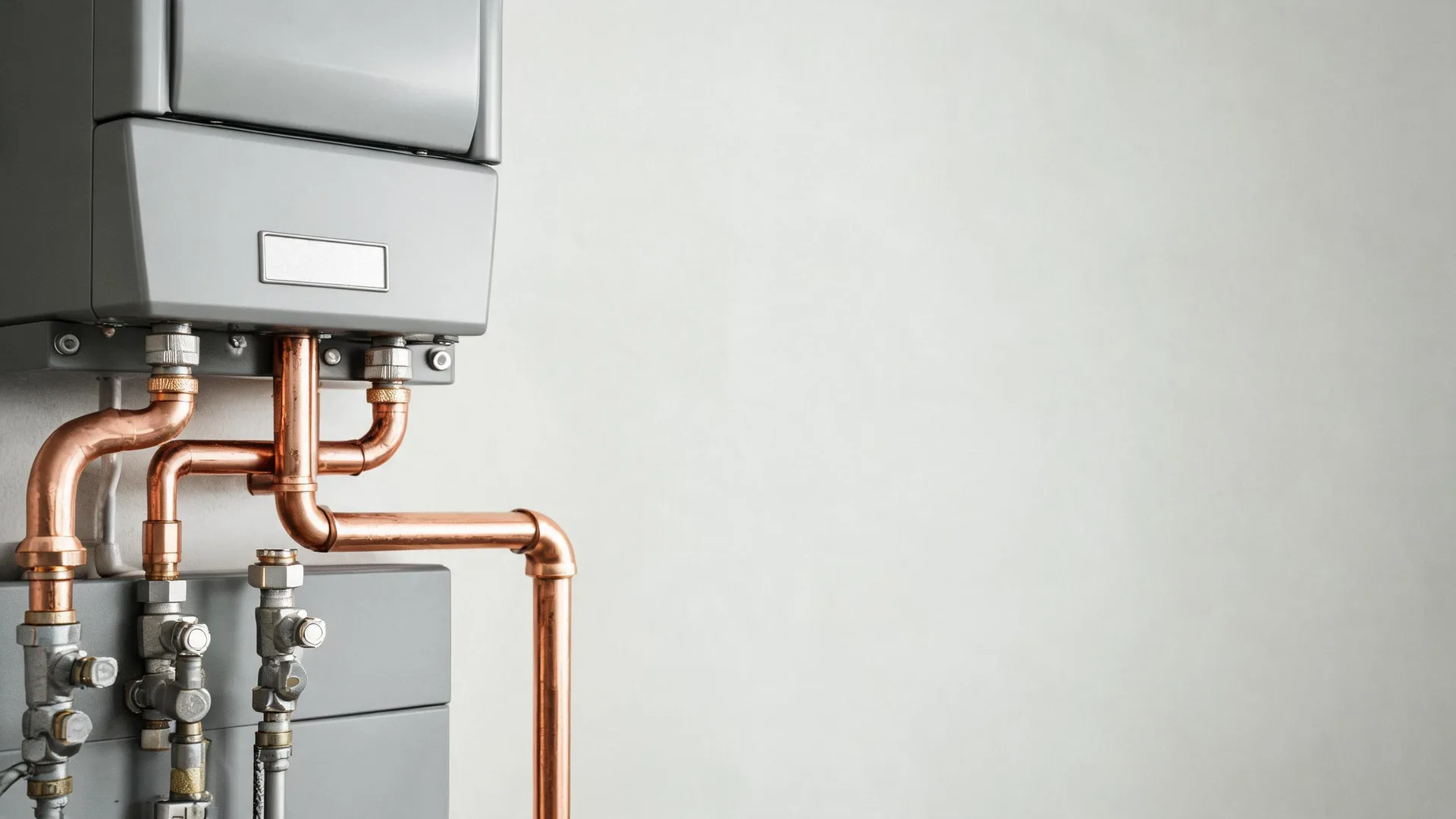
A boiler sits in the middle of a system of pipes, valves, a circulator pump, an expansion tank and controls. If the old piping is worn or the venting doesn't match what the new unit needs, that work has to happen too. A job can grow past the boiler itself once a contractor sees what it's connected to.


Matching the boiler to the house costs more than grabbing the nearest size

A contractor sizes the boiler to the heat loss of the house, not just the square footage. Guessing high wastes fuel and shortens the boiler's life through constant short cycling. Guessing low leaves rooms cold on the coldest days. Getting this right takes a proper load calculation before anyone quotes a price.

A boiler in Olean runs from September clear through May.

Nine months of heating a year leaves no room for the wrong size or a cut-rate install.

Nine months of heat ahead. August is when this gets done before you need it.

Heat runs September through May
Climate zone 5A
Winter nights average 17°F

Gas heats just over half the homes in Cattaraugus County, and a boiler running on gas is the familiar setup for most contractors here. If the house already has a gas line run to the old boiler, that line usually serves the new one too. A contractor will still check that the gas supply and venting match what the new unit calls for, since boilers vary in what they need. Staying with gas, if that's what the house already has, keeps the installation closer to a swap than a rebuild.

Size it for how hard it works here

A new system here will work harder than most, every year. Size it right and don't buy on price alone.

Find a contractor

A load calculation looks at more than floor space

A contractor measures heat loss room by room, accounting for window area, wall construction, ceiling height and how many exterior walls each room has. Houses the same size can need different boilers because one loses heat faster than the other. Square footage alone can't tell a contractor that.

Radiators and baseboards have their own output limits

Whatever boiler goes in has to match what the existing radiators or baseboard can actually deliver into each room. A boiler sized for the house but paired with undersized radiation still leaves rooms short. A contractor checks the heat emitters as part of the same calculation, not as an afterthought.

The efficiency rating on a boiler's label tells you how much of the fuel it burns actually ends up as heat in the house, versus going out the flue. A higher-rated boiler pulls more heat out of the same flame before letting the exhaust go. That number matters for what shows up on the gas bill, but it doesn't change how a contractor sizes the unit. A high-efficiency boiler still has to match the heat loss of the house and the output of the radiators or baseboard it feeds. The rating also affects venting. Higher-efficiency boilers run cool enough that they vent through plastic pipe out a sidewall, while standard units need a traditional chimney or metal vent. That's a question to settle before installation, not after, since it decides where the vent pipe can run and what the old chimney ends up doing instead.

Installation day starts with the old boiler coming out, along with whatever piping or venting isn't being reused. The new unit gets set, leveled and connected to the water lines, gas line and vent. Once it's piped in, the system gets filled with water and purged of air, since trapped air in the lines causes noise and uneven heat later. The circulator pump, expansion tank and controls get wired in and tested. Before anyone calls it done, the boiler runs through a full cycle so the contractor can check the pressure, the temperature rise and whether every radiator or baseboard loop is actually getting hot. A combustion analyzer checks the flue gases to confirm the burner is tuned correctly, not just running. That test matters more than how the boiler looks sitting there.