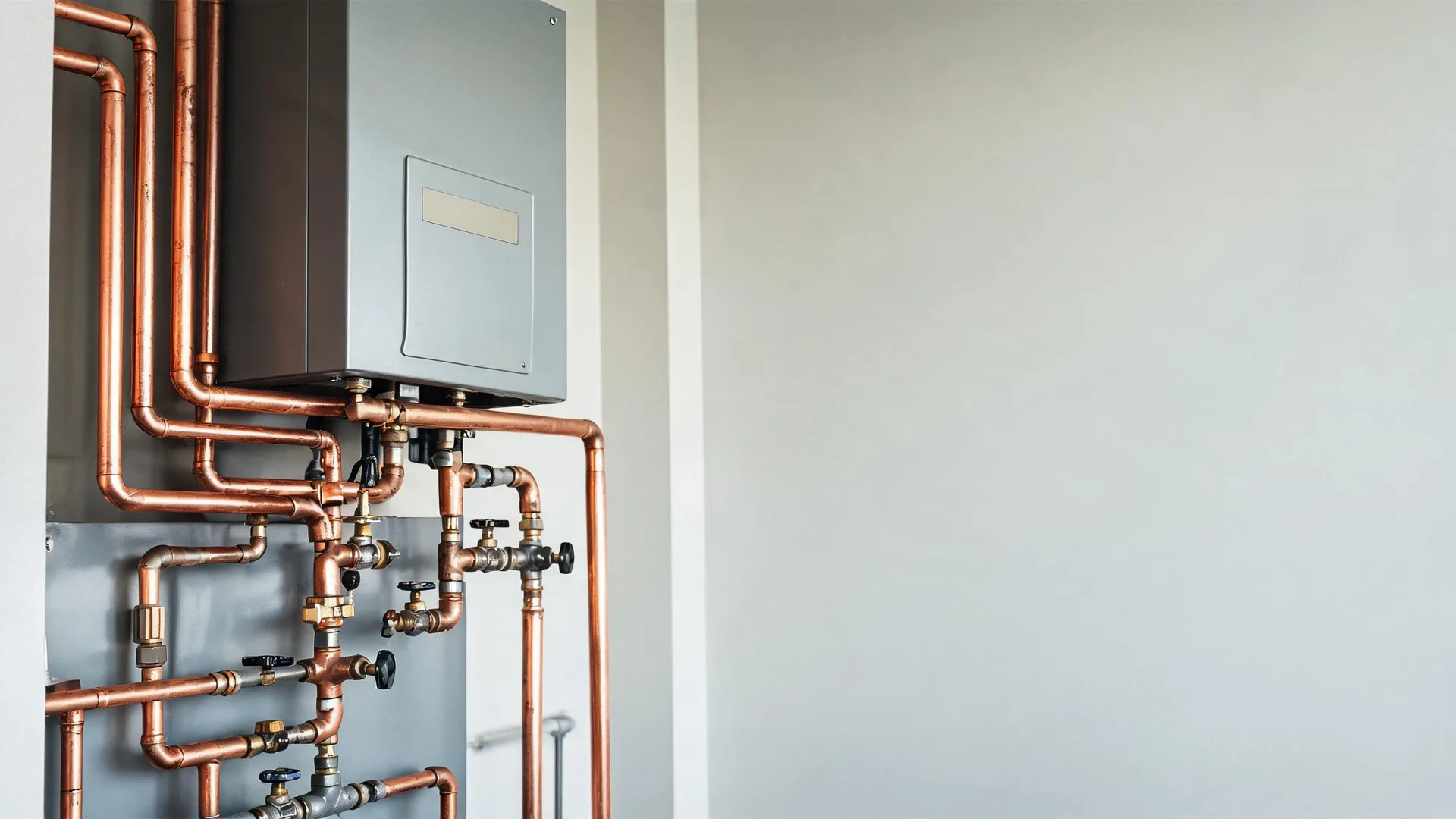
Gas here runs $16.03 per million Btu
New York homes paid $16.03 per million Btu of natural gas in 2024. A boiler burns gas for every degree it makes, so that price sits behind every therm the burner uses.
Takes about a minute. No obligation.
New York homes paid $16.03 per million Btu of natural gas in 2024. A boiler burns gas for every degree it makes, so that price sits behind every therm the burner uses.
A new boiler's efficiency sets how much of that gas turns into heat in your house instead of going out the flue. At this price per Btu, the difference between models shows up on every bill, not just the first one.
Half the homes in Wayne County were built in 1968 or earlier.
An old boiler in a house that age was likely sized for radiators or steam lines that may not match what's there now, so the new one needs to be sized to your actual house, not swapped in to match the old one.




Newark falls in climate zone 5A, a cool zone where heating is the bigger load on a home. Any gas-fired hot water boiler installed here now has to reach at least 84 percent AFUE. That floor rules out the older, lower-efficiency models some contractors might still have sitting on a shelf. It still leaves room above it, since newer boilers are built to clear that number by a wide margin. A federal tax credit is available on qualifying high-efficiency equipment, worth checking against whatever model you're considering.
Eight months of heat a year, with overnight lows averaging 20°F through December, January and February, means your boiler runs long and runs cold-weather hard most of the time it's on. That kind of load finds the weak spot in an undersized unit fast. Get this one sized to your house and built to last through that stretch, not picked because it was the cheapest box on the lot.
Find a contractor
A boiler is sized to the heat load of the house, the radiators or baseboards it has to feed, and the length of pipe runs. A bigger house or a system with more zones needs a boiler that can push more heat through more loops, and that moves the price before efficiency or brand even come into it. Getting the sizing right also keeps the unit from short cycling, which wears parts out early.
Swapping a boiler for the same type of boiler is the simple version of this job. It costs more when the venting has to change, when the gas line needs to be resized for the new unit, or when old piping or wiring near the boiler doesn't meet current code and has to be brought up to it. None of that shows up until someone's looked at what's actually in the mechanical room.
Sizing a boiler comes down to a heat loss calculation, not the square footage of the house or the rating of the unit it's replacing. A contractor works out how much heat the house actually loses on the coldest days, room by room, using the walls, the windows, the ceiling height, and works backward from there to the output the boiler needs to deliver. Too big and the boiler short cycles, firing up, satisfying the thermostat fast, then shutting off again before it's run long enough to warm evenly or run efficiently. That cycling is hard on the burner and the heat exchanger both, and it shows up as wear years before it should. Too small and it runs flat out on the coldest nights and still can't keep up, so the far rooms stay cold no matter how long it runs. The old boiler's size is a starting point for comparison at best. It isn't proof of what this house actually needs.
The old boiler comes out before the new one goes in, so expect the mechanical room to be down to bare pipes for part of the day. The installer drains the system, disconnects the gas line, the venting and the wiring, then pulls the unit. Before anything new goes in, that's when the piping gets a real look, since problems hidden behind the old boiler's casing only show up once it's gone. Setting the new boiler means leveling it, connecting the venting to match what that model needs, running gas back to it, and tying in the same loops it's about to feed. Once it's wired up and the system's refilled and purged of air, the installer fires it and watches it run through a full cycle, checking gas pressure and water temperature before calling it done. A boiler with a standing pilot doesn't need power to stay lit, but most new ones do, so where the electrical runs to it matters too.