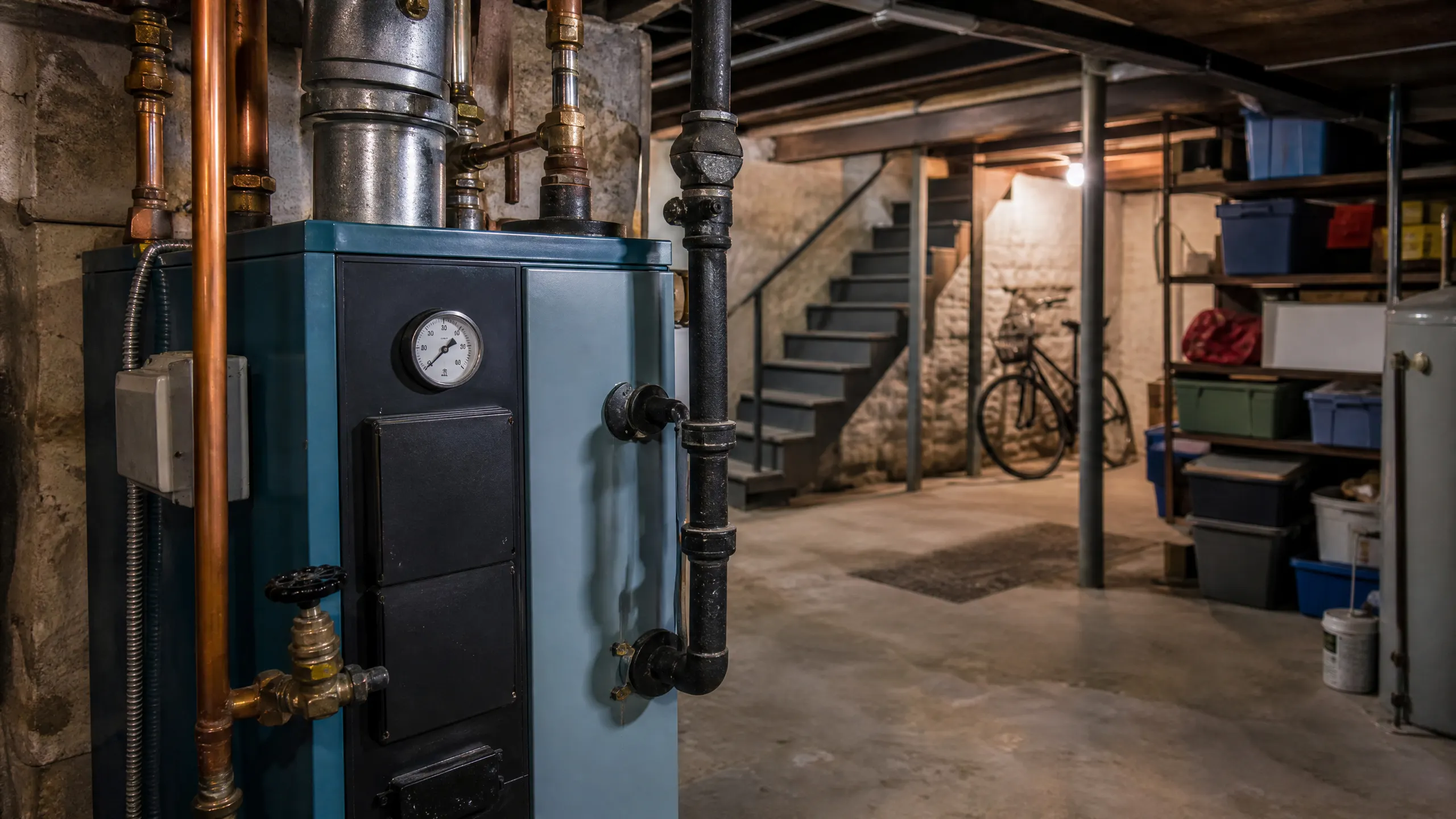




A residential basement showing a blue boiler with copper and iron pipework in the foreground, with storage shelves, a bicycle, and a staircase in the background.

Boiler Installation in Massena, NY

Tell us about the job

Takes about a minute. No obligation.

New system or replacementBoilerSt. Lawrence County, NY
Step 1 of 2

What ZIP code is the job in?

Natural gas in New York ran $16.03 per million Btu in 2024, and a boiler here burns gas all winter to keep up with the cold. That price sits on every therm the boiler uses, not just the ones on the coldest nights. A boiler that converts more of that gas into heat, instead of sending it out the flue, keeps more of each bill's worth of fuel in the house where it belongs. The difference between a well-matched system and one that's working harder than it should shows up month after month, not just once.

Boilers here run September through May.

Install before September and the job happens on your schedule, not during the first cold snap.

Half the homes here were built in 1964 or earlier. Your new boiler has to work with that house.

Half the homes here were built by 1964
Heat runs September through May
Winter nights average 11°F
Built for Nine Months of WinterHeat runs here September through May, and winter storms hit St. Lawrence County 69 times between 2015 and 2024.

Gas heats more homes in St. Lawrence County than any other fuel, at 33.5%. Oil or kerosene heats 23.8%, and propane heats 15.9%. If your old boiler burned gas, the line, the venting and the meter are already there and sized for the job. That keeps the installation simpler and gives the contractor fewer unknowns to work around. If your house runs on oil or propane instead, switching to gas usually means bringing in a new fuel line, and that's worth asking about before you settle on what to replace it with.

What You Install Now Sets Every Bill After It

Get the sizing and the efficiency right at installation and that $16.03 per million Btu works in your favor on every bill from here on. Get it wrong and you're paying that rate on gas going out the flue instead of into the house. The install is the one chance to decide which way that goes.

Find a contractor
A man in a cap, dark t-shirt and worn tan work pants walks up steps toward a dark front door, carrying a canvas tool bag filled with tools, beside a potted shrub.

Ask How They Sized It

A boiler should be sized off a heat loss calculation for the house, room by room, not matched to the old boiler or guessed from square footage. Too big and it short cycles, turning on and off before the house ever gets a steady draw of heat, which wears the burner and the heat exchanger faster than steady runtime would. Too small and it runs flat out on the coldest days and still can't keep up. Ask what method they used and ask to see the numbers, not just the model they picked.
Ask What Happens to the Old Piping

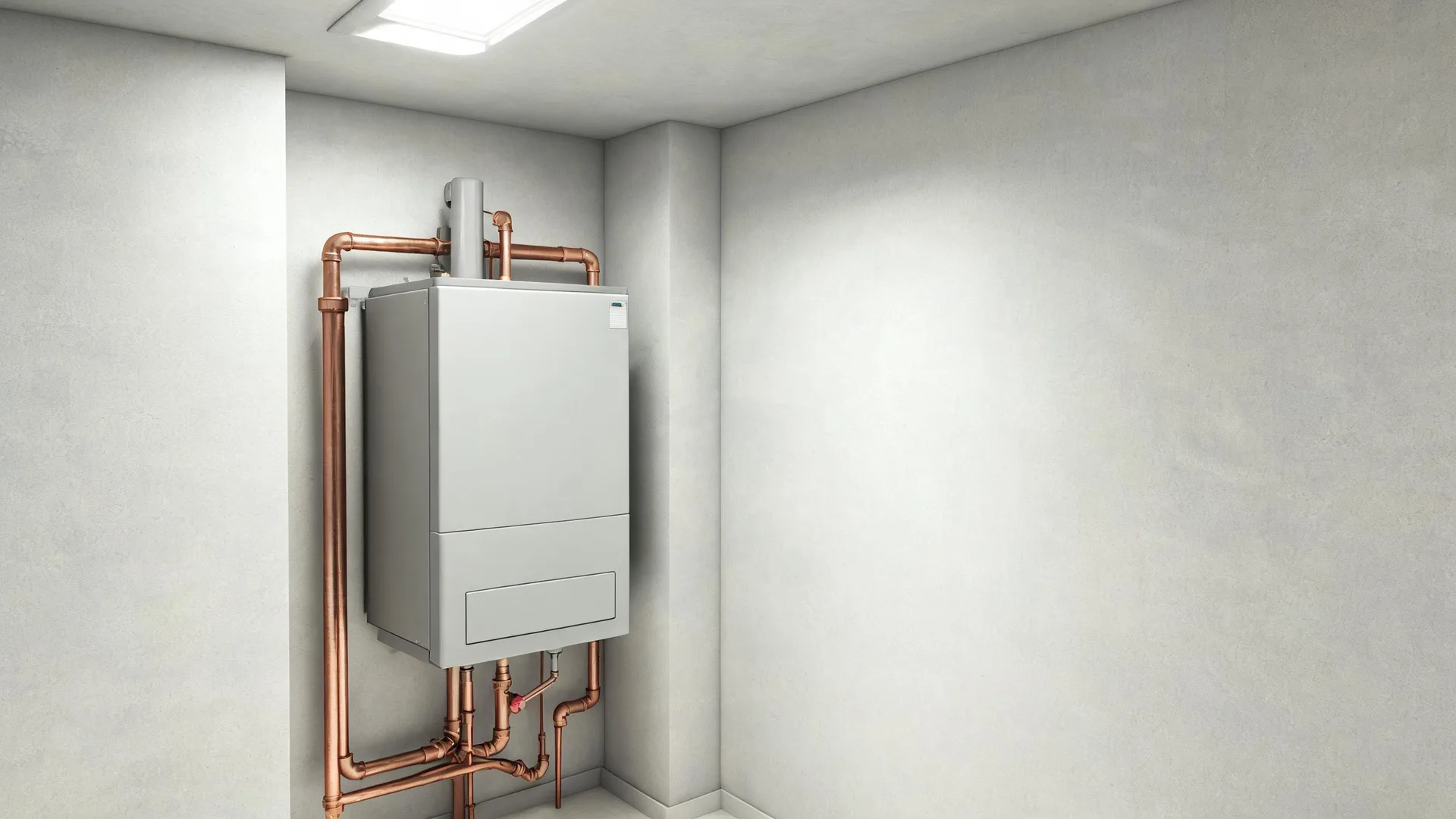
The boiler is one part of the system. The near-boiler piping, the circulator pump, the expansion tank and the zone valves all have to work with whatever new boiler goes in. A contractor who plans to reuse old piping without checking it against the new unit's specs is leaving a mismatch for you to find later, usually as a noise, a leak, or a zone that never gets warm. Ask directly whether anything besides the boiler itself is being replaced or adjusted.

The efficiency rating on a boiler's label is its AFUE number, and it tells you how much of the fuel it burns turns into heat for the house over a full season, with the rest going out the flue. A conventional boiler vents hot enough that the exhaust needs a metal flue. A condensing boiler pulls extra heat out of that exhaust before it leaves, enough that what's left is cool enough to vent through plastic pipe and drain off as water through a condensate line. That difference changes what the installation needs, not just what the boiler costs to run. A condensing unit needs a condensate drain and somewhere for that water to go, and it vents differently than an older boiler might have. The rating on the label is a season-long average, not a promise about any single cold snap, so the boiler still has to be sized correctly to actually deliver it in the house.

St. Lawrence County falls under climate zone 6A, and the 2021 energy code sets what a new boiler here has to meet. Any gas-fired hot water boiler built since January 2021 has to turn at least 84 percent of the gas it burns into heat over the season. That's a floor, not a target to aim for, so most units sold today clear it without being a special order. A federal tax credit is available for qualifying high-efficiency equipment, worth checking against whatever model a contractor proposes. The code sets the minimum. What you install can still go well beyond it.