



A row of gray and beige wood-sided two-story houses behind a white picket fence, with a grass lawn in the foreground and large leafy trees overhead.

Boiler Installation in Lindenhurst, NY

Tell us about the job

Takes about a minute. No obligation.

New system or replacementBoilerSuffolk County, NY
Step 1 of 2

What ZIP code is the job in?

Oil heats 44 percent of homes in Suffolk County, more than any other fuel, with gas close behind at 41.1 percent. If your boiler runs on oil, replacing it with another oil boiler is usually the straightforward path, since the tank and lines are already there. The same goes for gas. Switching fuels for a boiler installation means new venting, new fuel lines, and in some cases a new tank or a gas line extension, so it's worth asking a contractor what that adds to the job before you decide against staying put.

Suffolk County logged 82 winter storms between 2015 and 2024.

A boiler here needs to fire reliably on the coldest night of the year, nothing more.

September is the month to get this done, before heat season starts in October

Heat runs October through May
Climate zone 4A
Winter nights average 26°F
Lindenhurst boiler installationFuel oil runs $23.11 per million Btu in New York, a number worth knowing before you pick a fuel

Half the homes in Lindenhurst were built in 1970 or earlier. A boiler going into a house that age is going into a house built around cast iron radiators or baseboard loops that were sized for how that home lost heat decades ago. If walls or windows have changed since then, the old sizing may not match the house anymore. A contractor doing the installation should run a heat loss calculation on your home as it stands now, not go by the boiler you're replacing. Putting in a boiler too big for the house wastes fuel and shortens its own life from cycling on and off too fast.

A standard boiler, sized right, covers what Lindenhurst winters ask of it

A boiler sized to the house, not oversized for it, covers an average overnight low of 26°F without trouble. That's the number it has to be built for, not a worse one. Standard sizing and efficiency are enough here.

Find a contractor

The boiler is one part of the bill

The boiler itself is only one line on the quote. Piping, venting, the circulator pump, zone valves and controls, and whatever it takes to connect to the existing radiators or baseboard loops all add to the job. A straight swap in the same spot costs less than one that needs new pipe runs or a new vent path.
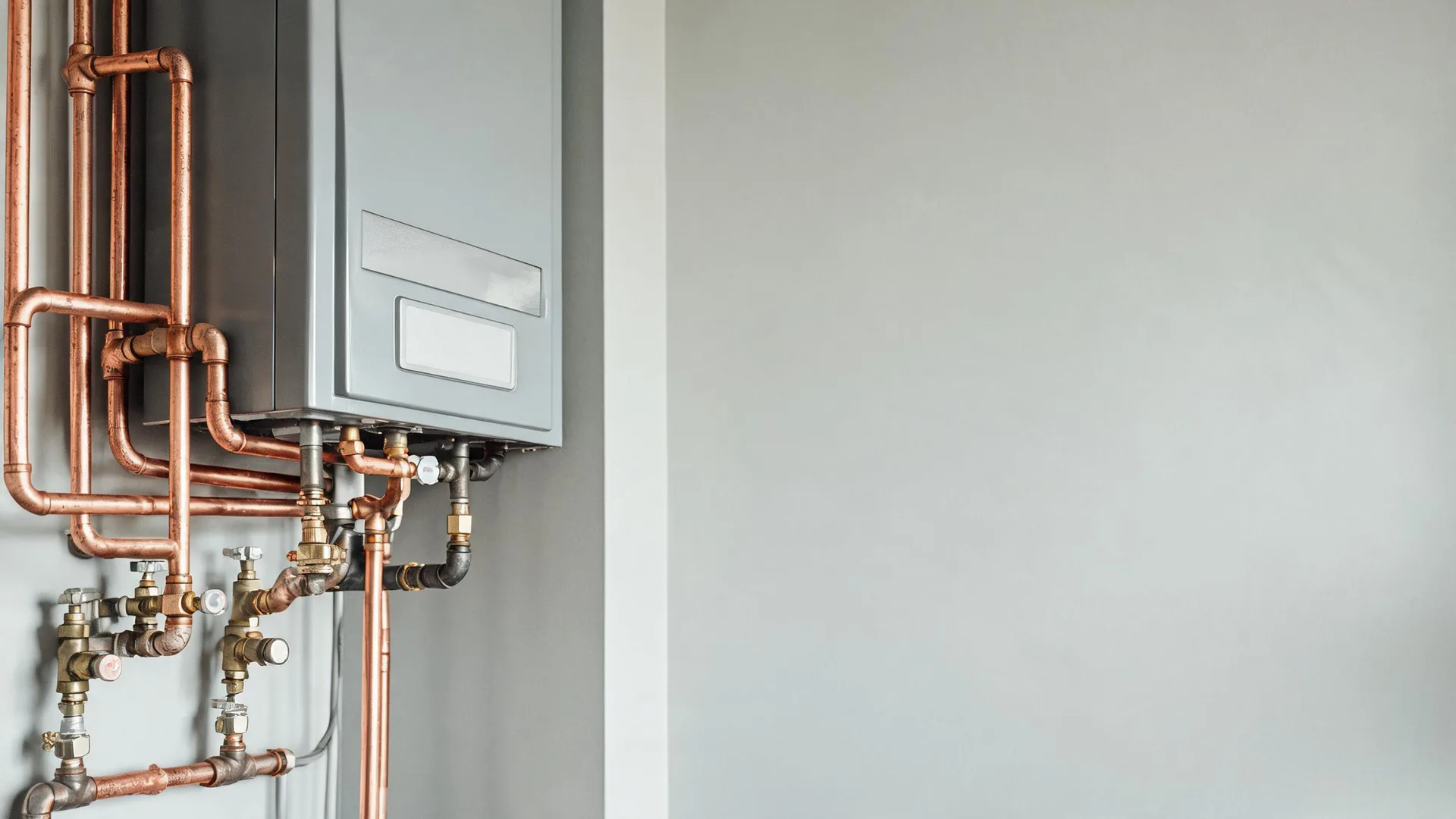
What's hidden behind the walls changes the job

A contractor can't know what the venting, gas line or electrical hookup look like until the old boiler comes out and the space opens up. If the chimney liner is undersized for a new unit, or the gas line needs upsizing to feed it, that work gets added once it's found. Asking upfront what's typically uncovered on a job like this is fairer than expecting a number with no surprises.

The efficiency rating on a boiler tells you how much of the fuel it burns turns into heat for the house, and how much goes out the flue. A higher rating means less fuel wasted doing the same job. Older cast iron boilers lose a good deal of heat up the chimney even when they're running right. Newer condensing boilers recover heat from the exhaust before it leaves, which is where most of the gain comes from. That gain depends on the system running cool enough to condense, so the piping and radiators it connects to matter as much as the boiler itself. A high efficiency boiler tied into a system it isn't matched to won't hit the number on its label.

Installation day starts with the old boiler coming out, and that's when the real work begins. The new unit gets set, leveled, and connected to the existing pipes or baseboard loops, then the venting goes in, whether that means a new flue liner or a sidewall vent run. Gas or oil lines get hooked up and checked for leaks before anything fires. Once it's wired to the controls and thermostat, the system gets filled with water and purged of air, because trapped air in the lines causes knocking and uneven heat. Only then does the contractor fire it up, checking the burn and watching how the system responds as it comes up to temperature. A boiler installed and started this way should run the rest of the day without a callback.