Gas here runs $16.03 per million Btu
New York homes paid $16.03 per million Btu of natural gas in 2024. A boiler burns gas all winter to keep the house warm, so that price touches every month of the heating bill.
Takes about a minute. No obligation.
New York homes paid $16.03 per million Btu of natural gas in 2024. A boiler burns gas all winter to keep the house warm, so that price touches every month of the heating bill.
Two boilers can use the same gas at the same price and still leave you with different bills, because one turns more of that fuel into heat in the house. For a new install, that difference runs for as long as the boiler lasts.
Boilers here run from September through May.
Install before September and the job happens on your schedule, not during the first cold week.




Tompkins County falls in climate zone 5A, a cool zone where heating carries most of the load. Any new gas-fired hot water boiler installed here has to turn at least 84 percent of its gas into heat over a season, if it was built on or after January 15, 2021. That floor narrows what can legally go into your house. A federal tax credit is available on qualifying high-efficiency boilers, on top of whatever that efficiency saves you in gas each winter.
Gas here runs $16.03 per million Btu, and a boiler that wastes less of it keeps less of that cost off your bill all winter. That difference gets locked in at install, for as long as the new boiler runs. Worth getting the sizing and the efficiency right before it goes in.
Find a contractorA boiler doesn't come apart easy. The gas line gets capped, the water lines get drained and disconnected, and the flue or vent connection gets undone. If it's a cast iron boiler, it usually gets cut into pieces to get it out the door. That work has to happen before the new unit can go in, so it's part of the install, not a separate job.
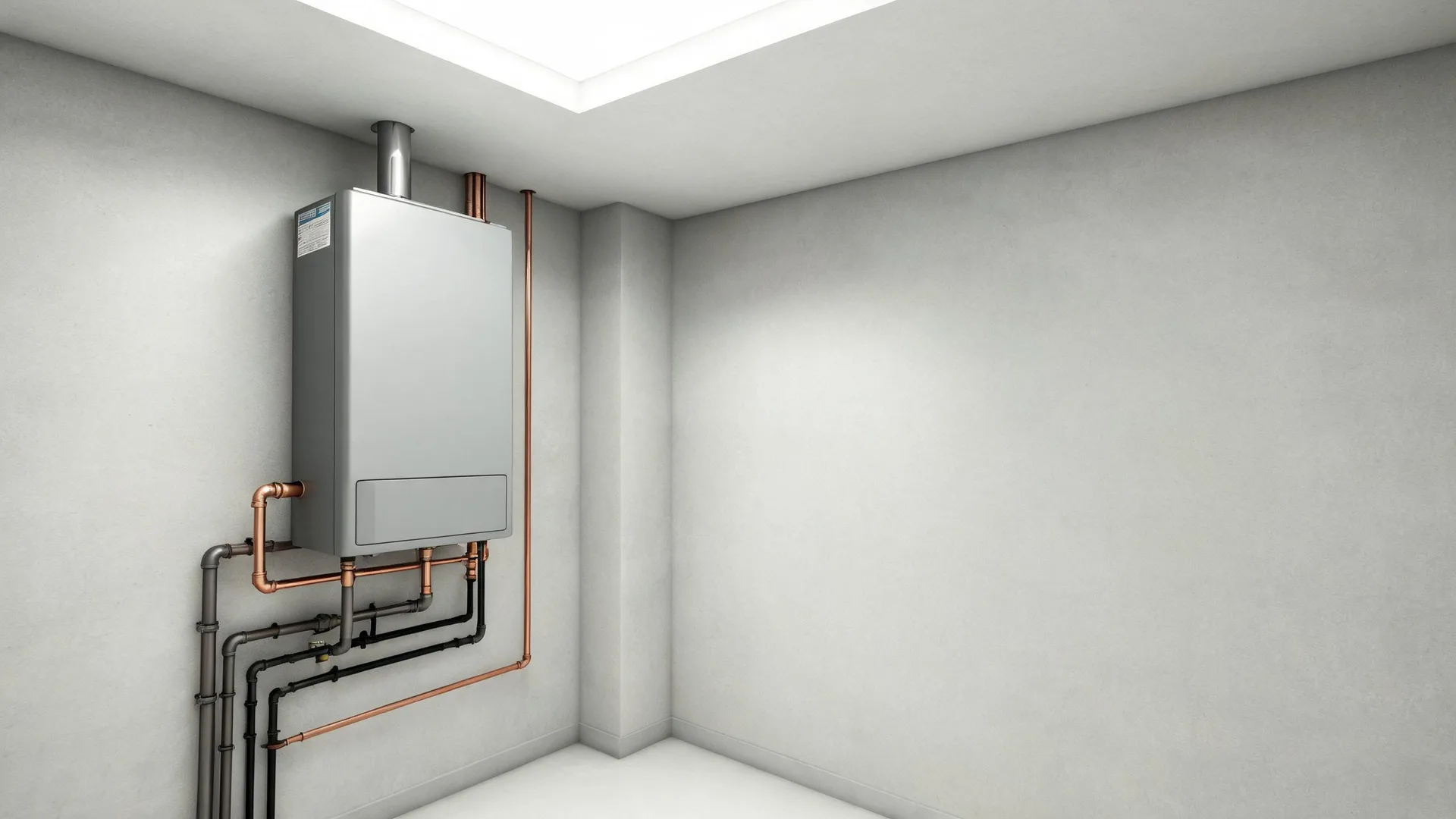
A high-efficiency boiler doesn't vent like an old one. Older boilers push hot exhaust up a chimney or a metal flue. Newer condensing models vent through PVC pipe out a sidewall, because the exhaust runs cool enough for plastic to handle. That means swapping boiler types usually means running new venting, not reusing what's already there.
That efficiency number on the label is the AFUE rating, and it tells you how much of the fuel burning in there actually turns into heat for the house instead of going out the flue. An older boiler loses a real share of every bit of gas it burns straight out the exhaust. A condensing boiler recovers more of that heat by cooling the exhaust down before it vents, which is also why that exhaust runs cool enough to pass through plastic pipe instead of metal. The rating is measured over a full season, not on one hour of run time, so it accounts for how the boiler behaves at a low simmer and at full fire. Two boilers with the same rating can still perform differently once installed, because a boiler only hits that number when it's sized and piped the way it was designed to be. A unit that's too big for the house will short cycle, firing up and shutting down before it ever settles into the steady burn the rating assumes.
Nine months of run time a year means the sizing matters more here than almost anywhere else. A boiler that's too big for the house fires up, satisfies the thermostat fast, and shuts off before it ever settles into a steady burn. Over a long winter that short cycling adds real wear to the igniter and the heat exchanger, and it burns more gas than a correctly sized unit would for the same heat. That calls for a heat loss calculation on your actual house, not a match to whatever size is already out there. Price alone won't tell you if a quote has done that work.