Gas here runs $16.03 per million Btu
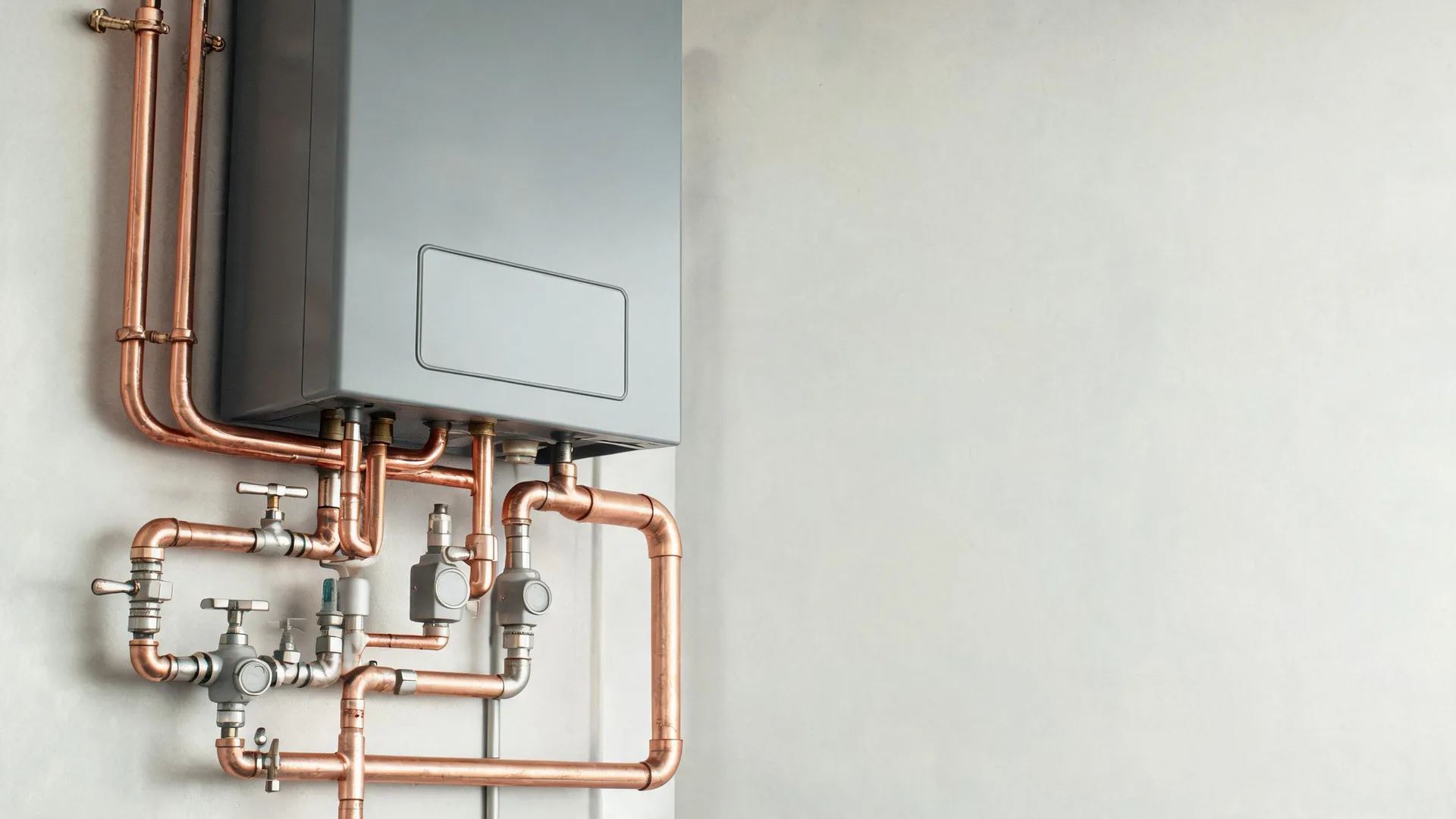
New York households paid $16.03 per million Btu of natural gas in 2024. Most boilers in Herkimer County burn gas, so that price sets what every therm your boiler uses actually costs you.
Takes about a minute. No obligation.
New York households paid $16.03 per million Btu of natural gas in 2024. Most boilers in Herkimer County burn gas, so that price sets what every therm your boiler uses actually costs you.
A boiler that wastes less fuel matters more where fuel costs more. The efficiency rating on the unit you pick decides how much of that $16.03 per million Btu turns into heat in your house and how much goes up the flue.
Boilers in Herkimer County start running in September.
Get the install done by August and the boiler is already proven before it has to work.




Herkimer County falls under zone 6A in the 2021 energy code, the cold end of the scale with a long heating season. Any gas-fired hot water boiler installed here has to meet the federal minimum for that type: at least 84 percent of the gas it burns has to turn into heat over the season, not go out the flue. That floor applies to boilers manufactured from January 15, 2021 on, so it covers what's currently on the market. A boiler at or near that minimum still qualifies, but higher-efficiency models are available and some may qualify for a federal tax credit. Given how long the heating season runs here, the difference between a boiler that barely clears 84 percent and one well above it shows up every winter, not just on paper.
You already know gas here runs $16.03 per million Btu. The boiler you install decides how much of that turns into heat and how much goes up the flue, for as long as you own it. Picking for efficiency now is how you act on that.
Find a contractorSizing a boiler comes from a heat loss calculation, room by room, based on wall and window area, insulation and how much the outdoor temperature drops on the coldest nights. Going by the square footage alone, or just matching what's already there, skips that work. A contractor doing it right will ask about windows and insulation before they ask what's in the basement now.
An oversized boiler short cycles. It blasts heat, satisfies the thermostat fast, and shuts off before it settles into a steady burn, so the house ends up with hot and cold swings instead of even heat. Short cycling also means the boiler fires more often, and every firing puts wear on the ignition system and the heat exchanger. A boiler sized correctly runs longer, steadier cycles and holds the temperature where you set it.
The rating on the label is an AFUE number. It tells you what share of the fuel burned over a season turns into heat that reaches your radiators or baseboards, and what share goes out the flue as exhaust instead. A boiler with a low rating loses a real share of every bit of fuel before it ever heats water. A high-efficiency boiler condenses the exhaust to pull extra heat out of it before venting, which is why those models drain condensate and vent through PVC pipe instead of a metal flue. That difference in venting is also why a high-efficiency boiler often costs more to install, not just more to buy. The rating is tested under set conditions, so your actual fuel use will move with how cold it gets and how well the house holds heat, but the rating still tells you which boiler wastes less fuel doing the same job.
Half the homes in Herkimer County were built in 1954 or earlier. A boiler going into a house that old is going into a heating system that was probably never designed around it, old radiators, baseboard added later, pipe runs that don't match what a catalog assumes. None of that means the job is harder to get right. It means the sizing and the hookup have to go by what's actually there, not by a standard plan. A boiler that matches the heat loss of an older house and ties into its existing distribution correctly will run the way it's rated to. One that gets forced to fit won't, no matter how good the AFUE number on the label is.