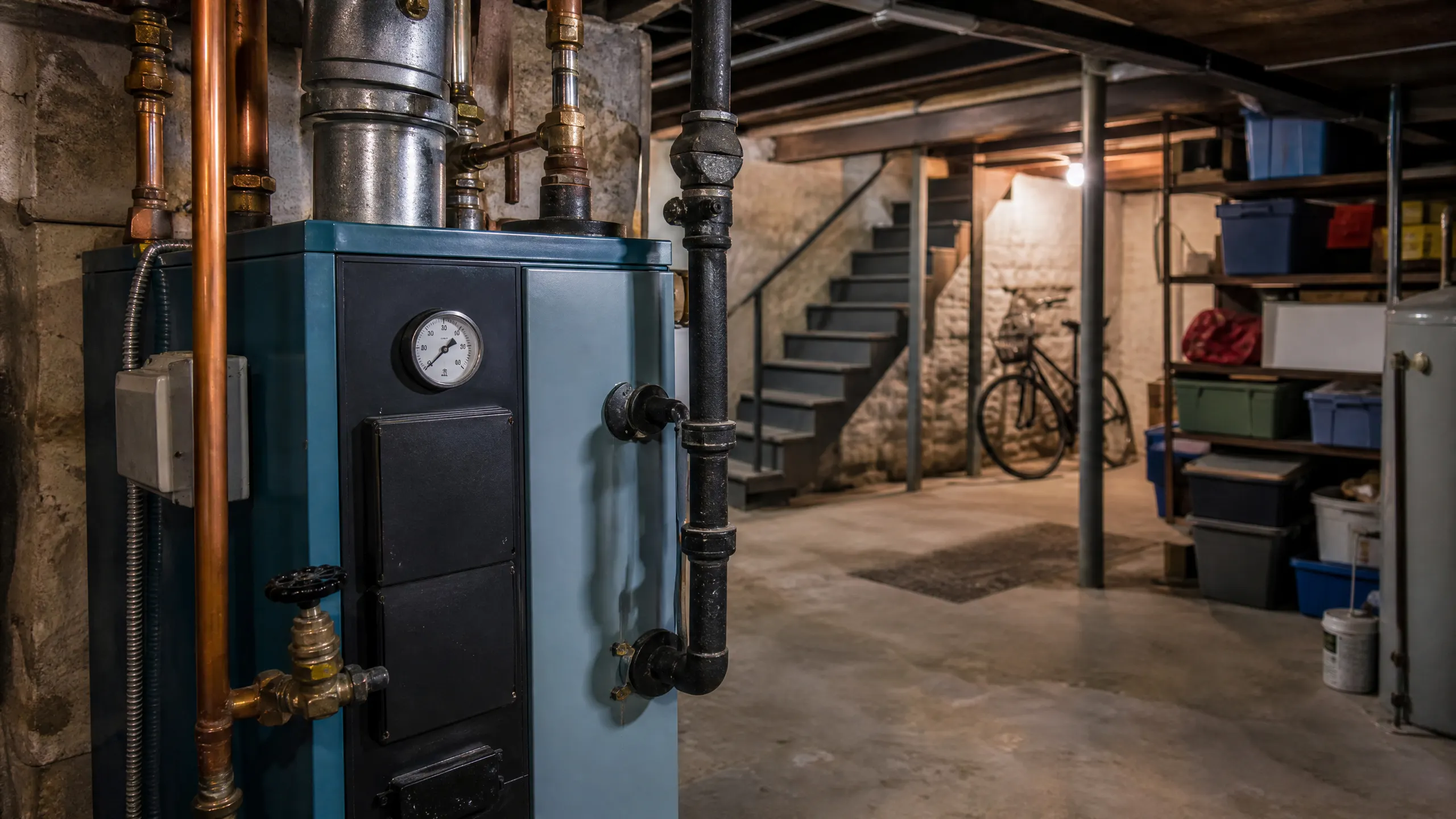





A residential basement showing a blue boiler with copper and iron pipework in the foreground, with storage shelves, a bicycle, and a staircase in the background.

Boiler Installation in Elmira, NY

Tell us about the job

Takes about a minute. No obligation.

New system or replacementBoilerChemung County, NY
Step 1 of 2

What ZIP code is the job in?

Gas in New York runs $16.03 per million Btu, among the higher rates in the country. A boiler that wastes even a little of that fuel shows up fast on a winter bill. This is where the efficiency rating on a new boiler matters more than the sticker price. An older boiler can lose a good chunk of its heat straight up the flue, and at these gas prices that loss is real money every month. When you're comparing boilers for installation, ask what AFUE rating each one carries, since that number tells you how much of the gas you pay for actually turns into heat in your home.

Gas heats 69.2% of homes in Chemung County.

A gas boiler is the straightforward replacement for most homes installing one here.

Half the homes here were built by 1955. A new boiler has to work with the pipes and radiators already in that house, not a blank slate.

Half the homes here were built by 1955
Climate zone 5A
Heat runs October through May
Get it done before OctoberHeat runs October through May here, so September is the month to get a new boiler in.

Heat runs here from October through May, about eight months of the year. Add in overnight lows that average 18°F through December, January and February, and a boiler installed in Elmira spends most of the year working, not idling. That's what it has to be sized for. A boiler sized too small will run flat out all winter trying to keep up. One sized too large cycles on and off more than it should, which wears on it in its own way. Getting the size right matters more here than it would somewhere milder.

A new boiler here has to meet a higher bar

Chemung County falls under zone 5A, and any gas boiler installed here now has to hit at least 84 percent AFUE. That floor rules out the old low-efficiency units and sets the baseline for what you're comparing. A boiler that clears it may also qualify for a federal tax credit, worth looking into before you settle on a model.

Find a contractor
A man in a dark long-sleeve shirt and worn brown work pants, seen from behind, carries a canvas tool bag up the steps toward a gray front door, with a potted shrub beside the entry.

What's already there drives the cost

A boiler installation is never just the unit. The venting has to be run to meet code for that model, and an older system sometimes needs the gas line upsized to feed it properly. If the job calls for new zone valves or a different circulator pump, that's more work too. The more the old setup has to change to fit the new boiler, the more labor goes into it.
Higher efficiency costs more up front

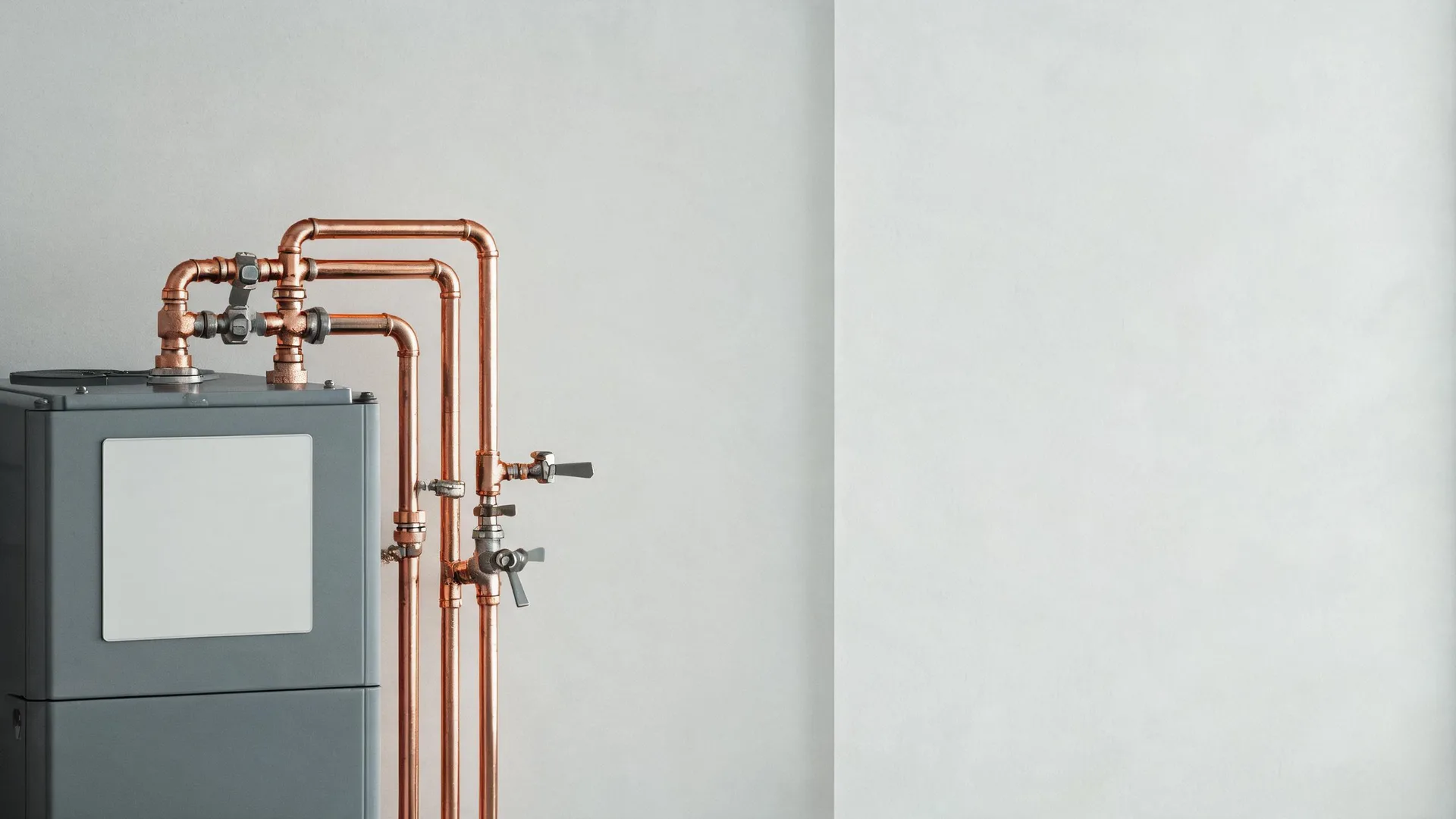
A boiler built to clear a higher AFUE rating uses a more complex heat exchanger, usually a condensing design that needs a drain line for the condensate it produces. That hardware costs more than a standard model. It also uses less gas to make the same heat, which is the other side of the comparison once you're past the sticker price.

AFUE is just a measure of how much of the gas you burn turns into heat in your house instead of going out the flue. A boiler rated higher wrings more heat out of the same flame, every time it fires, for as long as you own it. The rating on the label is tested under set conditions, so it's a fair way to compare one model against another, but your actual bill still depends on how the system is sized and installed. A high-efficiency unit installed wrong, with a flue that's not sized right or a condensate line that backs up, won't deliver what the label promises. The number tells you what the boiler is capable of. Getting that condensing heat exchanger to actually condense, run after run, is what the installation has to get right.

Installation day starts with the old boiler coming out, along with whatever piping or venting won't carry over to the new one. The installer runs new venting sized for the replacement, since a condensing boiler vents differently than the old style ever did, often through a wall with plastic pipe instead of up a chimney. The gas line gets checked against what the new unit needs, and the condensate line gets run to a drain, since a condensing boiler produces acidic water that has to go somewhere. Once it's piped in, wired, and vented, the installer fires it and watches how it runs, checking the flue for proper draw and the system for leaks before calling it done. The boiler won't hit its rated efficiency until the gas pressure and combustion are set correctly at startup, not just connected and left to run. A system that's second nature to a residential crew can still take the better part of a day, especially if the venting or gas line needs rework to meet code.