




A row of illuminated white colonial houses along a road photographed at dusk.

Boiler Installation in Corning, NY

Tell us about the job

Takes about a minute. No obligation.

New system or replacementBoilerSteuben County, NY
Step 1 of 2

What ZIP code is the job in?

Gas here runs $16.03 per million Btu, among the higher rates in the state. A boiler burns gas all winter to keep up with Corning's cold, so that price per unit matters more than it would somewhere milder. The efficiency rating on the new unit is not just a spec sheet number. It is what decides how much of that gas turns into heat in your house and how much goes out the flue.

Gas heats more homes in Steuben County than any other fuel, just over half.

A new boiler usually just takes the place of the one already there, same fuel line, same vent.

Nine months of heat a year means this boiler earns its keep or costs you all winter

Heat runs September through May
Winter nights average 17°F
Climate zone 5A

Steuben County falls under zone 5A in the 2021 energy code, a cool zone where the heating load matters more than cooling. That classification is part of why gas boilers installed here have to clear a federal efficiency floor. Any gas-fired hot water boiler built on or after January 15, 2021 has to turn at least 84 percent of the gas it burns into heat over the winter. That rules out the old low-efficiency models still sitting in some supply houses. It also means the unit going into your house already has to perform at a level suited to a hard winter, not a mild one. A federal tax credit is available toward a qualifying new boiler, which is worth knowing before you compare prices.

The boiler you install now runs every winter after this one

You already know gas here runs higher than in most of the state. The efficiency rating on the boiler you choose decides how much of that gas turns into heat in your house all winter. Pick the unit before you need it running, not after the first cold snap.

Find a contractor
A man in a cap, dark shirt and tan pants, seen from behind carrying a canvas bag, climbs wooden porch steps toward a blue front door beside a potted evergreen.

Sizing comes from a heat loss calculation, not the old unit's rating

A contractor works out the right size by figuring how much heat your house actually loses through its walls, windows and roof on the coldest days, room by room. The boiler that's coming out is not a reliable guide. It may have been oversized from the start, or sized for a house that's since had windows or insulation changed. Matching the new unit to what's already installed just carries the old guess forward.
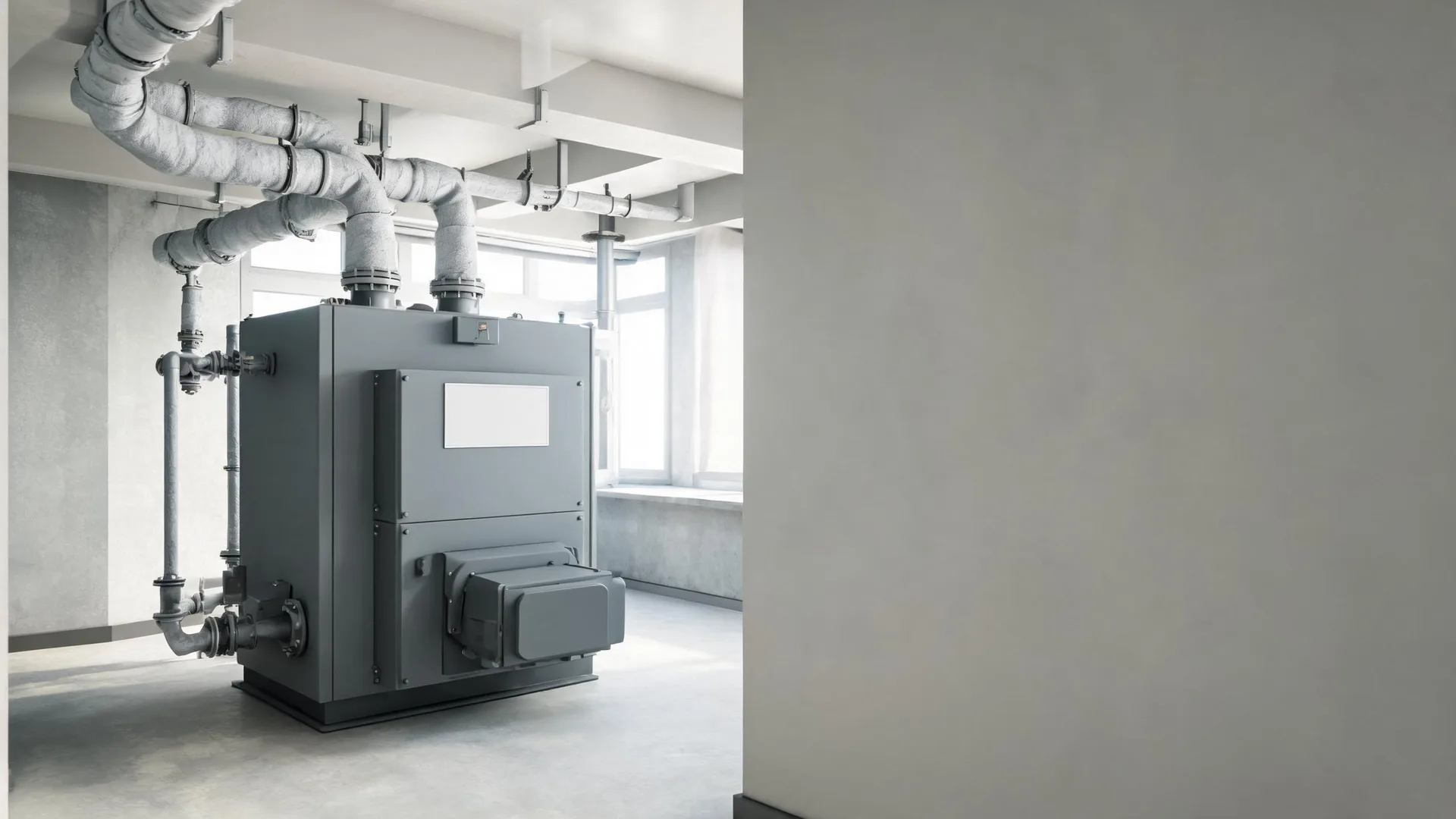
Oversized or undersized both cause real problems

A boiler that's too big satisfies the thermostat fast and shuts off, then starts again a few minutes later. That short cycling wears out the igniter and the circulator pump well before their time, and it leaves rooms farther from the boiler never quite warm. A boiler that's too small runs flat out and still can't keep up on the coldest nights. Right sized, it runs long, steady cycles that hold a room at temperature without wearing itself out doing it.

What you pay for a boiler installation comes down to more than the unit itself. The boiler has to be matched to the right venting for its type. A condensing boiler needs PVC or similar venting that can handle the moisture in its exhaust, run through a wall or up through the roof. A non-condensing boiler needs a metal vent that can take much higher flue temperatures. If the new unit's venting needs differ from what's already there, that's pipe and labor the old system never required. Piping near the boiler matters too. Some units need extra fittings to protect the boiler from returning water that's too cold, which otherwise causes condensation inside a non-condensing boiler over time. Controls add their own cost, since a modern boiler reads outdoor temperature and adjusts its output rather than just firing on and off. None of this shows up by looking at the old boiler. It shows up once someone traces the piping and vent back to see what the new one actually needs.

Half the homes in Steuben County were built in 1963 or earlier. A house that age was almost never built with a boiler sized for the windows, insulation or additions it has now. A room may have been added since, old windows swapped for new, insulation blown into walls that didn't have any before, and none of that shows up by looking at the boiler currently running. Installing a new one is the point to fix that mismatch, not carry it forward. The heat loss calculation works out what your house needs today, not what a house like it needed back when it was built.