



A row of illuminated white colonial houses along a road photographed at dusk.

Boiler Installation in Buffalo, NY

Tell us about the job

Takes about a minute. No obligation.

New system or replacementBoilerErie County, NY
Step 1 of 2

What ZIP code is the job in?

Half the homes in Erie County were built in 1957 or earlier. A boiler going into a house that old is going into piping and radiators that were likely sized for a different system entirely, maybe even the original one. The old boiler may have been oversized to begin with, which happened often, and a straight swap just carries that mismatch forward. Getting the new boiler sized to the actual house, not the one before it, is what decides how it runs for the next few decades.

A boiler in Erie County runs about eight months a year, October through May.

Pick a boiler built for that kind of run time, not just the lowest bid.

Eight months of work a year wears a boiler down faster here

Heat runs October through May
Winter nights average 19°F
45 winter storms from 2015 to 2024

Gas heats 86.8% of the homes in Erie County, nearly nine out of ten. Electricity comes in a distant second at 8.7%, with oil and propane barely registering. If your house is on gas now, a gas boiler is almost certainly the right call again. The piping, the venting, the gas line itself, all of it is already there and sized for that fuel. Switching to electric or propane means new infrastructure the house was never built for, on top of the cost of the boiler itself.

Size the new boiler to your house, not the old one

A new boiler should get sized for the house it's actually going into, not the one that was there before. That means a contractor looking at your piping and your radiators, not just pulling a number off the old unit's nameplate.

Find a contractor

Venting changes the job

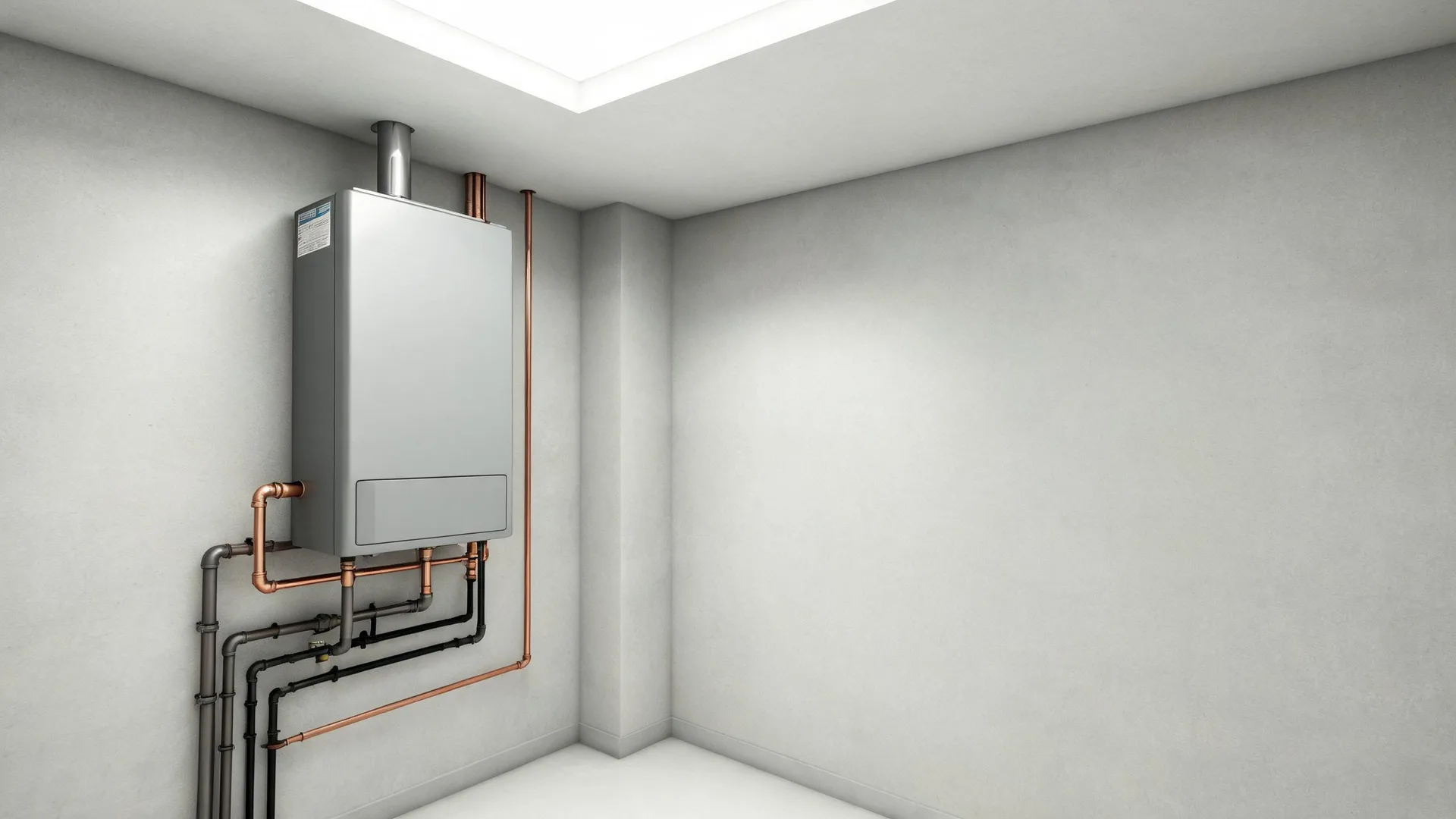
A boiler vents differently depending on how efficient it is. An older style sends exhaust up a chimney. A high-efficiency model vents through a wall with plastic pipe and needs a condensate line to drain the moisture it pulls out of the exhaust. That difference in venting means different materials and different labor, not just a different box on the floor.
The zones drive the rest

Every zone of heat, each loop of baseboard or each radiator circuit, needs its own valve or its own circulator pump wired into the control board. A house with more zones needs more of that hardware and more wiring to make them work independently. The boiler itself might be a similar price across jobs. What it takes to hook it to the rest of the house is where installations start to differ.

The old boiler does not get reused or moved to another house. Once it is disconnected, it gets drained, cut free from the piping and the flue, and hauled out. Most of it is scrap steel or cast iron, and a scrap yard will take it apart for the metal. Whatever refrigerant or chemical treatment was in the system gets handled separately, since that cannot just go in a dumpster. If the old unit ran on a chimney, that chimney either gets capped or gets lined for the new venting, because an unused flue can pull cold air into the house. The spot where the old boiler sat usually needs some patching, a gas line capped or rerouted, old wiring cleaned up, before the new one goes in. None of that is optional work. It is part of taking the old system out for good, not just setting a new one next to it.

A boiler doesn't sit outside, but an outage still takes it down, and Erie County loses power more than most places. The county logged 329 severe weather events between 2015 and 2024, from 241 windstorms to 45 winter storms with heavy snow and ice. Nine tornadoes touched down in that same stretch. Statewide, 11% of households went at least a day without power in 2024. A gas boiler still needs electricity to run its controls and circulator pumps, so when the power goes, so does the heat, even with gas in the line. Worth asking a contractor about a battery backup or a manual transfer switch for a generator, especially heading into a Buffalo winter.