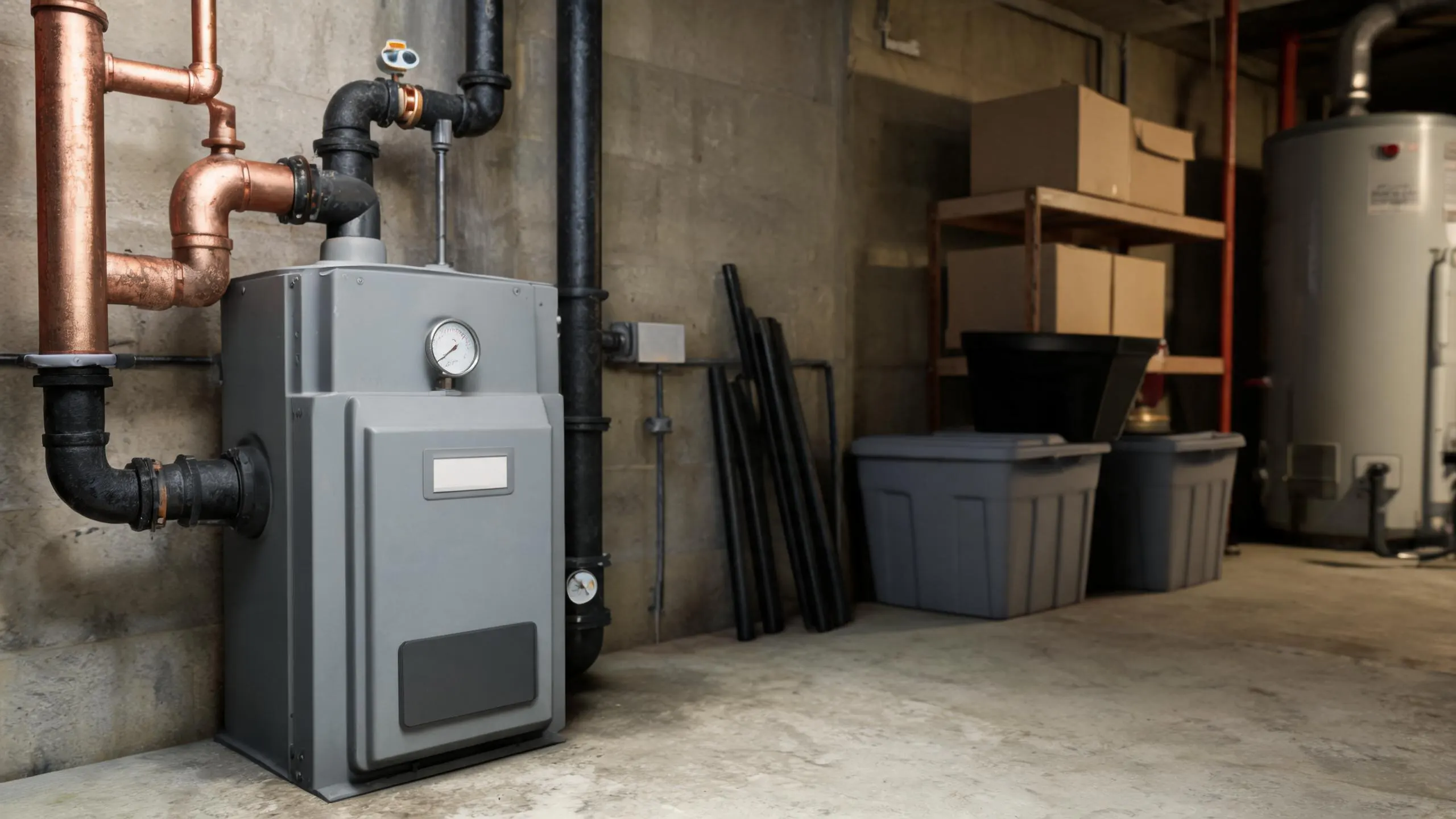





A gray boiler with copper and black iron pipe connections stands against a concrete basement wall, with a water heater and storage shelving visible in the background.

Boiler Installation in Binghamton, NY

Tell us about the job

Takes about a minute. No obligation.

New system or replacementBoilerBroome County, NY
Step 1 of 2

What ZIP code is the job in?

Broome County saw 314 severe weather events between 2015 and 2024. Most of that was wind, 248 damaging wind events, with 39 hail storms and 3 tornadoes mixed in. Add 18 winter storms with heavy snow and ice, and you've got weather that knocks out power on a regular basis, not a rare year. Statewide, 11% of households went at least a full day without electricity in 2024. A boiler needs power to run its igniter and circulator pump even though it burns gas, so when the power goes, so does the heat unless you've planned for that.

Gas heats 59.4% of homes in Broome County.

A new boiler here most often means swapping in another gas-fired unit, not rethinking the fuel.

Heat runs September through May on some of the priciest power in the country

Climate zone 5A
Heat runs September through May
Winter nights average 18°F
Have it in before SeptemberHeat runs nine months here, and a boiler put in during August never costs you a cold week waiting.

Half the homes in Broome County were built in 1958 or earlier. A house that age wasn't built around the boiler going into it now, it was built around whatever heated it decades ago, and the pipes, radiators or baseboards still trace that original layout. Installing a new boiler means matching it to that existing system, not just setting a new box where the old one stood. Get the sizing wrong for the radiators or the loop lengths already in the house and the boiler will short cycle or struggle to keep rooms even. Whoever installs it needs to look at what's actually running through your walls now, not just what's standard for a house built today.

Plan for the power to go out before the boiler goes in

Ask whoever installs it how the boiler keeps running without power, and what that costs to add now versus later. A battery backup or a generator hookup is a decision made at install, not after the lights go out and the house goes cold with them.

Find a contractor
A man in a cap, dark T-shirt and tan work pants carries a canvas tool bag up wooden porch steps toward a gray front door, with a potted shrub beside the entry.

The old boiler doesn't get reused

A boiler that's being replaced gets drained, disconnected from the gas line and the flue, and hauled out. Cast iron sections are heavy, and most installers break the unit down to get it out of a basement or a tight mechanical room. None of it goes back in, even the parts that still looked fine.
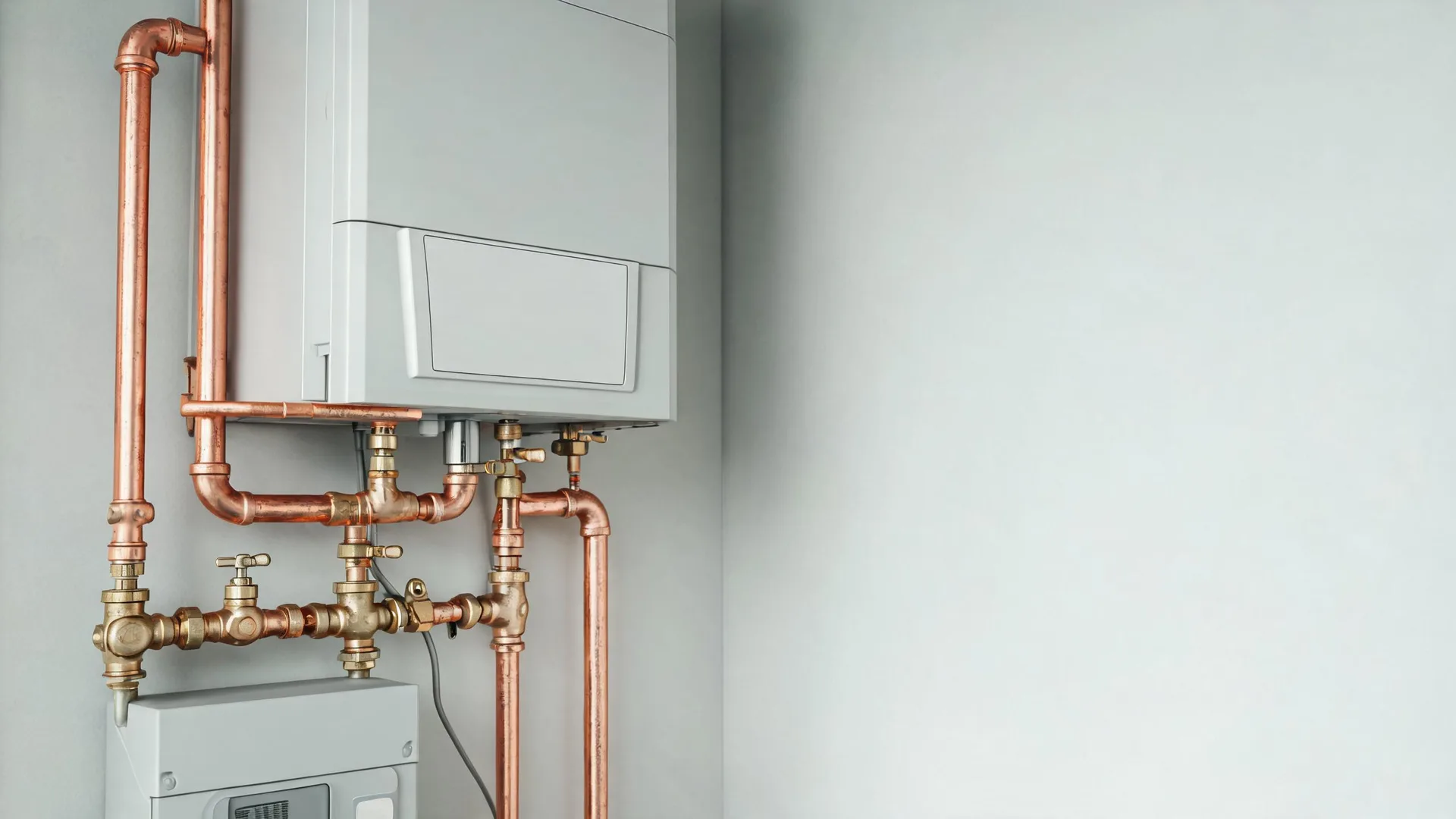
The venting and gas line get checked, not just swapped

A new boiler often needs different venting than the one it replaces, especially if the old one vented into a chimney shared with something else. Whoever installs it has to confirm the flue still works for what's left using it, and that the gas line is sized for the new unit's input. Skipping that step is how you end up with a boiler that's fine but still isn't drafting right.

The label on a boiler lists an AFUE rating, and that number tells you how much of the fuel it burns actually turns into heat for the house. The rest goes out the flue as exhaust. A boiler with a higher rating pulls more heat out of the same flame before letting the exhaust go, usually by running a second heat exchanger that catches warmth from the exhaust before it leaves. That second stage is why high efficiency boilers vent through PVC pipe instead of a metal flue, the exhaust is cool enough by the time it leaves that it doesn't need metal. A lower rated boiler sends more of that heat straight out the vent, which is simpler to install but means more of what you're paying for leaves the house unused. Neither style is broken or wrong, they just trade installation complexity for fuel burned.

Nine months of heat a year is a long season for any boiler to carry. Homes here run it from September through May, which means more hours firing, more cycles on the circulator pump, more chances for a small issue to turn into a cold morning. That's most of the year on, not a few months in the dead of winter. A boiler sized and installed right for this kind of run time holds up. One sized for a shorter season somewhere else won't see the same years out of it here. This is the argument for buying on fit, not on the lowest number on the quote.