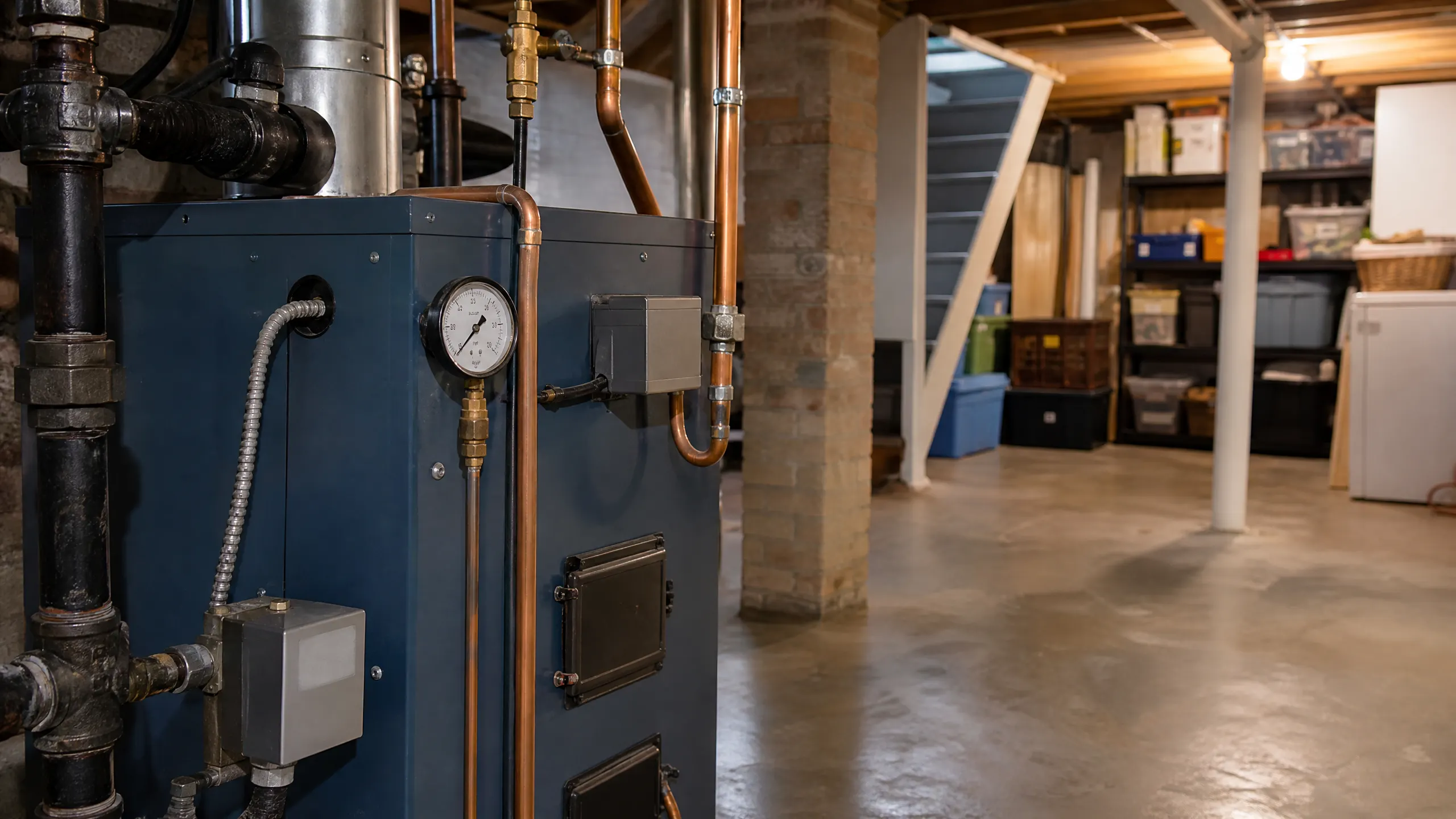



A blue boiler with copper pipes and a pressure gauge mounted on its front panel, installed in an unfinished basement used for storage.

Boiler Installation in Auburn, NY

Tell us about the job

Takes about a minute. No obligation.

New system or replacementBoilerCayuga County, NY
Step 1 of 2

What ZIP code is the job in?

A boiler in Cayuga County runs about eight months a year, from October through May. That's most of the calendar spent cycling on and off, heating water, pushing it through the system. Overnight lows average 19°F across December, January and February, colder than what most of the country sees, so the boiler is working against real cold for most of its run. Between 2015 and 2024 this county saw 32 winter storms, counting heavy snow, ice and blizzards, and each one means hours of steady, hard operation right when the system can least afford to struggle. A boiler sized for this load has to match the house it's going into now, not whatever was installed decades ago.

Half the homes in Cayuga County were built in 1958 or earlier.

A boiler going into a house that old needs sizing for the house as it is now, not for whatever stood in that spot decades back.

Gas heats most homes here, which is why most boilers getting replaced are gas boilers

47.8% of homes heat with gas
Climate zone 5A
Heat runs October through May

Natural gas ran $16.03 per million Btu across New York in 2024, among the higher prices in the country. A boiler that's sized right for the house burns less to put out the same heat, and at that price the difference shows up on every bill. An old boiler running too big or too small for the house wastes gas doing its job, and that waste costs more here than it would somewhere with cheaper gas. Sizing the new system to the house, not to whatever was in that spot before, is what keeps the cost down for as long as it runs.

Size it for this house, not the last one

Eight months of heat a year and a storm count like this one doesn't leave much room for a boiler that's guessing at its size. Get the new one matched to the house, not the spot where the old one sat.

Find a contractor

Sizing the house, not matching the old unit

A boiler has to be sized to the heat loss of the house it's going into, the walls, the windows, the square footage being heated. A contractor works that out room by room rather than just swapping in something close to the old unit's output. Pick one too small and it runs constantly without catching up on the coldest days. Pick one too big and it short cycles, turning on and off fast, which wears the burner and the heat exchanger before their time.
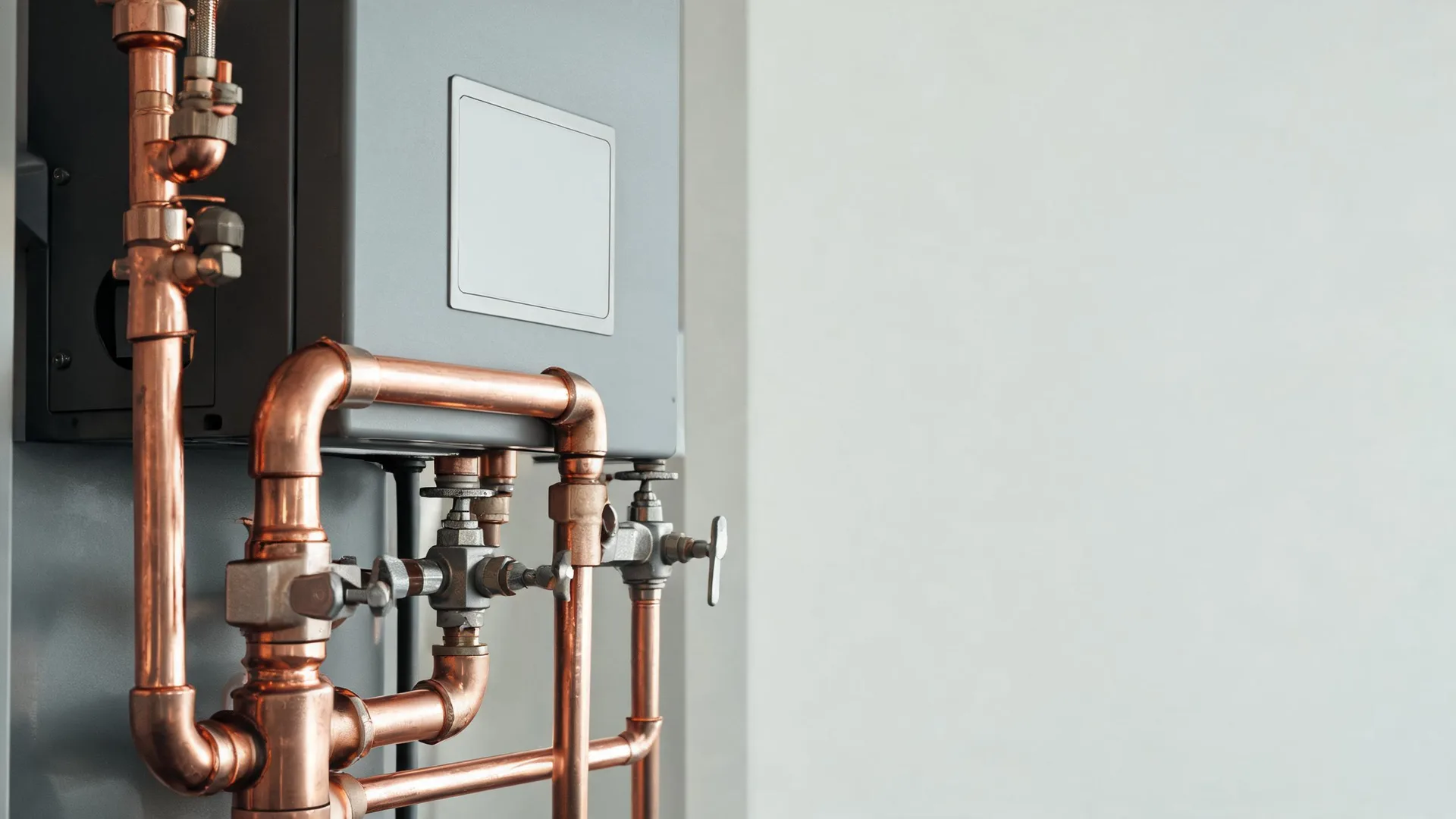
What's connected to it changes the job

The boiler itself is one piece of the installation. Venting has to be run correctly for the fuel type, the near boiler piping has to be done to spec, and if the system uses an indirect water heater or multiple heating zones, that adds controls and valves to the job. Radiators or baseboard that stayed from the old system need checking too, since they have to be matched to what the new boiler is putting out. A straightforward swap into the same footprint with the same venting is a different job than one where the piping or venting has to be reworked.

An old boiler doesn't come out all at once. The water gets drained first, from the unit and from the near boiler piping, before anything gets disconnected. Gas and water lines come off next, then the vent connection, then the electrical. Cast iron boilers are heavy enough that they sometimes have to be broken down in place to get them out the door. Once it's clear, a contractor checks what's left behind: the chimney liner if the old unit vented into one, the condition of the existing piping, whether the expansion tank and circulator are worth keeping or need to go with the old boiler. Some of that stays and gets reused. Some of it doesn't owe anyone anything and comes out at the same time, even though nobody asked it to.

Cayuga County falls under zone 5A in the 2021 energy code, a cool, humid climate where heating carries most of the load. Any gas boiler installed here now has to meet that standard. For a gas-fired hot water boiler, that means turning at least 84 percent of the gas it burns into heat over the winter, a requirement that's been in place for units built since January 2021. That floor rules out the older, less efficient models some contractors might otherwise have on hand. It also means a homeowner comparing options isn't comparing against units that fall below it, since none of them are allowed to.