A white picket fence runs along a mowed grass lawn in front of a row of gray clapboard houses with dark shingled roofs, framed by overhanging tree branches under an overcast sky.

Boiler Installation in Albany, NY

Tell us about the job

Takes about a minute. No obligation.

New system or replacementBoilerAlbany County, NY
Step 1 of 2

What ZIP code is the job in?

Eight months of heat, year after year

Boilers in Albany County run from October through May, and overnight lows average 17°F through December, January and February. A boiler installed here needs to hold up to that stretch every single year, not just get through a cold snap.


Get the sizing right at install

A boiler too small for the house will run constantly trying to keep a home warm through a long, cold winter. One too large will short cycle, turning on and off more than it should. Either way wears the system down faster. Installation is the one chance to match the boiler to the house before years of Albany winters start working on it.

Half the homes in Albany County went up in 1964 or earlier.

An old boiler in an old house got sized for that house once. A new one needs the same care.

Eight months of heat is a long time to run on a system that is failing

Heat runs October through May
Climate zone 5A
Winter nights average 17°F

Gas heats 64.5% of occupied homes in Albany County. If that's what's already running the house, a new boiler that burns gas too is the straightforward call. The gas line, the venting, all of it is already there. Switching fuel types at installation means new venting, maybe new gas or electrical work, and a contractor who has to plan for that before the first pipe comes out. Staying with what the house already runs on keeps installation about sizing the boiler right, not rebuilding how the house gets its heat.

The boiler you install now is the bill you pay all winter

Gas here runs $16.03 per million Btu, well above what homes in most states pay. A boiler sized wrong for the house burns more of that gas than it needs to, all winter long. Getting the sizing right at installation is what keeps that bill as low as the house allows.

Find a contractor
A man in a gray t-shirt, tan work pants and brown boots, seen from behind, climbs steps toward a dark front door while carrying a canvas tool bag holding a tape measure and screwdrivers, with a potted flowering shrub beside the entry.

The rating tells you what the boiler does with the fuel it burns

An efficiency rating on a boiler says how much of the fuel it burns turns into heat for the house, and how much goes out the flue. A boiler with a higher rating pulls more heat out of the same fuel it burns. The rating says nothing about how big the boiler is or whether it fits the house. A high-rated boiler and a low-rated one can heat the exact same size home, or wildly different ones.

A high rating on the wrong size boiler won't show up on the bill

Sizing decides how hard the boiler works to heat the house. A high efficiency boiler that is too big for the home will short cycle, turning on and off more than it should, and a boiler that cycles like that loses some of the advantage the rating promises. The rating is a ceiling on what the boiler can do. Correct sizing is what gets the house close to it.

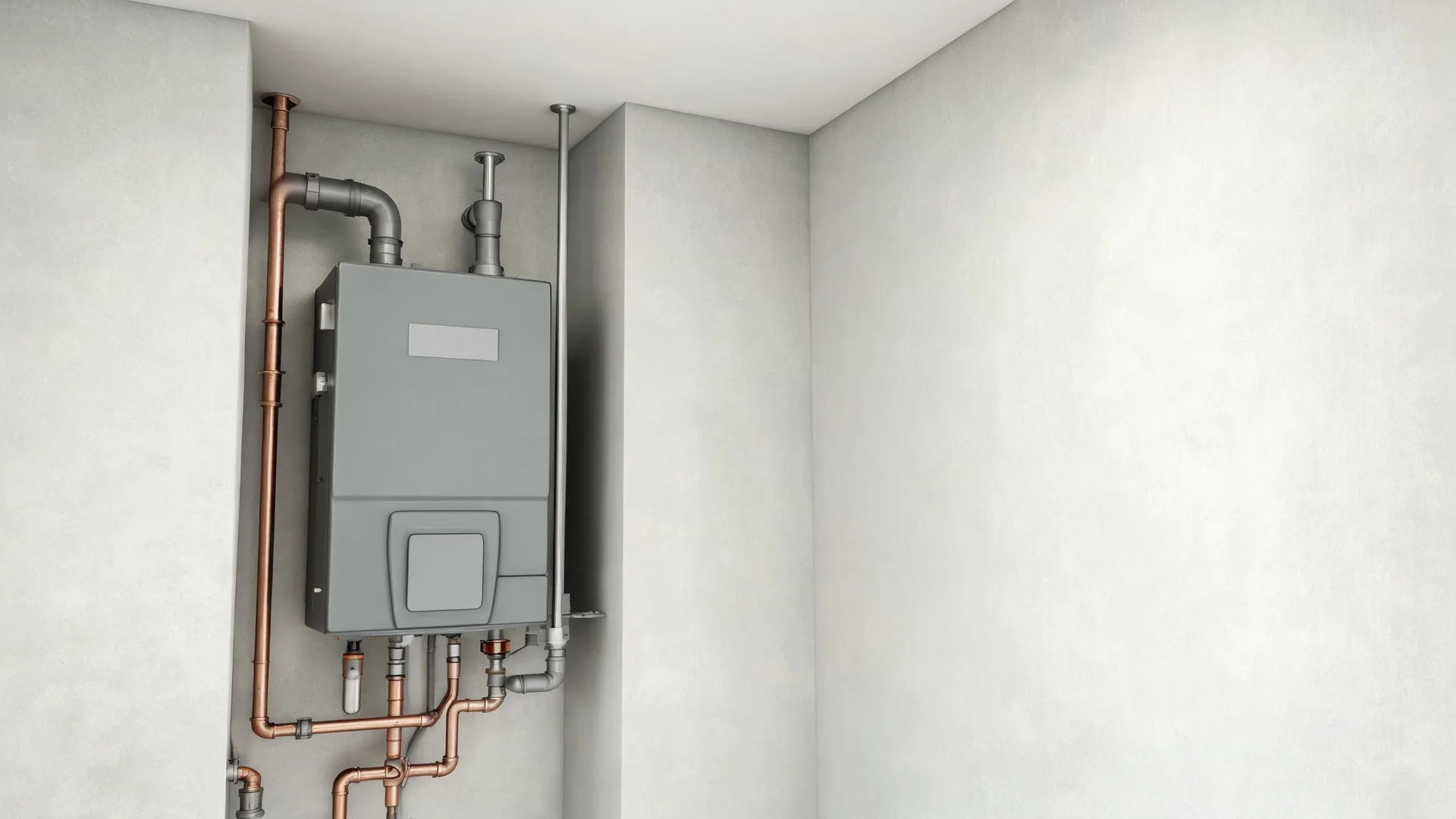
The old boiler has to come out before the new one goes in, and that means draining the system first. Water sitting in the boiler and the lines has to go somewhere, and a contractor will run it out through a hose or a drain before disconnecting anything. The gas line gets capped off the old boiler and the flue connection comes apart. If the boiler is cast iron, it's heavy, and it usually gets broken down or cut into pieces to get it out the door. From there it's scrap metal, and most of what's inside it, the iron, the copper, the steel jacket, gets recycled rather than landfilled. None of that old equipment carries over to the new install. New venting, new connections, a new control setup, all of it gets built fresh around the boiler going in.

Once the old boiler is out, a contractor sets the new one, levels it, and starts tying in the pipes. The supply and return lines connect to the house's heating loop, the gas line gets run to the new unit, and the flue gets connected to carry exhaust out. Electrical goes in next, power for the controls and the circulator pump that moves water through the system. Before any of it gets closed up, the system has to be filled with water and purged of air. Air trapped in the lines makes for cold spots in radiators or noisy pipes once the heat is running. A contractor will run the boiler through a full cycle, heating up and shutting off on its own, before calling the job done. That's the only way to see it behave the way it will all winter.