Nine months of runtime
A furnace in Sullivan County runs from September through May. That's nearly three-quarters of the year the burner, the blower and the igniter are cycling on and off, trying to keep up with the cold.

Takes about a minute. No obligation.
A furnace in Sullivan County runs from September through May. That's nearly three-quarters of the year the burner, the blower and the igniter are cycling on and off, trying to keep up with the cold.
A furnace that runs this much wears its parts sooner than one that gets a few months off. When something acts up, it pays to find the actual cause rather than patch the symptom, since the same strain that caused it will still be there next week.

NOAA nClimDiv, 1991–2020 normals
A furnace that short cycles, turning on and off in quick bursts, usually has a clogged filter, a cracked heat exchanger, or a flame sensor that needs cleaning.
Ignoring short cycling wears out the blower motor and the ignition system faster, turning a simple fix into a bigger repair.




A furnace that isn't running right still burns oil the whole time it's acting up, at $23.11 per million Btu. A clogged filter or a dirty burner makes it work harder to put out the same heat, and that shows up on the oil bill before anything else. Waiting out a cold spell before calling someone just means paying for heat the furnace isn't delivering well. Getting it looked at sooner stops that waste from running up month after month.
A furnace here doesn't get much time off. Whatever's wearing on it now will still be there after a patch job. Getting the actual cause diagnosed is what makes a repair last the rest of the winter.
Find a contractor
A furnace that's struggling still has to meet the thermostat setting, so it runs longer to get there. That extra runtime is what turns a small problem into a bigger one. A cracked heat exchanger gets more cycles of expansion and contraction, so the crack spreads. A flame sensor coated with a thin layer of oxidation gets a few more hours of flame to build that layer up until it stops sensing altogether. A blower motor with a failing bearing keeps spinning under load instead of getting a rest between cycles, and that's what takes it from noisy to seized. None of these get better on their own while the furnace keeps firing. The only thing that changes is how much is left to repair by the time someone opens it up.
Look at the thermostat first. Make sure it's set to heat and the setting is above room temperature. Check the furnace switch, the one that looks like a light switch near the unit, and make sure nobody bumped it off. Check the filter by pulling it out and holding it to a light. If you can't see light through it, that's enough to choke the airflow and cause real problems. Check the breaker it's on, since a tripped breaker will shut the whole system down with no warning at all.
Don't open the burner compartment or touch anything near the flame sensor or igniter. Don't try to relight a pilot on a furnace that uses one unless you know the exact steps, since getting it wrong can leave gas where it shouldn't be. If you smell anything like rotten eggs, leave the house and call the gas company before anyone calls about the furnace itself. A furnace that trips its breaker repeatedly, or that you've reset more than once, needs a tech before you try again.
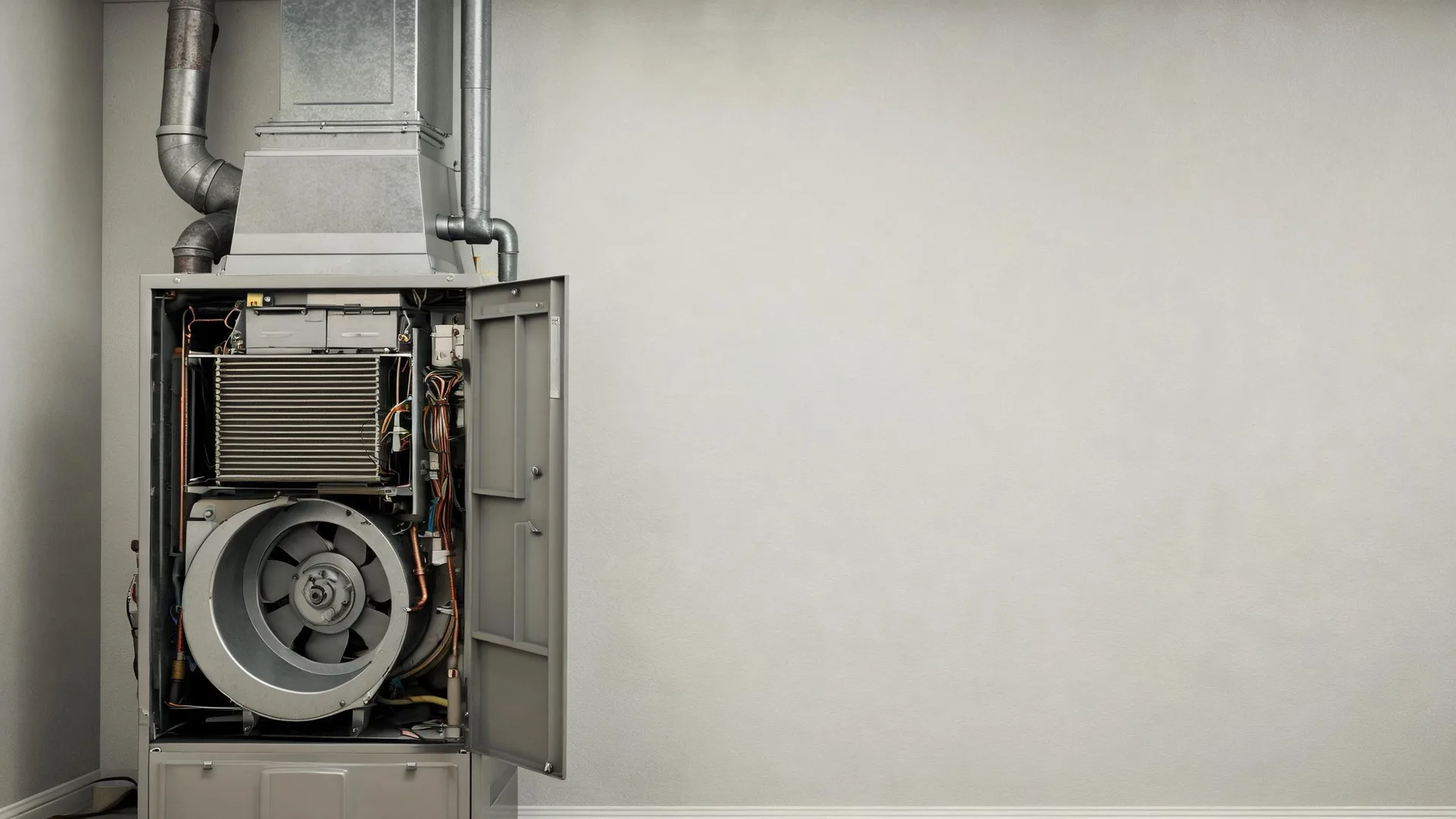
Most furnace failures trace back to a handful of parts, and they tend to go in the same order every time. The igniter is usually first, since it heats up and cools down every single cycle and that stress eventually cracks it. The flame sensor goes next, coated slowly by the same flame it's watching until it can't tell the burner is lit. Blower motor bearings wear from spinning hours at a time, and a failing one gets louder for weeks before it seizes. A cracked heat exchanger is the one that matters most, because it's caused by the same heating and cooling cycle as everything else, just repeated enough times that metal fatigues. None of these fail from one bad night. They fail from doing their job over and over until something gives.
A repair is worth making when the parts around the problem are sound and the furnace is doing its job apart from whatever's wrong right now. A cracked heat exchanger is the exception, since that's not a part repair, that's the furnace telling you it's done. Age matters less than what's already failed. A furnace that's needed three different repairs in two years is spending its life in the shop, and the next part to go is anyone's guess. A furnace that's run clean for years and just had one part quit is a different situation entirely. The question worth asking isn't how old it is, it's whether this is the first thing to break or the latest in a line.