

Heat pump vs furnace in St. Lawrence County, New York

Price Both Options

Quotes from pros near you

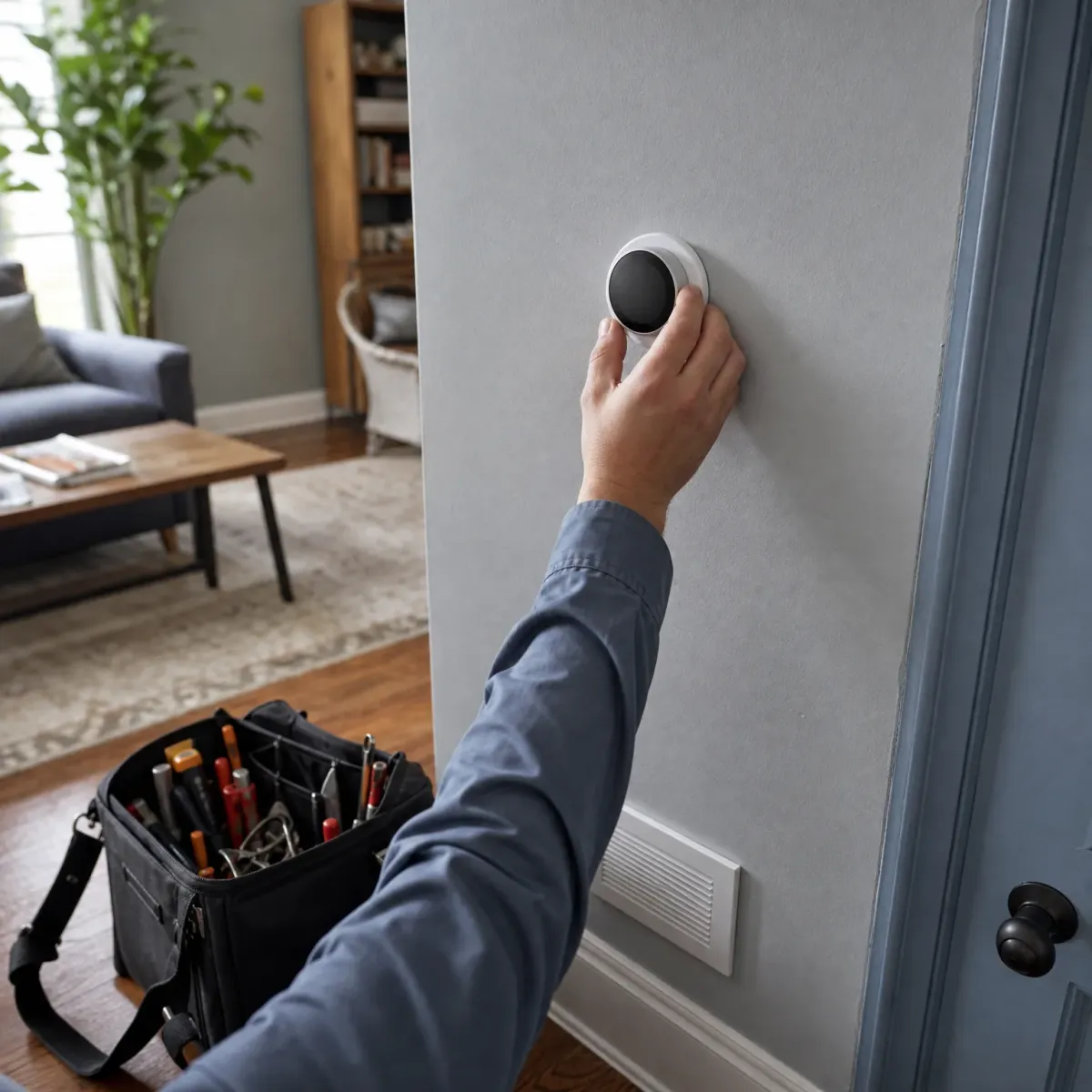
A person's arm in a blue shirt reaches up to adjust a round wall-mounted thermostat on a gray interior wall, with an open tool bag on a wood floor and a living room with a sofa and houseplant in the background.

Tell us about the job

Takes about a minute. No obligation.

New system or replacementSt. Lawrence County, NY
Step 1 of 3

What kind of equipment?

Which costs less to run in St. Lawrence County?

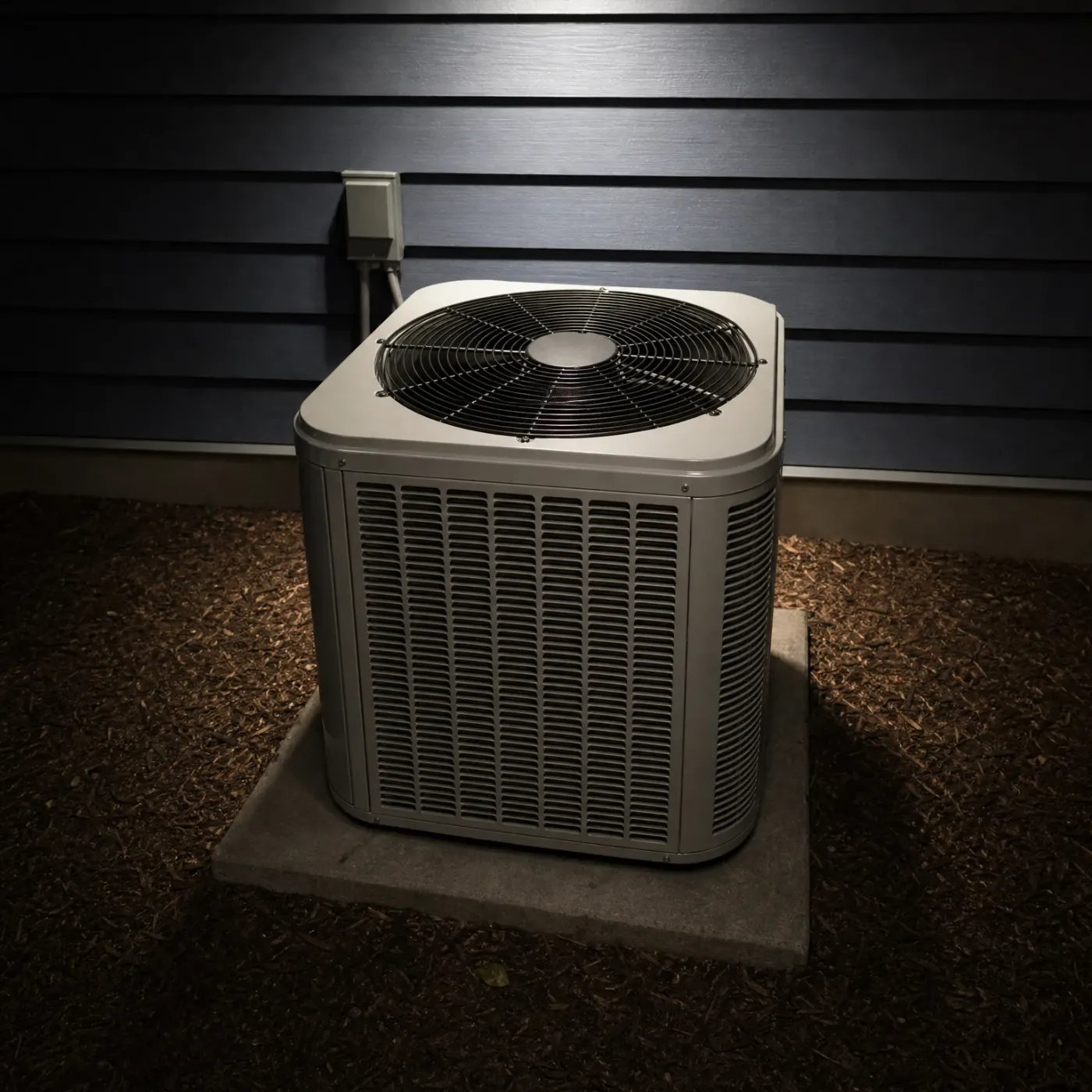
An outdoor condenser unit with a top-mounted fan grille sits on a concrete pad surrounded by wood mulch against dark horizontal siding, with a small electrical box on the wall above.

Heat pump

To heat your home here$3.26per 100,000 Btu

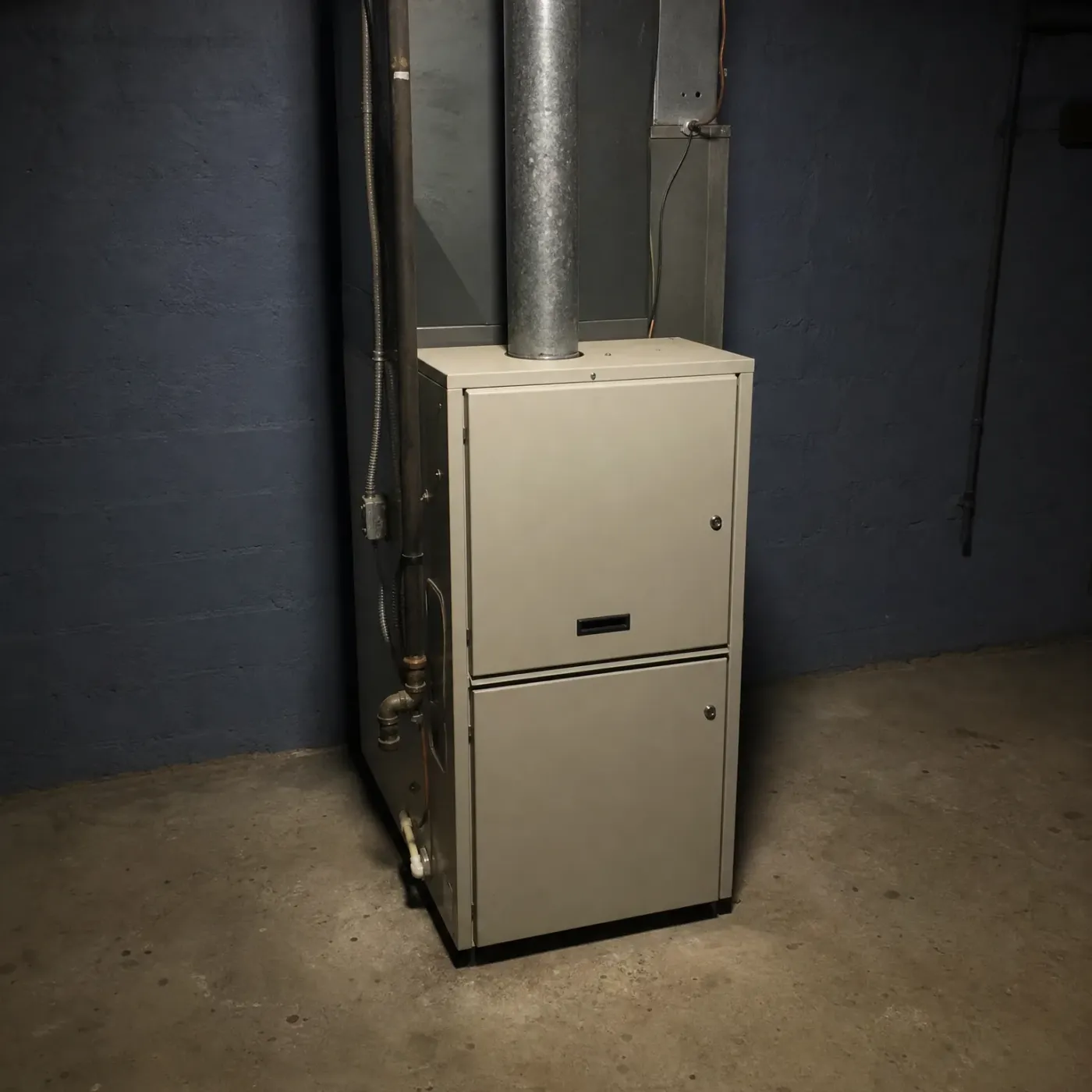
A beige two-panel furnace stands against a dark blue-gray painted block wall in a basement, with a galvanized metal flue pipe and ductwork rising from its top and flexible conduit and pipes along the left side.

Furnace

To heat your home here$2.00per 100,000 Btu

At New York's gas and electricity prices, a gas furnace makes the same heat as a heat pump for at least 38% less.

Btu stands for British thermal unit, the standard measure of heat energy.

Where does a heat pump shine?

  • Steady, even comfort

    It eases up and down with the weather. There are fewer swings between too warm and too cool.

    A dimly lit living room with a gray armchair holding an open book and mug, a lit table lamp by a window showing snow outside, built-in navy shelving, a fireplace with visible flames, and a golden-colored dog sleeping on a gray rug.
  • Heats and cools in one system

    Winter and summer are covered by the same outdoor unit. That's one machine to service instead of two.

    A living room with a cream sofa holding grey and navy cushions and a grey fringed throw, a rustic wooden coffee table with a mug and wooden bowl, a dark grey panelled door, built-in shelves with books, a large window looking onto a green garden, and a table lamp beside a wooden chair.
  • No gas line, nothing burning in the house

    It moves heat instead of making it from fire. That means no combustion, no flue and no gas bill for heat.

    A grey stovetop kettle sits on a black glass induction cooktop set into a light grey island counter, with dark blue cabinets, potted herbs, cutting boards and a window showing green foliage behind.

Where does a furnace shine?

  • Strong, steady heat in hard cold

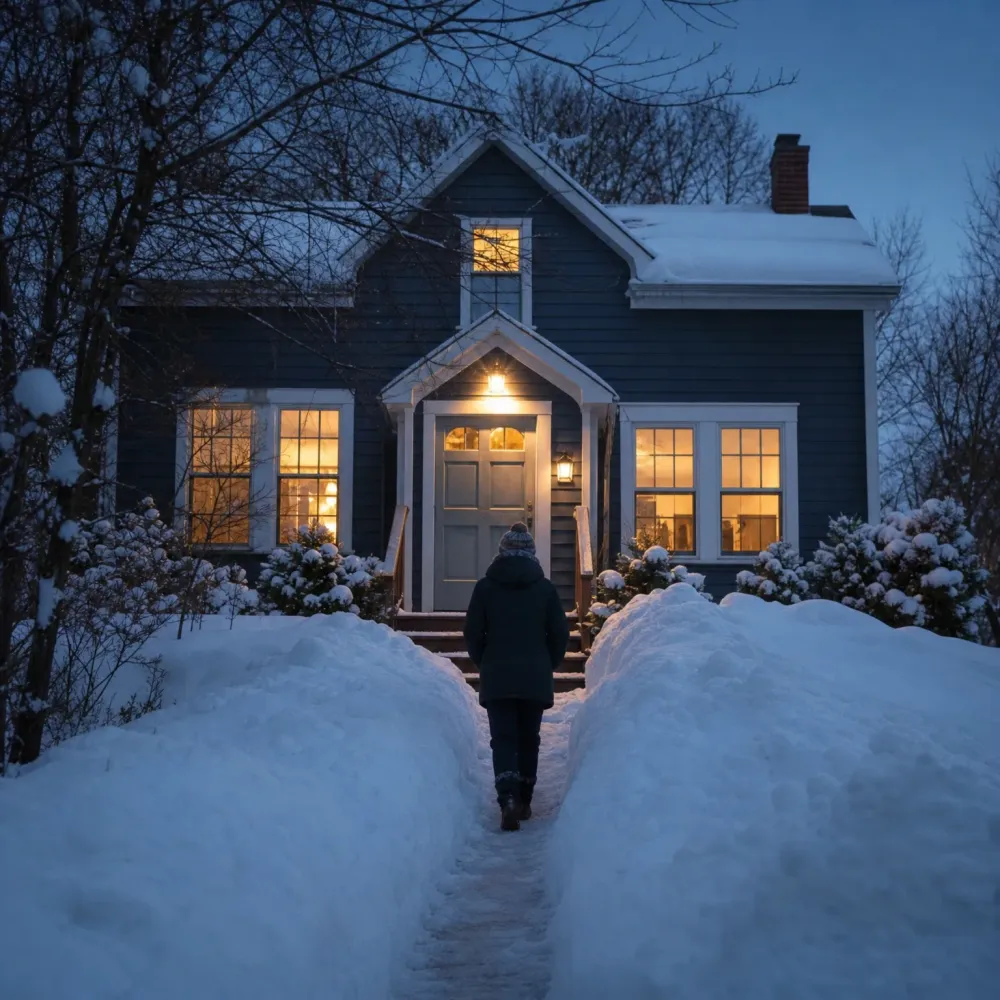
    Winter nights here average 11°F, and a furnace keeps putting out the same hot air no matter how far the temperature drops. You won't notice any difference in comfort between a mild night and the coldest one of the year.

    A person in a dark winter coat and knit hat walks up a narrow shoveled path between deep snowbanks toward a dark blue clapboard house with lit windows and a porch light at dusk.
  • Fast, strong heat on demand

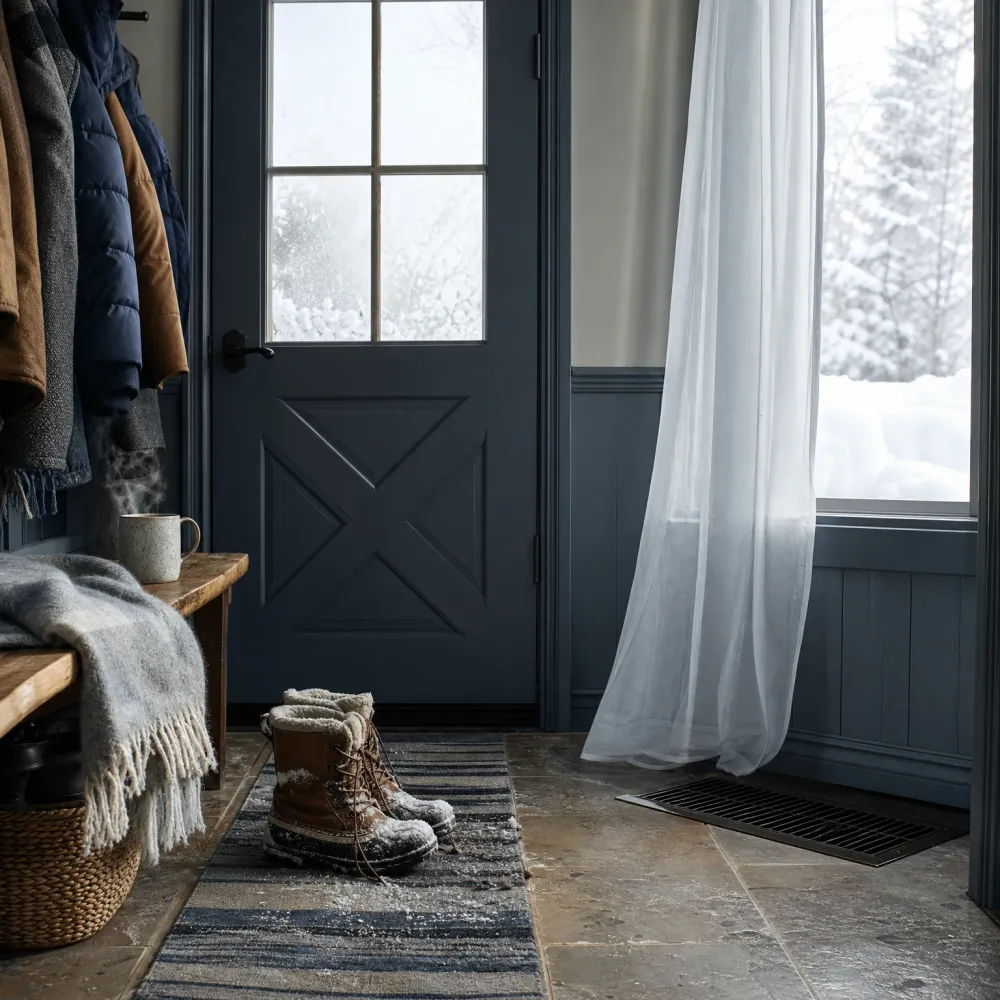
    A furnace pushes out hot air within minutes of switching on. A cold house warms up fast.

    Mudroom entry with a dark blue door and wainscoting, coats on hooks, a wooden bench with a gray fringed throw and mug, snow-dusted winter boots on a striped rug, a floor vent, and a sheer-curtained window showing snow outside.
  • Proven, simple, easy to get serviced

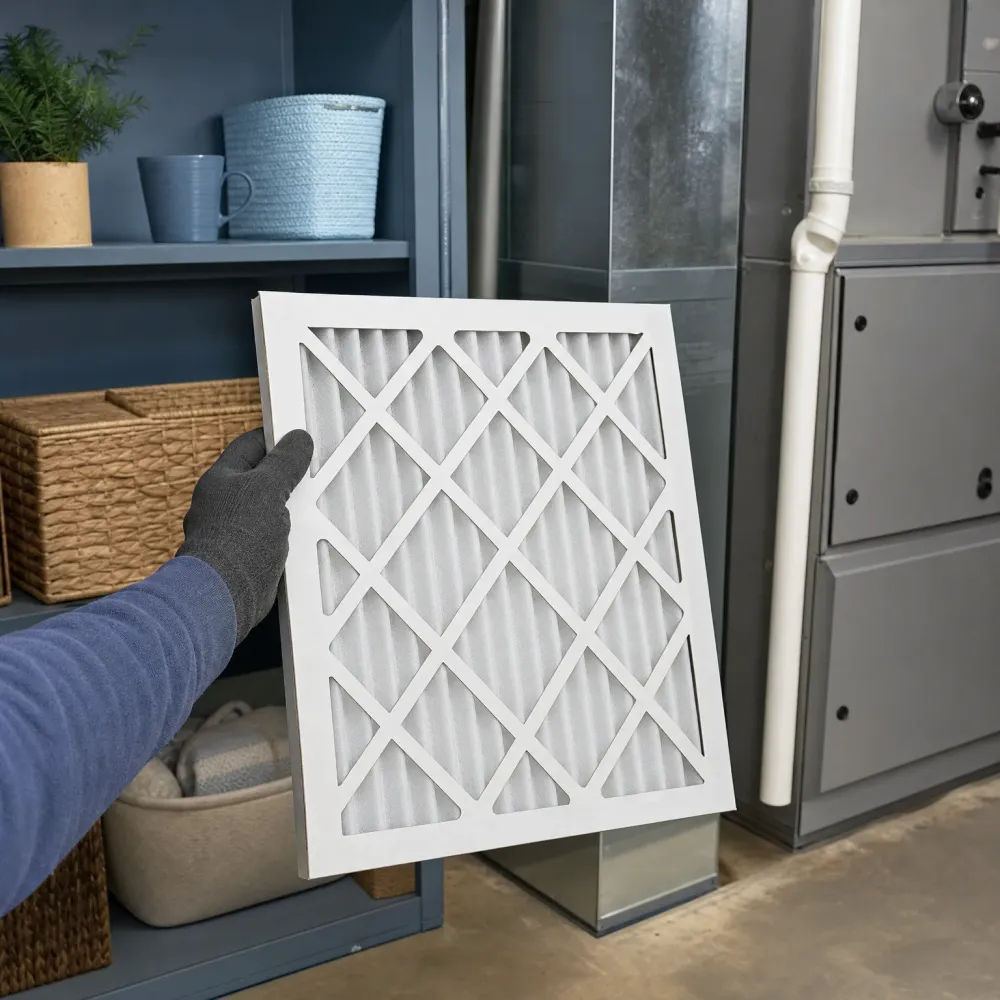
    The design is simple and well understood. That keeps service calls short.

    A gloved hand holds a white pleated air filter in front of a furnace and ductwork, with shelves holding baskets and a potted plant on the left.

What your winter actually does to a heat pump

Your winter low here averages 11°F. A standard heat pump starts losing ground below 40°F and often needs backup heat below about 35°F. That means almost the entire heating season here, nine months of it, is working against the machine rather than with it.

About 160 nights a year drop to freezing or below, more than half the nights you'll run heat at all. Every one of those nights is already past both of the marks where a standard heat pump struggles. Twenty-five nights a year reach 0°F or below, and that's where backup heat tends to carry a real share of the load, not just fill in at the edges.

There's a real answer to this, not just a warning. ENERGY STAR's Cold Climate heat pumps are tested to hold at least 1.75 units of heat per unit of electricity at 5°F, and keep 70 percent of their 47°F capacity at that same temperature. Field tests of prototype cold-climate units in occupied homes back this up: backup heat covered only a small share of the heat needed between 0°F and 35°F, and running on backup alone was rare even above 0°F. A cold-climate model is a different purchase than a standard heat pump in a county like this one.

So the question isn't whether a heat pump can work here. It's whether you're buying the version built for this kind of winter.
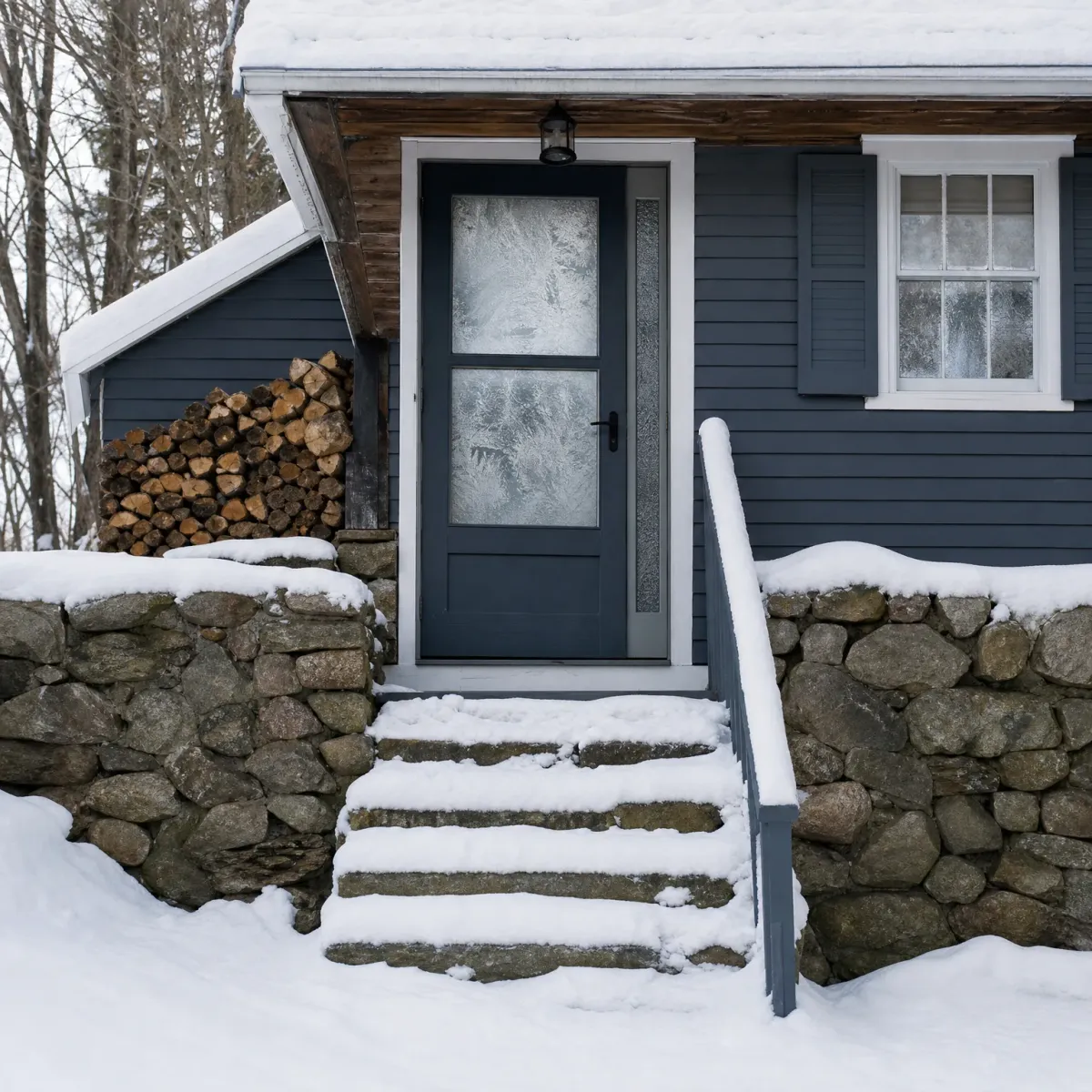
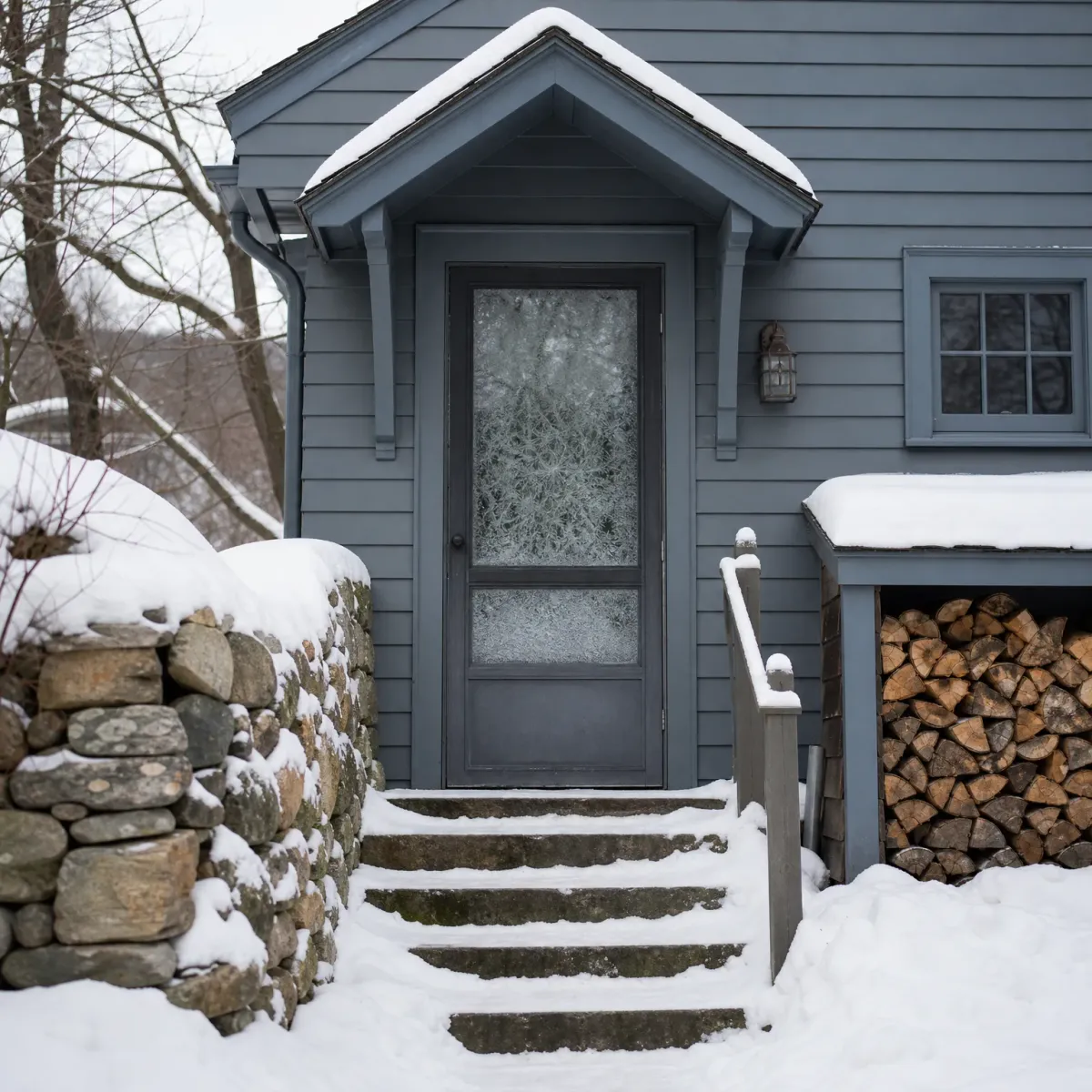
Snow-covered stone steps with a metal handrail lead to the dark blue entry door of a gray clapboard house, with a stacked woodpile and stone retaining walls on either side.

What it costs to run, and what that means for your choice

A gas furnace makes the same heat here for $2.00 per 100,000 Btu, against $3.26 for a heat pump, with nothing added for backup heat on the coldest nights. An oil furnace lands in between at $2.78. Gas is the cheapest of the three to run, then oil, then electricity.

That math only applies if gas is actually an option at your address. One in three homes in this county heat with utility gas. Almost one in four heat with oil, and close to one in five with propane, both more expensive than gas but still cheaper to run than a standard heat pump. If your house isn't on a gas line, the furnace choice is really between oil, propane and electric resistance, and a cold-climate heat pump's running cost starts to look better by comparison, especially once you count what it gives you in summer.

A furnace only heats. For the two months of the year you'd run cooling here, July and August, it does nothing, and you'd need a separate air conditioner. A heat pump runs both, one system instead of two, which changes the comparison even if you've decided running cost matters most.

If your house already has a gas line, a gas furnace costs less to run and handles the cold without a second thought. If it doesn't, or if you want one system for both seasons, a cold-climate heat pump is built for exactly the winters this county has. A standard heat pump is not the right match for 11°F nights. A cold-climate one is a different machine, and the field data backs that up.

Sources: NOAA nClimDiv · NOAA 1991–2020 seasonal normals · PNNL Building America guide · PNNL-37127 field study · ENERGY STAR product criteria · EIA SEDS 2024 · 10 CFR 430.32 · Census ACS 2020–2024

Snow-covered stone steps lead to a gray clapboard house with a frosted glass storm door under a gabled entry hood, flanked by a snow-topped stone wall and a woodshed stacked with split firewood.

Common questions about heat pumps and furnaces

  • Can a heat pump heat a house through a New York winter?

    Yes, but check what the system is rated for. A conventional heat pump puts out less than its rated capacity below 40°F, and only a fraction of that rating once it drops into the teens, which happens here. A cold-climate model is built to keep most of its capacity down to 5°F, so the answer depends on which kind is going into the house.

  • Do I need backup heat with a heat pump here?

    Most likely, yes. A standard heat pump often needs backup heat once it's below about 35°F outside, and your average overnight low here runs 11°F in December, January and February. A heat pump carrying the ENERGY STAR Cold Climate rating holds up better in deep cold, but check what backup, if any, comes with the system you're looking at.

  • Can I keep my furnace and add a heat pump?

    Yes, that's a standard setup, usually called a dual-fuel or hybrid system. The heat pump carries the house most of the year, and the furnace takes over when it gets too cold for the heat pump to keep up or run efficiently, which here is below about 35°F on roughly 160 nights a year. The furnace already in the house can often be the one that stays.

  • What if my house heats with oil or propane?

    Oil and propane both cost more to run here than gas, and oil comes in just under the heat pump while propane runs higher. An oil furnace makes 100,000 Btu of heat for $2.78 here against $3.26 for a heat pump figured the same way, so if your house already heats with oil, replacing it with a heat pump alone would raise your running cost. Propane isn't priced out in the running-cost band above, but at $34.35 per million Btu it costs more than electricity, gas, or oil here, so a propane furnace is worth comparing against a heat pump for your own house.