




What winter here actually asks of a heat pump
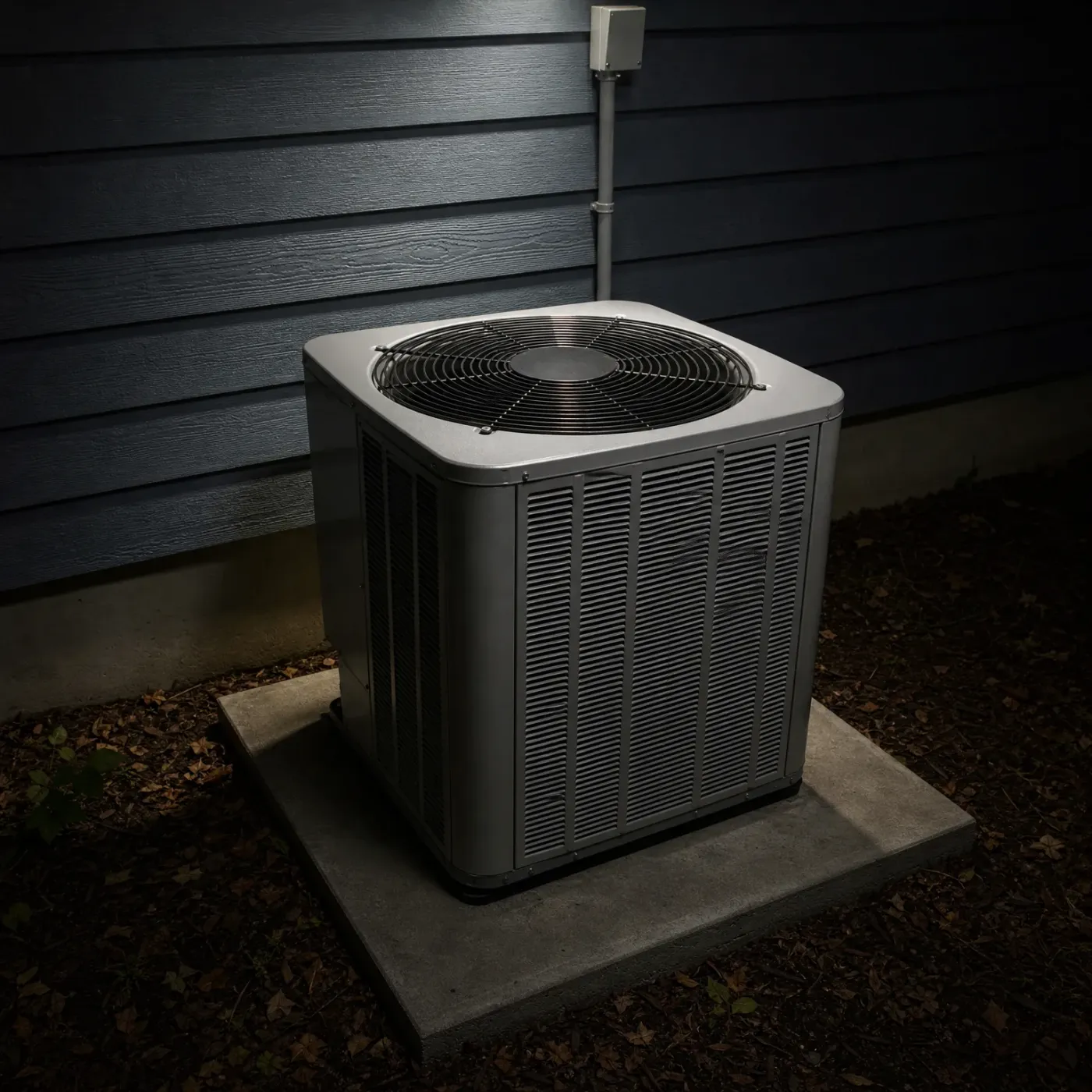
Your winter is long and mild, not long and brutal. Heat runs eight months a year here, October through May, and the average overnight low across December, January and February is 26°F. Nights drop to freezing or below about 95 times a year, but almost none of those nights go anywhere near 0°F, fewer than one a year. That matters because of where a standard heat pump struggles. Its heat output starts falling short of the rating below 40°F, and it often needs backup heat once it gets below about 35°F. Your average winter night sits below both of those marks. So on a typical night here, a standard heat pump is working below its best range, not above it.
That sounds worse than it plays out. A heat pump does not stop working at 26°F, it just makes less heat per unit of electricity, and needs backup for the coldest stretches. Suffolk County's coldest stretches are short. About 95 nights a year reach freezing, and only a sliver of those reach anywhere near 0°F. A two-winter field test of cold-climate heat pumps in occupied homes found backup heat covered only a small share of the heat needed between 0°F and 35°F, and running on backup alone was rare even above 0°F. If you buy a heat pump built to the ENERGY STAR Cold Climate spec, it is tested to hold at least 70 percent of its rated capacity at 5°F, well below anything this county sees on an average night. For a house here, the question is not whether a heat pump can keep up. It is what you pay to run it.