




A single-story white house with dark trim and a shingled roof stands among leafy trees, photographed from low in a green lawn with blurred grass blades in the foreground.

Furnace Installation in Monticello, NY

Tell us about the job

Takes about a minute. No obligation.

New system or replacementFurnace or heatingSullivan County, NY
Step 1 of 2

What ZIP code is the job in?

Fuel oil ran $23.11 per million Btu across New York homes in 2024. That number sits upstream of every gallon a furnace burns here. A furnace that converts more of that oil into heat for the house, instead of losing it up the flue, keeps more of that cost from showing up on the bill. Over a winter that runs long, the gap between a furnace that does this well and one that doesn't adds up gallon by gallon. The equipment you install decides which side of that gap you're on.

9 months
September through May, your furnace is on duty
18°F
the average winter night it heats against
80% AFUE
the federal minimum any new unit must meet
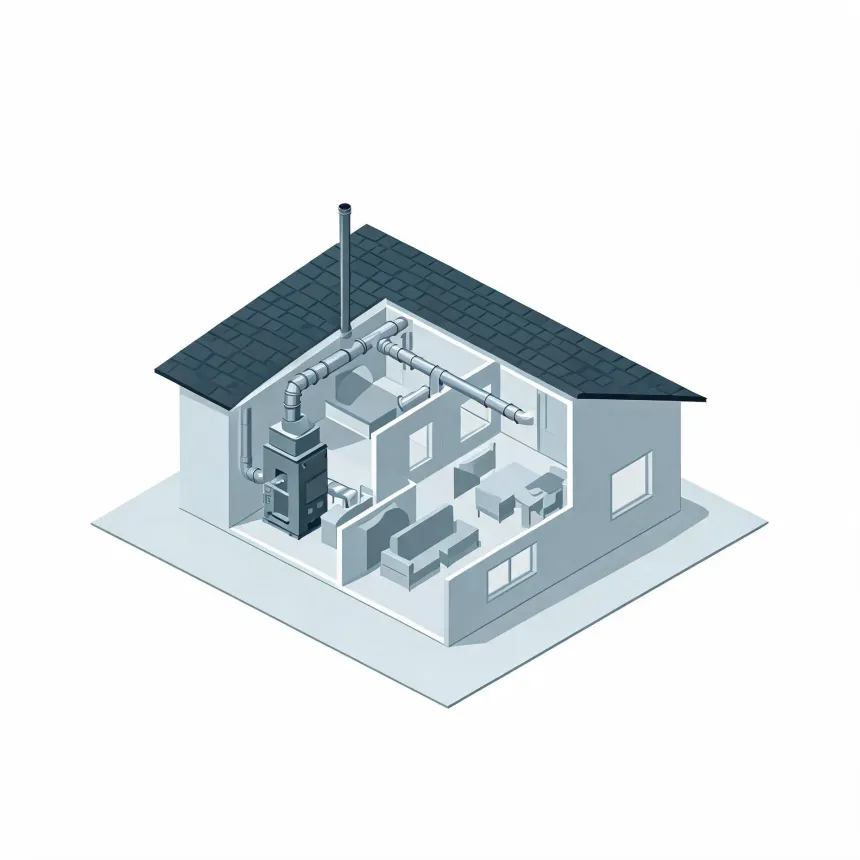
Isometric cutaway illustration of a single-story house with a dark shingled roof, showing a furnace with a flue pipe and branching ductwork running through interior rooms furnished with a sofa, table and chairs.
Your furnace works hardest from November through March.

NOAA nClimDiv, 1991–2020 normals

Oil heats 48 percent of the homes in this county, more than any other fuel.

Most of the furnaces going into Monticello homes are built to run on it.

Nine months of heat a year means this furnace earns its keep

Heat runs September through May
Winter nights average 18°F
Climate zone 6A
Before September, not during itHeat starts running in September here. August is when this gets done without the rush.

Sullivan County falls under zone 6A in the 2021 energy code, a designation for cold climates with a long heating season. Any furnace installed here has to meet that standard. Federal rules set a floor under that: gas furnaces built from November 2015 on have to turn at least 80 percent of the fuel they burn into heat, and that floor rises to 95 percent for units built from December 2028 on. A furnace below that line can't be installed here no matter what it costs upfront. Homeowners replacing a system now can also look into the federal tax credit available for higher-efficiency equipment.

The furnace you install sets your fuel bill for years

Oil here runs $23.11 per million Btu, and that cost doesn't change based on what furnace burns it. What changes is how much of it turns into heat for the house instead of going up the flue. That's decided once, at installation. Ask what efficiency rating the new furnace carries before it goes in.

Find a contractor
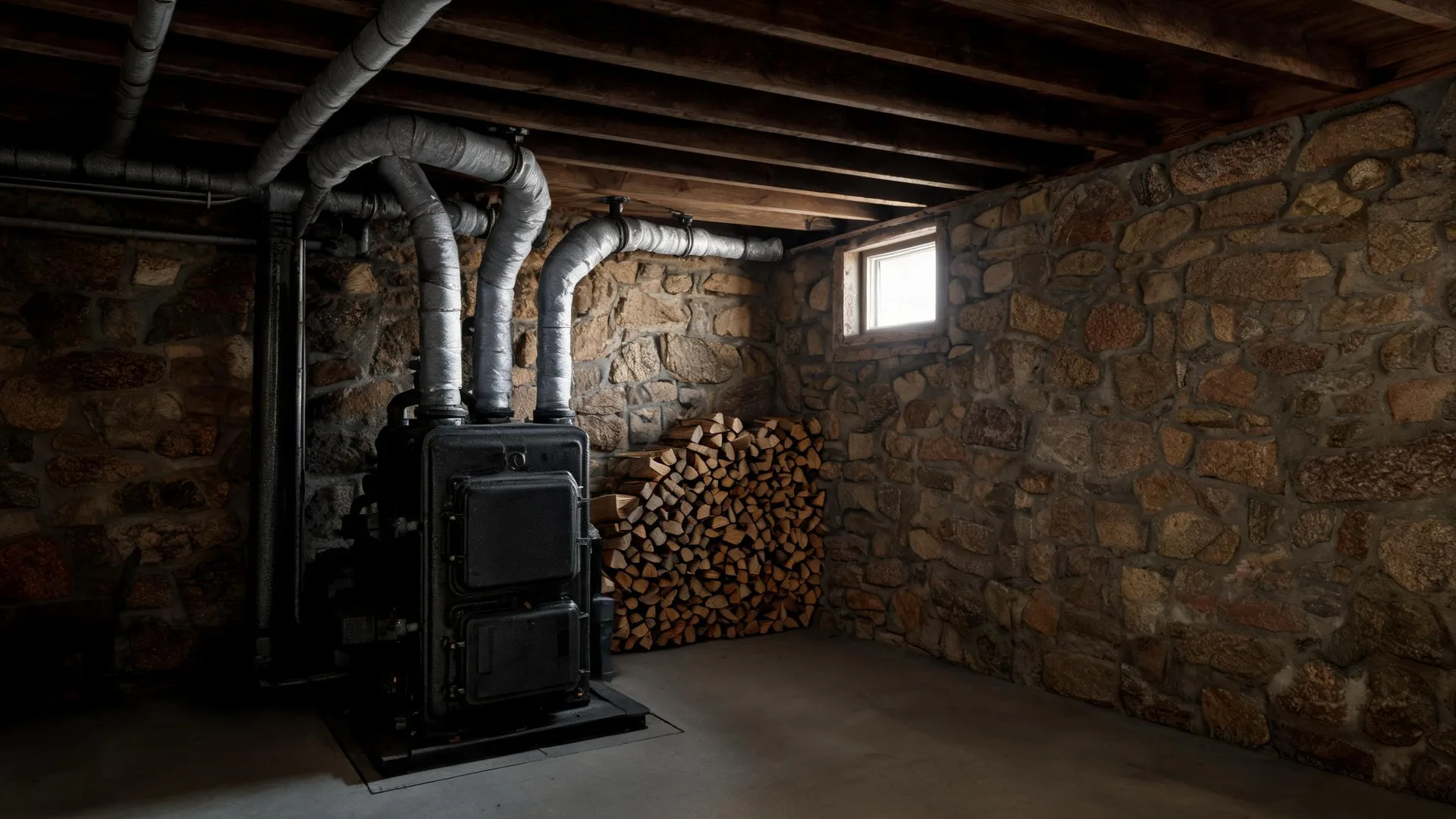
A gray residential gas furnace installed in an unfinished basement, surrounded by ductwork, a metal flue pipe, and a gas supply line.

Nine months of runtime, every year

Nine months is most of the year. This furnace will run from the first cold snap in September to whatever comes through in May, and it won't get much of a break between. That kind of run time puts real hours on the igniter, the blower motor, the heat exchanger. Parts that would coast through a short winter somewhere else don't get that here. Installed right, sized for the house instead of guessed at, this furnace holds up to that schedule. Sized wrong, the strain shows up early, in a part that fails before it should or a system that never quite keeps up.

Sizing is a calculation, not a guess off the old unit

A furnace gets sized by working out how much heat the house actually loses through its walls, windows, ceiling and floor, room by room. That calculation looks at insulation, window area, ceiling height, and how the rooms connect, then adds it up into a number the new furnace has to match. Replacing an old unit with the same size, or going bigger to be safe, skips that step. The old one might have been wrong from the day it went in.
Oversized wastes fuel, undersized wastes comfort

A furnace too big for the house heats it fast, shuts off, and starts again soon after. Each of those cycles burns fuel getting the heat exchanger up to temperature before it has settled in, and the burner never runs long enough to work efficiently. A furnace too small never gets that problem. It just runs and runs, straining to hold the temperature on the coldest days and falling behind when it can't. Either way, the house pays for a furnace that doesn't match what it actually needs.

A furnace installation is more than setting a box in place and connecting a duct. The ductwork it ties into has to be sized to carry the air the new furnace moves, and a system connected to ducts that are too small will never deliver the heat it's capable of, no matter how good the unit is. The venting has to be matched to the furnace too, since a high-efficiency furnace vents differently than an older style and needs the right pipe run to do it safely. Gas lines, if the furnace burns gas, have to be checked against what the unit requires, not just hooked up and assumed fine. Getting the airflow, the venting and the gas supply right the first time is what lets the furnace actually hit the efficiency it's rated for once it's running.

Installation day starts with the old furnace coming out, along with anything about the setup that won't carry over to the new one. If the old unit vented through a chimney and the new one doesn't need it, that gets sealed off. The new furnace gets set and leveled, then connected to the supply and return ducts, the gas line, the vent pipe, and the electrical. Each of those connections gets tested before anything gets buttoned up, not after. The gas line gets checked for leaks. The vent run gets checked for proper slope and clearance, since it has to carry combustion gas out of the house reliably in every condition the house sees. Once everything checks out, the furnace gets fired and run through its paces, cycling on and off to make sure it ignites cleanly, reaches temperature, and shuts down the way it should. Only then does the crew walk the homeowner through the thermostat and the filter before closing out the job.