




A long white picket fence runs along a mown grass lawn in front of a row of single-story houses with gray siding and shingled roofs, surrounded by large leafy trees.

Mini Split Installation in Yonkers, NY

Tell us about the job

Takes about a minute. No obligation.

New system or replacementMini-splitWestchester County, NY
Step 1 of 2

What ZIP code is the job in?

Electricity in New York runs 24.43 cents per kilowatt-hour, well above what most of the country pays. A mini split earns that cost back through how it works. It sends heat in or out rather than burning fuel or fighting a resistance coil, so it moves more warmth or cooling per watt than older systems do. Each zone runs only where someone needs it, so you're not paying to condition rooms that are empty. On a bill tied to a rate this high, that difference shows up every month, not just on the install invoice.

8 months
October through May, your system heats
3 months
June through August, it cools
24°F
the average winter night it heats against
82°F
the average summer afternoon it cools against
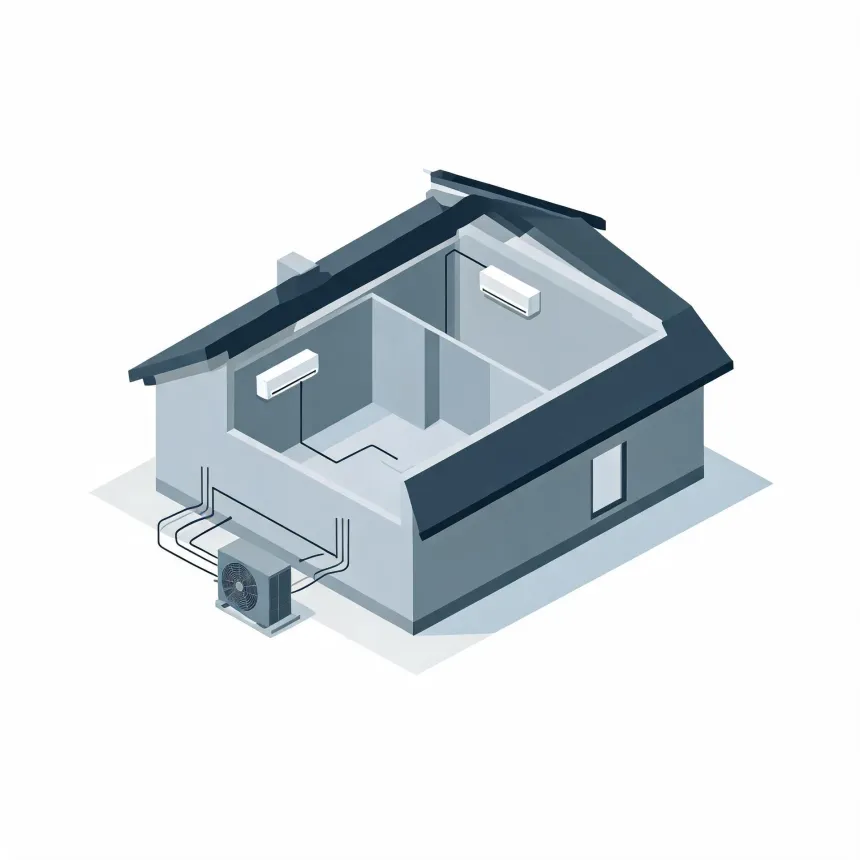
Isometric illustration of a cutaway house showing two wall-mounted indoor air conditioning units connected by line sets to an outdoor condenser unit on the ground outside.
Your system heats October through May and cools June through August.

NOAA nClimDiv, 1991–2020 normals

The old system has to come out before the new lines go in, whether that's a window unit, baseboard heaters, or a system that's stopped working right.

A mini split installer handles the removal and disposal, so the only thing left for you to decide is where the new units go.

A lot of Yonkers was built before anyone thought about central air

Half the homes here were built by 1959
Cooling runs June through August
Summer afternoons average 82°F
Get it in before JuneCooling runs June through August here, so May is the month to have it ready.

Cooling only runs three months here, June through August, with afternoon highs averaging 82. That's not a brutal load. A mini split sized right for the rooms it serves will keep up without strain, so you don't need to chase the highest efficiency number on the spec sheet to get good performance out of it. What matters more in this county is the unit holding up outdoors, since wind and hail both show up here with some regularity. Ask about the outdoor unit's housing and how it's mounted before you ask about SEER2.

A mini split fits alongside the heat you already have

More than half of Yonkers heats with utility gas, and most of what's left runs on fuel oil or electric resistance. A mini split doesn't replace either one outright. It takes over the cooling and shoulder season load, and for homes without ductwork it can take over heating too, without touching the gas line or the oil tank already in place. That makes it an add rather than a gut of what's already heating the house.

Find a contractor
A white outdoor air conditioner condenser unit mounted on metal wall brackets against gray horizontal siding, with a blue sky and white clouds behind it.

Built before the system you're adding

Half the homes in Westchester County went up in 1959 or earlier. A house that old wasn't built with line sets or a spot picked out for an outdoor condenser. Before anything gets mounted, have the installer walk the actual walls the lines need to cross and where the outdoor unit will sit. That's what decides how clean the install goes, not the spec sheet.

How many zones you're running

Each indoor head needs its own line set run from the outdoor unit, and each one adds labor beyond the equipment itself. A single zone covering one room is a straightforward run. A setup feeding several rooms means separate paths through walls or framing for each head, and the outdoor unit has to be sized to carry all of them at once. More zones means more planning for where lines travel, not just more units bolted to walls.
What the walls make the installer do

The line set connecting the outdoor unit to each indoor head has to cross from outside to inside somewhere, and that path is never the same house to house. A straight shot through one exterior wall is quick work. A run that has to go up through a chase, across a joist bay, or around framing that's already there takes longer and takes more skill. The installer can't know which one they're dealing with until they've opened up the spot and looked.

Comparing quotes on a mini split means comparing more than the brand on the indoor head. Ask how they arrived at the size, not just what size they landed on. A unit sized off square footage alone can end up too big, which sounds safe but isn't. An oversized unit cools the room fast and shuts off before it pulls the moisture out of the air, so the room feels cold and damp rather than comfortable. Ask what the installer is basing the load calculation on, and ask them to walk you through it room by room. Ask too how many times the outdoor unit short cycles under that sizing, since that's what wears out a compressor early. The quote that explains its math is worth more than the one that just names a number.

Installation day starts with the outdoor unit and the line set path, not the indoor head on the wall. The installer runs refrigerant lines, a condensate drain, and a power whip from the outdoor unit to each indoor position, then pulls a vacuum on the line set before any refrigerant moves through it. That vacuum step matters more than almost anything else done that day, because any moisture or air left in the lines turns into a compressor problem later, not a quick fix. Once the lines hold vacuum, the indoor head gets mounted, the connections get made, and the system gets charged and tested running both heat and cooling before anyone calls it done. A clean install also means sealing every spot where a line crosses a wall, inside and out, so water and air can't follow that path once the crew is gone.