Gas heats most homes here
Utility gas heats 39% of homes in Jefferson County, more than any other fuel. Electricity comes next at 23.4 percent, then propane, then oil.
Takes about a minute. No obligation.
Utility gas heats 39% of homes in Jefferson County, more than any other fuel. Electricity comes next at 23.4 percent, then propane, then oil.
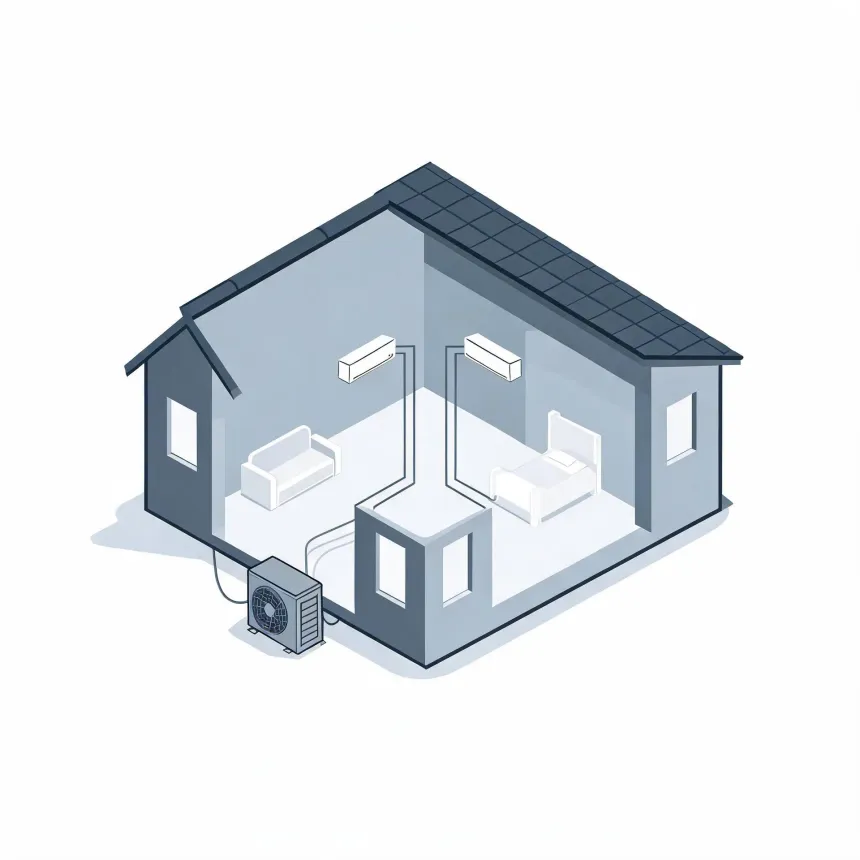
Most homes here keep their furnace and add mini splits for cooling or for the rooms the ducts don't reach well. It works alongside a gas furnace or an oil system without replacing it.
NOAA nClimDiv, 1991–2020 normals
Cooling runs about two months here, July and August.
Get the mini split installed by June and it's ready the day you need it.




Half the homes in Jefferson County went up in 1972 or earlier. A mini split going into a house that age has to work with what's already there, not with a clean slate. The line set has to run through a wall that was framed decades before ductless systems existed, and the spot picked for the outdoor unit has to make sense with how the house sits on its lot. None of that makes the install harder on its own. It just means the system has to be sized and placed for the house you actually have, not a guess at what a typical house looks like.
A new system here has to meet this region's minimum efficiency, which limits what can go in.
Find a contractorBefore anything goes on the wall, a contractor who installs here is going to look at how your house is actually framed, not guess from the year it was built. That means a walkthrough before the quote, not just a number over the phone. The line set route and the outdoor unit placement get decided from what's really there.
A single zone with one indoor head costs less than a multi-zone setup running several heads off one outdoor unit. Each extra zone adds its own line set, its own mounting work, and its own refrigerant run, and the outdoor unit has to be sized for all of them combined.
The cost isn't just the equipment. It's getting refrigerant line, wiring, and drain tubing from the outdoor unit to each indoor head. A short, straight run through an exterior wall costs less labor than one that has to travel between floors or snake through finished space to reach the right room.
When you're comparing quotes, ask what SEER2 and HSPF2 numbers each system carries, not just the brand name on the unit. Those ratings tell you how it performs on cooling and heating, and they can vary between models from the same manufacturer. Ask how many indoor heads the outdoor unit is rated to run, and whether adding a zone later is even possible with the equipment being quoted. Ask what happens to warranty coverage if the line set has to be extended or routed somewhere the manufacturer didn't plan for. And ask who services that brand locally. A system backed by a manufacturer with few trained technicians nearby can leave you waiting if something goes wrong down the line.
Install day starts with the outdoor unit and where it sits on the pad or wall bracket, level and with clearance to pull air through the coil. From there the line set runs to the spot picked for the indoor head, through a small hole bored in the wall, usually no bigger around than a drink can. That penetration gets sealed against weather once the lines are through. Inside, the refrigerant lines get connected, the system gets evacuated to pull moisture and air out of the lines, then charged to the manufacturer's spec. The indoor head gets mounted, the condensate drain gets run and tested so it actually drains, and the electrical gets tied in and checked. Before anyone leaves, the system gets run in both cooling and heating to confirm it holds temperature and the drain doesn't back up.