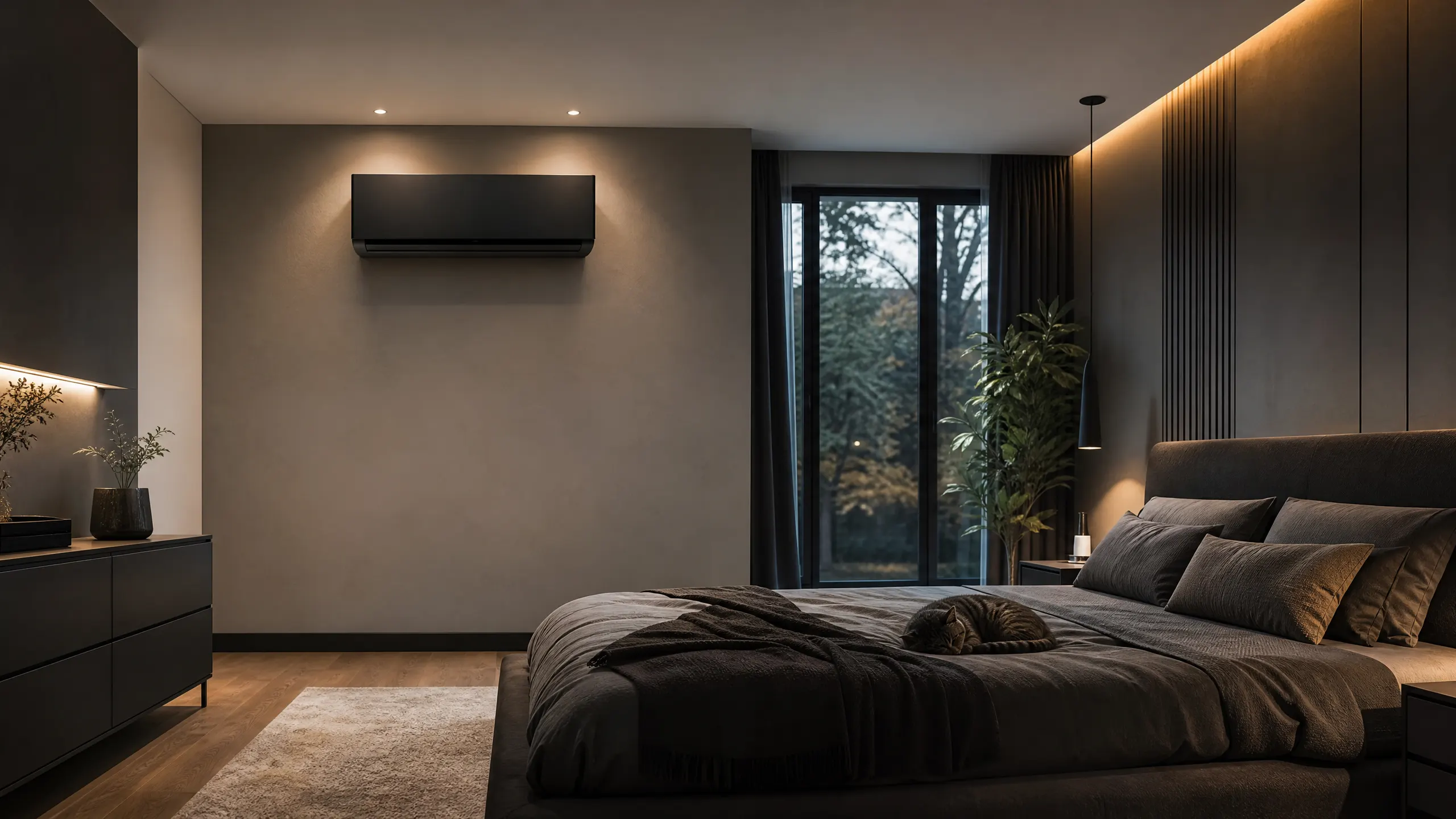






A dark, minimalist bedroom with a king-size bed, wall-mounted air conditioning unit, and large windows, with a cat sleeping on the duvet.

Mini Split Installation in Syracuse, NY

Tell us about the job

Takes about a minute. No obligation.

New system or replacementMini-splitOnondaga County, NY
Step 1 of 2

What ZIP code is the job in?

Gas heats most homes in Syracuse, close to seven in ten. A mini split works alongside that setup rather than replacing it, since most people adding one want cooling, or heat for a room the furnace doesn't reach well. Electricity heats about a fifth of homes here, and those houses can use a mini split as the main heat source for a room or the whole place, especially since newer mini splits keep working in cold weather. Either way, the install comes down to where the outdoor unit can sit and how far the line set has to run to reach it.

8 months
October through May, your system heats
2 months
July through August, it cools
18°F
the average winter night it heats against
79°F
the average summer afternoon it cools against
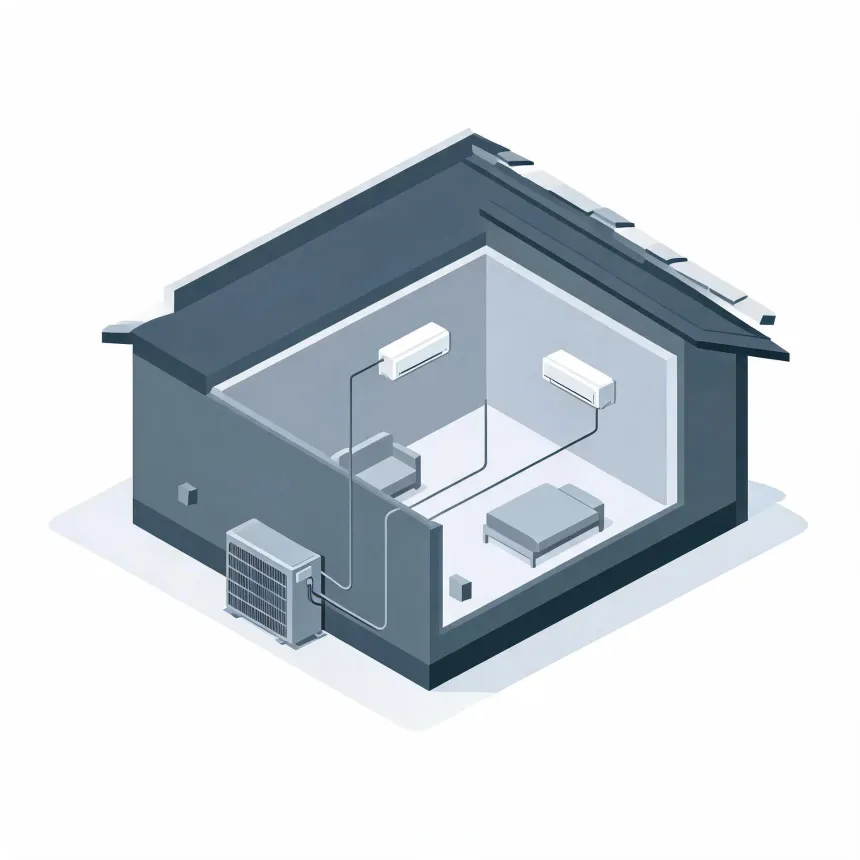
Isometric illustration of a cutaway house interior showing two wall-mounted indoor air conditioning units connected by line sets to an outdoor condenser unit beside the exterior wall.
Your system heats October through May and cools July through August.

NOAA nClimDiv, 1991–2020 normals

Half the homes in Onondaga County were built in 1964 or earlier.

A mini split going into a house that age has to work with the walls and wiring already there, not the other way around.

Weather here is part of the job, but it doesn't change the sizing

223 severe weather events from 2015 to 2024
11% of homes statewide lost power a day or more in 2024
186 damaging wind events from 2015 to 2024
Summer here doesn't ask much of itCooling runs about two months a year, July and August, with afternoons averaging 79°F.

Onondaga County falls in climate zone 5A, a cool zone where the furnace or heat pump works harder than the AC does over a year. Any mini split sold new here still has to meet the federal minimum for a split-system heat pump, 14.3 SEER2 for cooling and 7.5 HSPF2 for heating, since the standard doesn't set a separate rule for ductless units. That floor applies everywhere, not just in cold climates, so it's not something a contractor can size around. A federal tax credit is available on qualifying equipment, on top of whatever the unit is rated to do.

Get it in before July

Cooling starts in July here. If the install happens in June, the outdoor unit and line set are in place before the first hot afternoon, and there's no scramble to find a contractor once everyone else's AC is struggling too.

Find a contractor
A man seen from behind in a dark long-sleeve shirt, olive work pants and brown boots climbs porch steps toward a gray front door, carrying a waxed canvas tool bag with tools in its outer pockets, beside a potted shrub.
A white outdoor air conditioner condenser unit mounted on metal wall brackets against gray horizontal siding, with a blue sky and white clouds behind it.

It won't be working hard, so it doesn't need to be the best

Since heating carries the real load here, the compressor isn't working against a 79°F afternoon most of the year. That's the stretch where a mini split would be pushed hardest, and it barely comes up. A mid-tier unit, properly sized and installed, covers it without strain. Put the money into the install instead, the line set run, the mounting, where the outdoor unit sits, since that's what decides how well it performs and how long it lasts.

How many zones, and from how many outdoor units

A single outdoor unit can run more than one indoor head, but each added zone splits its capacity across more rooms. Ask whether the quote is one outdoor unit feeding several heads or a separate outdoor unit for each one. More heads on one compressor costs less to install but means every room draws from the same pool when several are running at once.
What happens to the line set and the wall it passes through

The refrigerant line, drain line, and power wire all have to get from the indoor head to the outdoor unit, usually through a hole drilled in an exterior wall. Ask where that penetration will sit, how it gets sealed, and whether the line set will be hidden in a chase or run exposed in a cover along the wall. A sloppy penetration is where water finds its way in later.

Sizing a mini split isn't about matching the square footage of a room to a number on a brochure. A contractor works out how much heat the room gains in summer and loses in winter, based on the windows, the exterior walls, the ceiling height, what's directly above and below it. Too big and the unit short cycles, cooling the room fast then shutting off before it pulls the moisture out of the air, so it feels clammy even at the right temperature. Too small and it runs flat out on the hottest and coldest days and never quite catches up. The load calculation is what tells the installer which indoor head and which outdoor unit to put on the quote, not a rule of thumb about tonnage per square foot. Get the number wrong and no amount of good installation work after it will fix how the room feels.

Most of the work happens outside. The outdoor unit gets mounted on a pad or brackets, and the line set runs from there to the wall penetration, so a tech spends real time getting that location right before any drilling starts. Once the hole is drilled, the refrigerant lines, drain line, and power wire feed through together and the indoor head goes up on its mounting plate. The lines get connected, the system gets evacuated to pull moisture and air out of them, then it's charged with refrigerant and tested. A good installer checks the line connections for leaks before closing anything up, since a bad joint there is what causes a slow leak months later. The indoor head won't blow cold air until the whole line set is sealed, evacuated, and charged, so don't expect to feel anything until the job is nearly done.