





A row of small single-story houses with gray shingled roofs and light siding behind a white picket fence, with mown lawns and leafy trees.

Mini Split Installation in Queens, NY

Tell us about the job

Takes about a minute. No obligation.

New system or replacementMini-splitQueens County, NY
Step 1 of 2

What ZIP code is the job in?

Electricity ran 24.43 cents per kilowatt-hour across New York in 2024, well above what most of the country pays. A mini split's efficiency rating matters more here than it would somewhere with cheap power, because every point of efficiency you give up gets charged back to you at that rate, month after month. These systems use a variable-speed compressor instead of switching on and off at full blast, so they draw only the power needed to hold the room at temperature. That matters most on the shoulder months, spring and fall, when a lot of New York homes just need to take the edge off rather than run flat out. Sizing it right for the room it serves is what makes that efficiency show up on your bill instead of staying on paper.

7 months
October through April, your system heats
4 months
June through September, it cools
28°F
the average winter night it heats against
83°F
the average summer afternoon it cools against
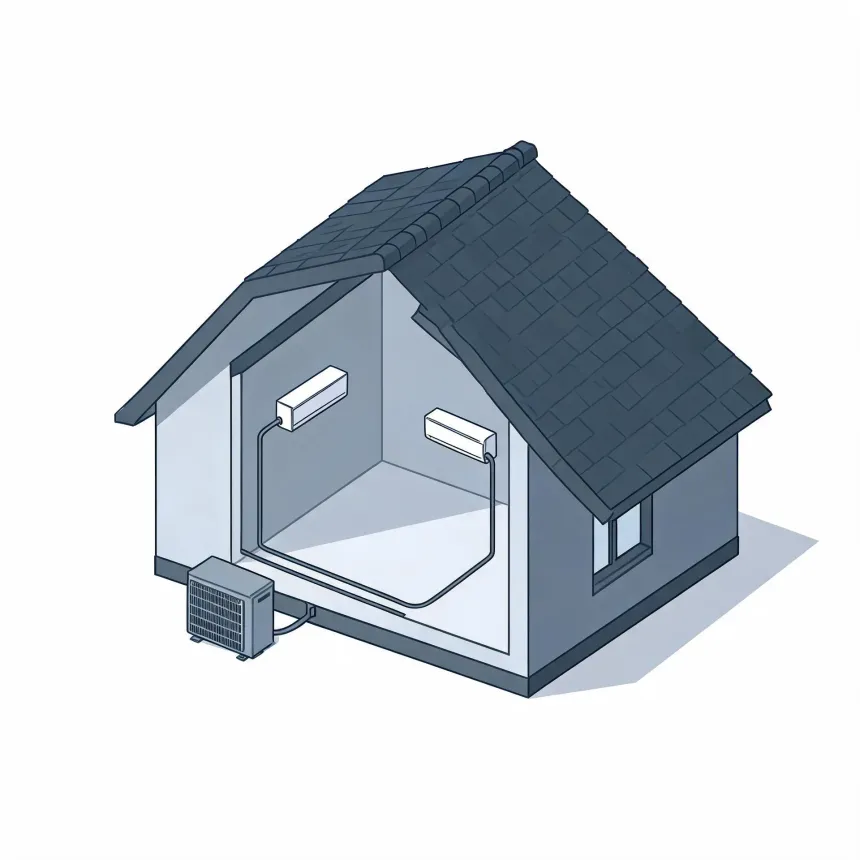
Isometric cutaway illustration of a small house with a shingled gable roof, showing two wall-mounted indoor air conditioning units connected by refrigerant lines to an outdoor condenser unit on the ground outside.
Your system heats October through April and cools June through September.

NOAA nClimDiv, 1991–2020 normals

A mini split too big for the room cools it fast and shuts off before it pulls the moisture out of the air.

The room ends up cold and damp, and the unit short cycles instead of holding a steady temperature.

Half the homes here were built by 1953, and a mini split has to fit the house it's going into

Half the homes here were built by 1953
Climate zone 4A
Power costs 24.43 cents a kWh statewide

Queens sits in climate zone 4A, which asks a new system to handle a real heating load and a real cooling load, with humid summers that put moisture in the mix too. That's the baseline any ductless system has to clear here. Under the federal standard, a mini split is judged as a split-system heat pump, the same category as central units, so one installed from 2023 onward has to hit at least 14.3 SEER2 for cooling and 7.5 HSPF2 for heating. There's no separate, looser standard for ductless. A system that clears that bar may also qualify for the federal tax credit on heat pumps, worth checking against before you settle on equipment.

Have it installed before June, not during

Cooling in Queens runs June through September. Put the install in before June and the system is sized, placed, and running before the first hot week, not scheduled around it.

Find a contractor
A man in a dark long-sleeve shirt, tan work pants and a cap climbs porch steps toward a gray door, carrying a canvas tool bag in his right hand, with a potted shrub to the right.
A white mini-split air conditioner outdoor condenser unit mounted on metal brackets against a beige stucco exterior wall, with a blue sky and scattered clouds in the background.

Half these homes were built by 1953, and that changes where this unit can go

Half the homes in Queens were built in 1953 or earlier. If this house is one of them, have the contractor check what's behind the mounting wall and along the line set path before they quote the job, not after. A day-into-night run on a system sized and placed for this house is nothing to think about. On a wall and a line set that weren't planned with this house in mind, those same hours find the weak point.

Ask what each zone actually needs

A multi-zone system splits its capacity across every indoor head running at once. Ask the contractor to size each room on its own heat loss and heat gain, not just split the total evenly across heads. A room with more glass or a higher ceiling pulls more than its share, and a unit sized off an average runs weak there and oversized everywhere else.
Ask what happens if one head needs service

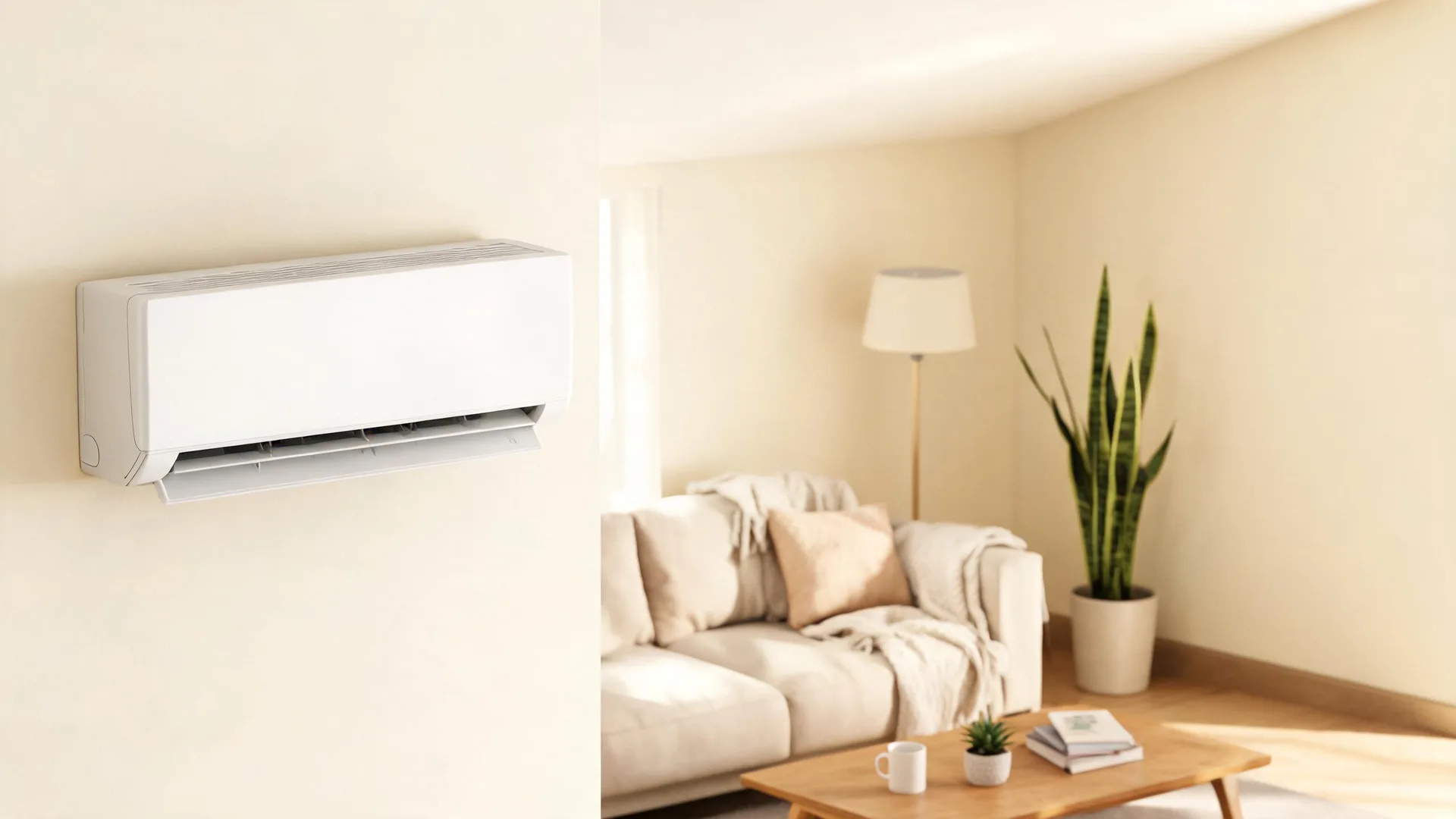
Most ductless systems tie multiple indoor heads to one outdoor compressor. Ask whether the system you're quoted lets one head run a repair or refrigerant check without shutting down the rest of the house, and whether parts for that indoor head are still sold as a direct swap years from now, not just at installation.

SEER2 and HSPF2 tell you how much heat a system moves for the electricity it draws, not how powerful it is. A higher rating means the compressor is doing more work per watt, which only pays off if the unit is sized to the room in the first place. Systems sharing the same rating on paper can still run differently once installed, because that rating is measured under set lab conditions, not in a room with a bad line set bend or a leaky seal where it meets the wall. The number on the label is the ceiling for that equipment. What the contractor does with the sizing, the line set, and the install is what decides whether you get close to that ceiling or give a chunk of it away.

Installation starts with the outdoor compressor and a line set run to each indoor head. That line set carries refrigerant, a drain line, and the electrical whip, and it has to pass through an exterior wall. The contractor cores a hole sized to it, sets a sleeve, and seals around it once the unit is in place. Each indoor head mounts to a plate secured into the studs, not just the drywall, then gets leveled so condensate drains the right way instead of pooling behind it. Before refrigerant goes in, the lines get pulled down with a vacuum pump to clear out air and moisture, because either one left behind shows up later as lost efficiency. Last comes commissioning, where the contractor checks refrigerant charge, confirms airflow at each head, and runs every zone before calling the job done.