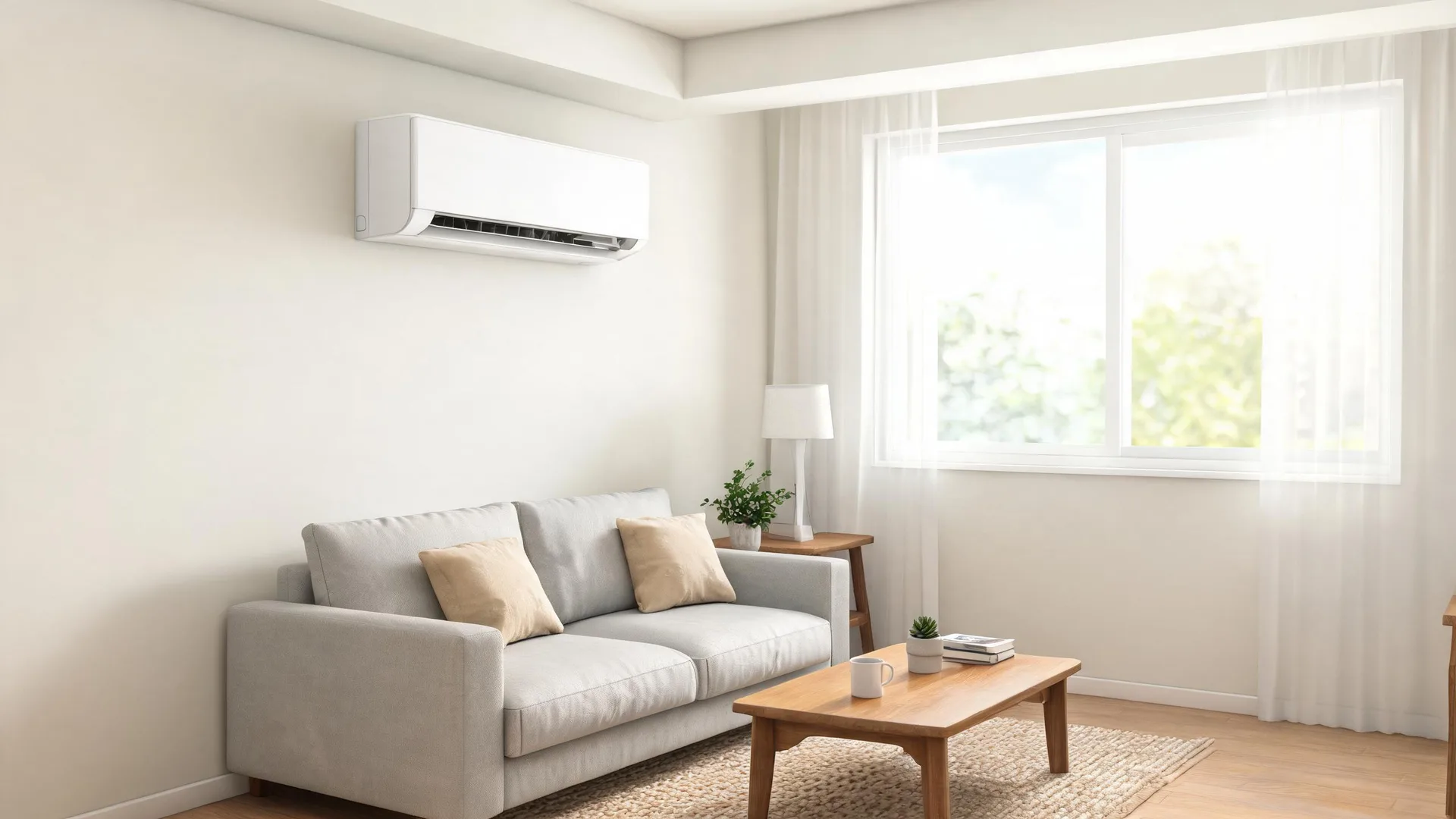
Electricity here runs 24.43 cents a kilowatt-hour
New York power costs more than it does in most of the country. A mini split that converts electricity into heat or cooling efficiently matters more here than it would somewhere with cheaper rates.
Takes about a minute. No obligation.
New York power costs more than it does in most of the country. A mini split that converts electricity into heat or cooling efficiently matters more here than it would somewhere with cheaper rates.
When you're comparing systems for installation, the efficiency rating on the unit affects what every month of running it costs you after. A higher-efficiency mini split is worth weighing against a cheaper one with a lower rating.
NOAA nClimDiv, 1991–2020 normals
Utility gas heats 76.2% of homes in Niagara County.
A mini split here is almost always going in alongside a gas furnace, not replacing the only system in the house.




Half the homes in Niagara County were built in 1958 or earlier. A house that age wasn't built with a mini split in mind, so the installer has to work with what's actually there rather than a blank slate. Where the indoor units go, how the line set runs between inside and outside, where the condensate drains, all of that gets figured out around the walls and layout you already have. None of this means an old house is harder to fit, but it does mean the installation gets planned around the home rather than the other way around. If your system is going into a house from that era, ask what the walk-through looks like before the work starts.
Niagara County is zone 5A, and any mini split installed here has to clear 14.3 SEER2 for cooling and 7.5 HSPF2 for heating. That's the floor for every split-system heat pump made since January 2023, ductless included. A federal tax credit is available on qualifying equipment, worth factoring in before you settle on a unit.
Find a contractorJuly and August carry the cooling load here, and the afternoon high across those two months averages 79°F. That's a mild number to size a system against. A reliable mid-range mini split will hold a house at 79 without strain, so the case for paying up for the highest SEER2 unit on the shelf is weak here. Put the money into a unit that's well matched to the room and installed right, not the top of the efficiency chart.
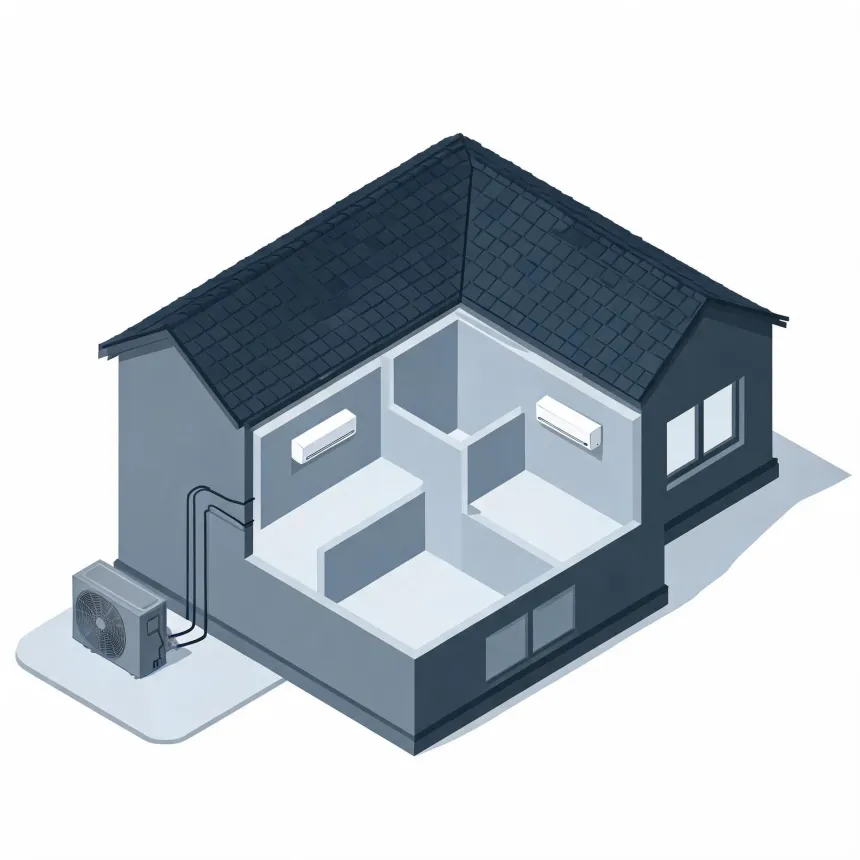
A mini split gets matched to the space it's actually heating and cooling, the square footage, the ceiling height, how many windows let heat in or out, whether the room sits under an attic or next to an unheated one. An installer walks the room and works through this before picking a unit. Skip that step and the unit is a guess.
A mini split too big for the room cools it fast, shuts off, then kicks back on a few minutes later. That cycling keeps the room from sitting at a steady temperature and never gives the unit a long enough run to pull moisture out of the air properly. Bigger isn't the safe choice here. Right-sized is.
If a mini split is going in where something else used to heat or cool that space, the old equipment doesn't have to come out the same day. A window unit can just get pulled and the opening closed up. A baseboard heater or wall furnace being replaced outright usually does get disconnected as part of the job, since leaving a dead unit on the wall serves no purpose. Where the mini split is one more zone alongside a furnace, nothing about the furnace changes at all. It keeps running the rooms it already handles, and the mini split takes over the room it's installed in. Ask what happens to whatever is currently in that space before work starts, since it changes what the installer needs to plan for.
A few questions sort out whether you're comparing like for like. Ask how many indoor heads a given quote covers and whether the outdoor unit is sized for just the one room or for a future zone too, since a system built to add heads later costs differently than one maxed out from the start. Ask what happens at the lowest outdoor temperatures it'll see, because not every heat pump holds its heating output once it gets cold, and a unit that quietly switches to backup resistance heat costs more to run than the rated efficiency suggests. Ask what's included in the line set run, since the distance and the number of bends between indoor and outdoor units affects both the cost and how the system performs. Ask about the warranty on the compressor separately from the warranty on parts and labor, since they're often different lengths and only one of them is the part that's expensive to replace. And ask who commissions the system once it's in, because a mini split that isn't charged and set up correctly on day one will underperform no matter how good the equipment is.