Oil heats most homes here
Fuel oil or kerosene heats close to half the homes in Sullivan County. A mini split adds cooling and a second way to heat without touching that oil system at all.
Takes about a minute. No obligation.
Fuel oil or kerosene heats close to half the homes in Sullivan County. A mini split adds cooling and a second way to heat without touching that oil system at all.
A mini split runs on electricity, so it doesn't compete with the oil furnace for fuel. Plenty of homeowners here add one to cover the rooms that stay hot in summer or cold in the shoulder months, and let the furnace keep handling the deep cold.
NOAA nClimDiv, 1991–2020 normals
Half the homes in Sullivan County were built in 1974 or earlier, half in 1974 or later.
A mini split is sized to the room it covers, not to the age of the house.




A standard mini split, sized to the room, is the right call here. Nothing about Monticello winters or summers pushes you toward a bigger unit or a higher efficiency tier than you'd put in anywhere else in the Northeast. Electricity runs 24.43 cents per kilowatt-hour in New York homes, which is worth knowing since the unit runs on electricity, not the oil that likely heats the rest of the house. That rate applies whether you buy a basic single-zone unit or a top-tier multi-zone system, so it's not a reason to upsize. Match the unit to the room and the job it's doing, and let that decide the size, not the climate.
A standard size and efficiency fit fine here. There's no local reason to go bigger or pricier.
Find a contractorThe compressor draws the most current the moment it starts up, more than it ever does once it's running steady. A system that cycles on and off less often puts that strain on the windings, the run capacitor, and the contactor less often too. That's the upside of light duty. It doesn't change what the install needs to get right. A bad vacuum or a weak charge causes the same wear whether the compressor runs most days or just a handful of afternoons a year. Light duty just means a sloppy install takes longer to show itself as a problem.
The number on the label is a ratio of cooling output to the electricity it takes to produce it, averaged over a whole season of running, not just at one moment. A higher number means the compressor moves the same heat using less power. It says nothing about how big a room the unit can handle or how fast it cools it down.
A high rating only pays you back on the hours the compressor actually runs. A unit that sits idle most of the year, cycling on for a stretch of warm afternoons, never puts in enough hours for a higher tier to close the gap on a standard one. Size and a clean install matter more to comfort than the number on the box.
When you're comparing quotes, ask what the contractor is basing the size on. A good answer involves the square footage of the room, the window area, ceiling height, and how many walls face outside. A bad answer is a number pulled from the brand of the old system or a flat rule of thumb. Ask where the outdoor unit goes and why that spot, since airflow around it affects how hard the compressor has to work. Ask how many line sets run and whether the wall sleeve gets sealed and insulated, since a sloppy penetration there leaks conditioned air and lets moisture in behind the wall. Ask who handles the refrigerant charge and whether they pull a vacuum on the lines before charging it, because a system charged wrong will never hit its rated efficiency no matter what the label says.
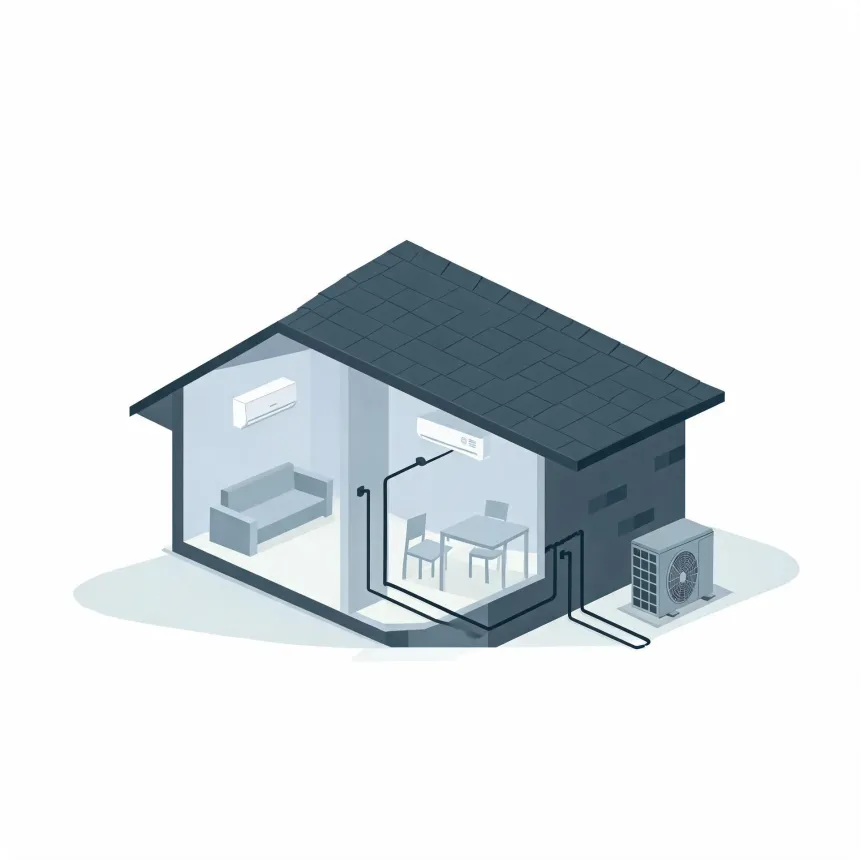
Installation starts with the outdoor unit and the indoor head going up, then the line set connecting them through a small hole drilled in the wall. That hole gets a sleeve, and the sleeve gets sealed, because any gap there is a path for outside air and moisture. Once both units are mounted and the lines run, the installer pulls a vacuum on the line set to clear out air and moisture before any refrigerant moves through it. Skip that step and the system can corrode from the inside or lose efficiency right from the start. After the vacuum holds, the lines get charged, the system gets powered on, and the installer checks airflow at the head and temperature split between the air going in and the air coming out. A clean install shows up later as a unit that holds its charge and runs quietly for years, not as anything you'd notice on day one.