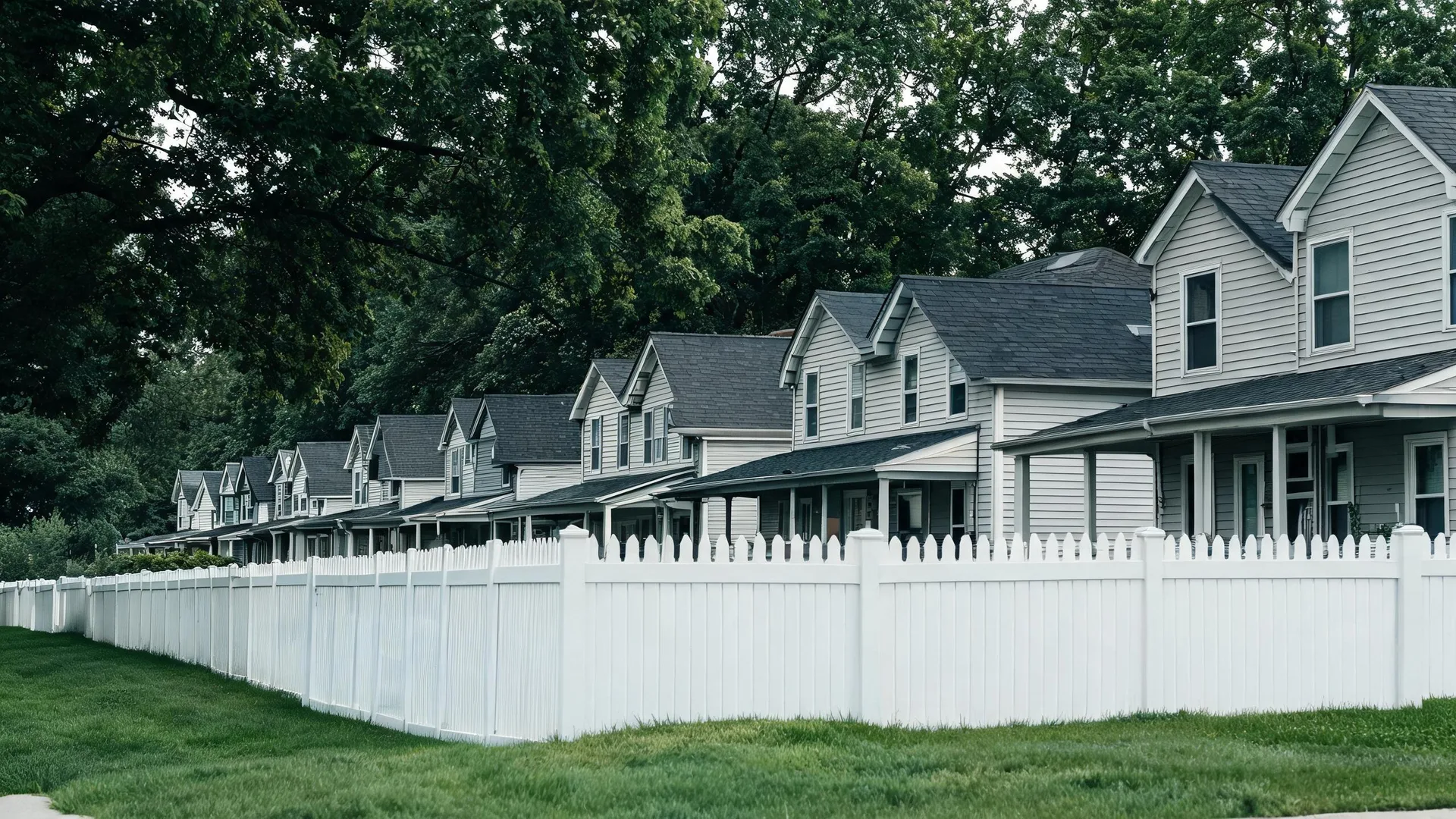





A row of similar two-story houses with gray siding and dark shingled roofs stands behind a long white vinyl fence, with mown grass in the foreground and large trees behind.

Mini Split Installation in Massena, NY

Tell us about the job

Takes about a minute. No obligation.

New system or replacementMini-splitSt. Lawrence County, NY
Step 1 of 2

What ZIP code is the job in?

Utility gas heats more homes here than anything else, but no single fuel comes close to a majority. Fuel oil and kerosene heat close to a quarter of homes in St. Lawrence County, propane heats 15.9%, and electricity heats 13.3%. A mini split doesn't ask what's already running your house. It works off its own electric line and heats or cools without touching a furnace, a boiler, or an oil tank. That matters in a county where homes are split across several fuels, and whatever you have now doesn't tell you much about what a given home needs next.

9 months
September through May, your system heats
2 months
July through August, it cools
11°F
the average winter night it heats against
77°F
the average summer afternoon it cools against
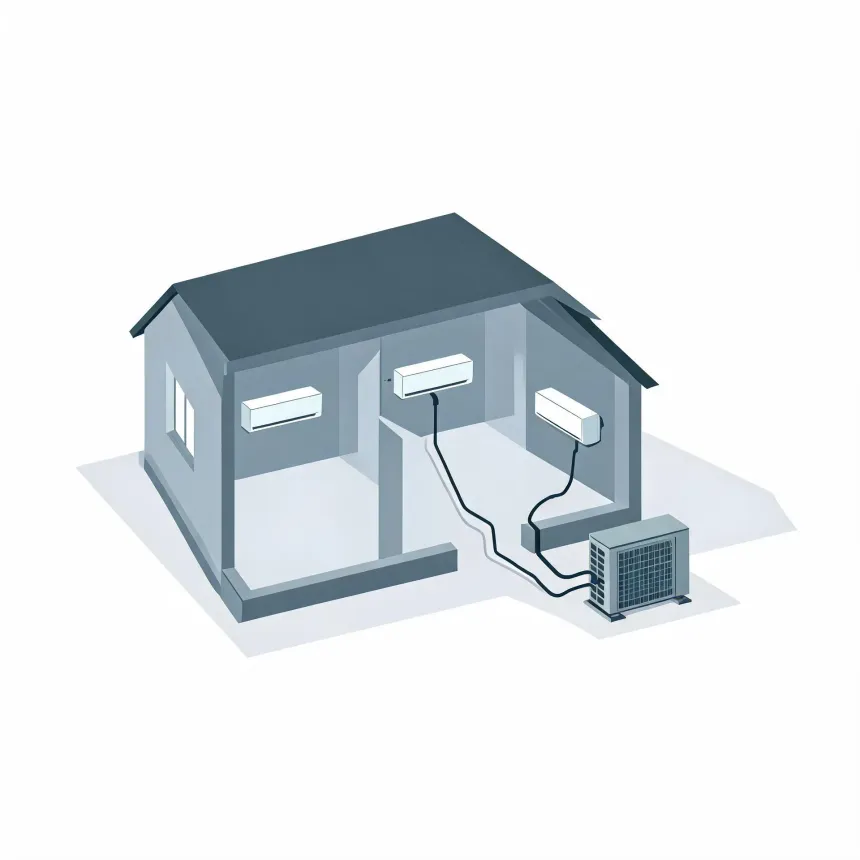
Isometric illustration of a cutaway single-story house with three wall-mounted indoor air conditioning units connected by lines to an outdoor condenser unit on the ground outside.
Your system heats September through May and cools July through August.

NOAA nClimDiv, 1991–2020 normals

Cooling in Massena runs July through August.

June is the month to get a mini split installed, before the first hot stretch hits.

Weather here doesn't change what a mini split needs to be

222 severe weather events from 2015 to 2024
11% of homes statewide lost power a day or more in 2024
136 damaging wind events from 2015 to 2024
Built for older homesHalf the homes in St. Lawrence County went up in 1964 or earlier.

A mini split here doesn't need to be oversized or loaded with extra capacity to handle anything unusual. Nothing about Massena winters or summers asks more of the equipment than the standard sizing a contractor would already run for a home this size. That matters for electricity, since New York homes paid 24.43 cents per kilowatthour in 2024, well above the national average. Bigger or higher-end doesn't buy you anything here, and it costs more to run every time the unit cycles on. A correctly sized system, matched to the square footage and the insulation it's working with, is the cheaper system over the long run too.

Replace it before the season

Replace it before the season starts, so it happens on your schedule, not in a hurry.

Find a contractor
A white outdoor air conditioner condenser unit mounted on metal wall brackets against gray horizontal siding, with a blue sky and white clouds behind it.

Match it to the house, not just the place

If your house is one of the older ones in the county, ask what year it was built before the contractor finalizes the install. A mini split doesn't care what's heating the house now, but it does care about the house itself, the square footage and how the walls hold heat. That's what the sizing is based on, not a guess from the outside. Get that part right and the system matches the house instead of just the climate.

How many zones you're running

Each indoor head needs its own line set run from the outdoor unit, its own mounting, its own spot picked for airflow. A single zone system is a straightforward job. Add zones and you add line sets, add labor, add another spot on the wall or ceiling that has to make sense for both airflow and the way the room gets used.
What the line set has to get through

The refrigerant lines and wiring have to travel from the outdoor unit to each indoor head, usually through an exterior wall. A short, straight run through a wall near where the outdoor unit sits is simple. A run that has to go up a floor, across a long interior space, or around framing takes more time and more material, and that shows up in what the job takes to finish.

Sizing a mini split comes down to a load calculation, not a chart that matches tonnage to square footage. That calculation looks at how much heat the house gains in summer and loses in winter, factoring in wall and ceiling insulation, window area and orientation, air leakage, and ceiling height. Houses the same size can still need different capacity if one holds heat better than the other. Oversizing feels like it should help, but a unit too big for the space cools or heats the air fast and shuts off before it pulls the moisture out or evens out the room, so it cycles on and off instead of running steady. Undersized, and it runs constantly trying to catch up and still falls short on the coldest or hottest days. The right size holds a steady temperature with long, even runs, which is also what the compressor is built to do.

Install day starts with the outdoor unit. It gets mounted on a pad or bracket outside, in a spot picked for airflow and clear of snow buildup, and that location also sets how far the line set has to travel to each indoor head. Running the line set means a hole through the wall, a channel for the refrigerant lines, wiring and a condensate drain, then the lines get connected, flared, and checked for leaks before anything gets charged. The system gets evacuated with a vacuum pump to pull out moisture and air, because either one left in the lines will wreck the compressor over time. Once the lines hold vacuum, the refrigerant charge goes in, the indoor heads get mounted and leveled, and the whole system runs through a test cycle in both heating and cooling before anyone calls it done.