Electricity here runs 26.96 cents a kilowatt-hour
That is higher than most US counties pay. A mini-split draws power every hour it runs, so a unit that struggles to hold its temperature burns through that rate fast.

Takes about a minute. No obligation.
That is higher than most US counties pay. A mini-split draws power every hour it runs, so a unit that struggles to hold its temperature burns through that rate fast.
Humid summer air makes a mini-split work harder to feel comfortable, and at this electric rate, every extra hour of runtime shows up on the bill. Sizing and installation decide how many of those hours it actually needs.
NOAA nClimDiv, 1991–2020 normals
The efficiency number on the label only holds up if the unit is sized and installed to match the room.
An oversized or badly placed mini-split burns more power than its rating promises, no matter what the label says.




Orange County sits in zone 5A, a cool climate zone where winter is the harder season to cover. Any split-system heat pump sold here, mini-splits included, has to clear the same federal floor: at least 14.3 Btu of cooling for every watt-hour it draws, and at least 7.5 Btu of heat for every watt-hour in winter. That floor rules out the weaker units some warmer states can still get away with. Most homes here lean on gas for heat, so the mini-split's winter number matters less than its summer one, but the unit still has to meet it. A system built to that standard, sized right for the room, is what keeps the bill in check at this electric rate. The federal tax credit for qualifying heat pumps is there to offset part of that equipment cost.
Power here costs more than almost anywhere else in the country, and a mini-split draws on it every hour it runs. That makes the install itself the thing worth getting right, since sizing and placement decide how many hours the unit actually needs to stay comfortable. Get that part right at the start and the rate works for you instead of against you.
Find a contractor
If this mini-split is going in alongside an old window unit or a system that's being replaced, that old equipment doesn't just unplug and disappear. A window unit can come out the same day. A ducted system or an old heat pump involves a refrigerant line set that has to be recovered properly, not vented, since the refrigerant in older systems isn't something you can legally release into the air. If there's an outdoor condenser being replaced, the old one gets disconnected from both the electrical circuit and the line set before it comes off the pad. Any old mounting brackets or line hidden in the wall are usually left in place unless they're in the way, since opening up a wall to chase old copper isn't worth it once the new system has its own path in. The breaker or disconnect that fed the old unit either gets reused for the new one or capped off so there's no dead circuit sitting live in the panel.
A mini-split should be sized off a room by room load calculation, not a guess based on square footage or what was there before. Ask the contractor what that calculation showed and which unit it points to. A unit sized bigger than the room needs will cycle on and off instead of running steady, and that short cycling is what drives the power bill up and leaves the room feeling clammy in summer.
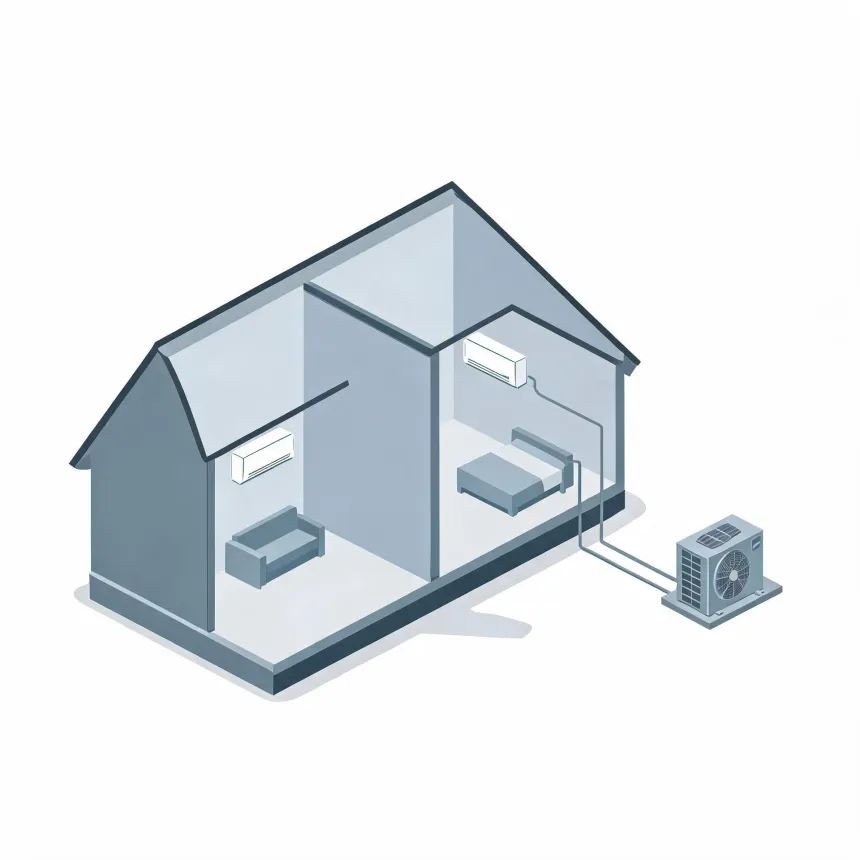
Where the compressor sits and how far the line set has to travel changes how hard the system works. A long line run or a condenser placed somewhere with poor airflow makes the compressor work harder to move the same refrigerant. Ask where the outdoor unit will mount, how long the line set is, and whether the indoor head's placement in the room was part of the plan or an afterthought.
Sizing a mini-split starts with a room by room load calculation, not a chart based on square footage. That calculation looks at the walls, the windows, the ceiling height, and how much sun the room gets, then works out how much heat the room gains in summer and loses in winter. Get that number wrong on the high side and the unit short cycles, blasting cold air until the thermostat is satisfied, shutting off, then starting again a few minutes later. A unit doing that never runs long enough to pull moisture out of the air, so the room feels cold and damp at the same time. Undersize it and the compressor runs flat out and still can't hold the setpoint on the hottest or coldest days. The right size is the one that runs long, steady cycles, because that's when the coil is coldest and pulling the most moisture and the compressor is working at its most efficient point.
Install day starts with the lines, not the equipment. The indoor head gets mounted on the wall first, on a bracket that has to sit level, because the condensate drain relies on gravity to carry water out. A hole gets drilled through the wall for the line set, the drain line, and the electrical whip, all bundled together and sealed where they pass through. The line set itself gets connected flare to flare, then pressure tested before anything runs, since a bad flare or a scratched fitting is a slow leak waiting to show up months later. Once the lines hold pressure, the system gets evacuated with a vacuum pump to pull out moisture and air, because any moisture left in the line turns to acid once refrigerant starts moving through it. Only after that does the refrigerant valve open and the system get its charge checked against what the line length calls for.