





A row of similar gray-sided houses with dark shingled roofs behind a new wooden picket fence, with a mown grass lawn in the foreground and leafy tree branches overhead.

Mini Split Installation in Jamestown, NY

Tell us about the job

Takes about a minute. No obligation.

New system or replacementMini-splitChautauqua County, NY
Step 1 of 2

What ZIP code is the job in?

Utility gas heats 66.6% of homes in Chautauqua County, more than any other fuel. A mini split doesn't tie into a gas line at all, so it works as its own heating and cooling source rather than a swap for a furnace. That makes it a common fit for a room or addition the gas system doesn't reach well, or for a home that wants cooling without ductwork. Some homeowners run one alongside the furnace, switching over on milder days in spring and fall. Either way, it's an addition to how the house is heated, not a replacement for it.

8 months
October through May, your system heats
2 months
July through August, it cools
19°F
the average winter night it heats against
78°F
the average summer afternoon it cools against
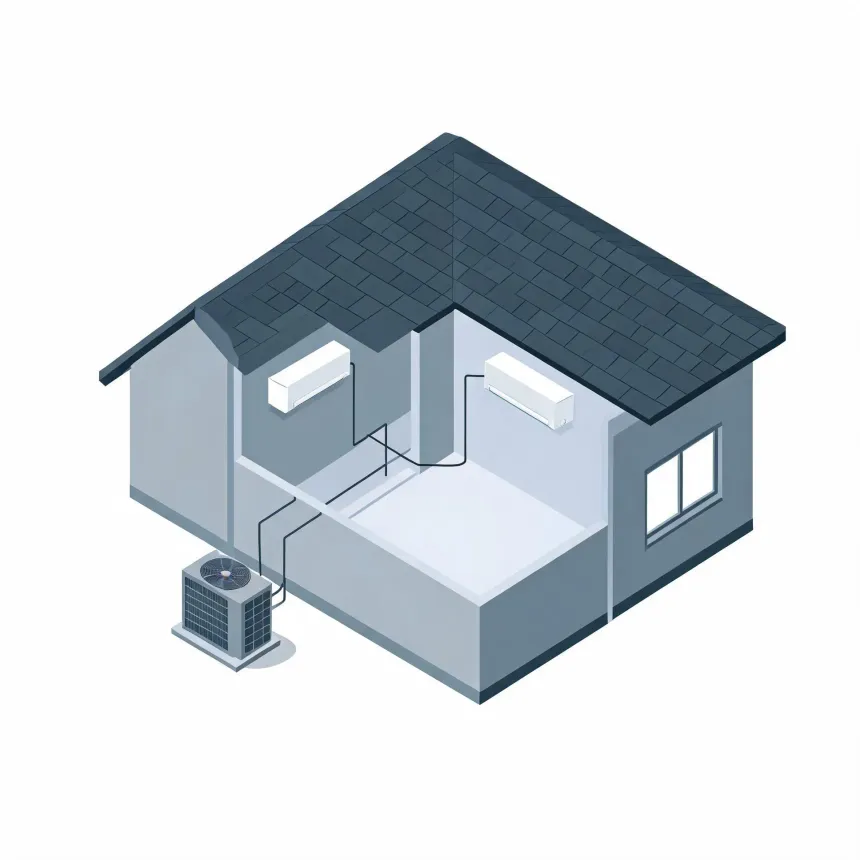
Isometric illustration of a cutaway gray house with a dark shingled roof, showing two wall-mounted indoor air conditioning units connected by lines to an outdoor condenser unit on the ground outside.
Your system heats October through May and cools July through August.

NOAA nClimDiv, 1991–2020 normals

Summer in Jamestown runs about two months, July and August, with afternoons averaging 78°F.

A mini split here isn't fighting heat for long, so a mid-range unit holds up fine.

Cooling starts in July. Get the mini split in before it does.

Cooling runs July through August
Summer afternoons average 78°F
253 damaging wind events from 2015 to 2024
Built for an older houseHalf the homes in Chautauqua County were built in 1953 or earlier.

A mini split is sized in BTUs, and for most rooms or additions in this area a standard unit covers it without needing to size up. Electricity here runs 24.43 cents per kilowatt-hour, higher than the national average, and a mini split still costs less to run than window units or baseboard heat because it moves heat instead of generating it. There's nothing about Jamestown winters or summers that calls for anything beyond the efficiency ratings most installers carry as their regular stock. Paying more for a higher-tier unit buys quieter operation or a longer warranty, not better performance in this climate. The honest spec here is the one sized to the room, not the one priced highest on the sheet.

A standard mini split comes back on the same as any other

Chautauqua County sees its share of wind, ice and heavy snow, and outages follow. A mini split draws on the same grid as everything else in the house, so it won't ride out a power cut. But once the power is back, it comes right back on with no pilot to relight and no extra step. A standard unit handles that the same as a higher-priced one.

Find a contractor
A white mini-split air conditioner outdoor condenser unit mounted on metal brackets against a beige stucco exterior wall, with a blue sky and scattered clouds in the background.

Placement matters more in an old house

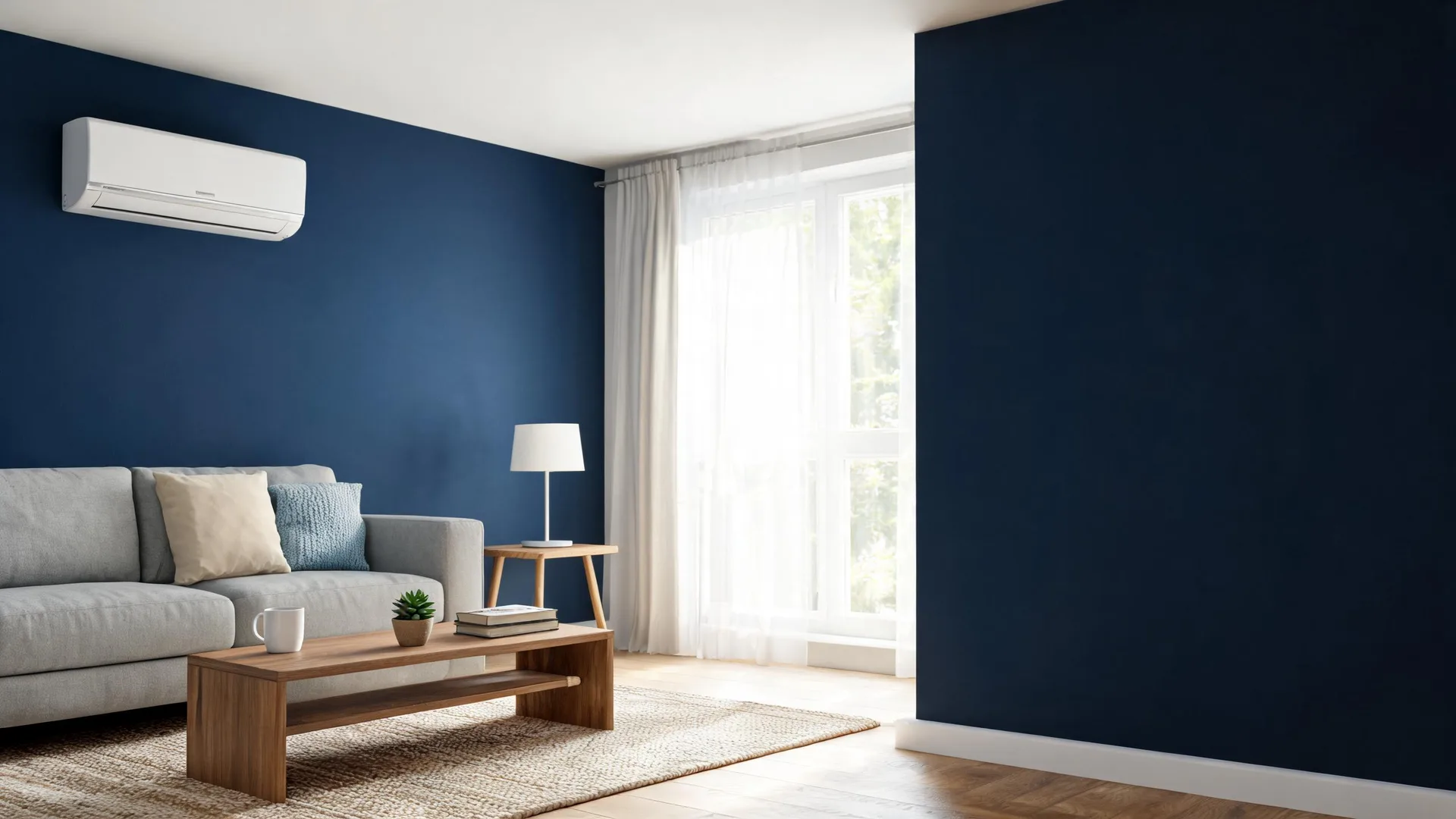
An old house rarely has ductwork built for central air, which is part of why mini splits get installed in them so often. The line set runs through a small hole in the wall, not a duct run through the attic or basement. So when the line set and the indoor unit get placed, where they go should match how this particular house is laid out, not a generic spot that works on paper.

The outdoor unit and the indoor head both cost money

A mini split needs a compressor outside and at least one air handler inside, and the price covers both plus the line set connecting them. Add a second or third indoor head off the same outdoor unit, and the job costs more than a single-zone setup, even though it's still one outdoor unit doing the work.
Where the line set runs changes the labor

A straight shot through an exterior wall to a nearby outdoor pad is the easiest install there is. Run the line set up through a wall cavity, across a long outside wall, or route it around a corner the house wasn't built to accommodate, and the labor adds up fast. The unit itself doesn't change price. The path to get it there does.

Whatever heating system is already in the house stays right where it is. A mini split doesn't connect to the furnace or the ductwork, so putting one in doesn't touch what's already there. If the old system is a window unit in the room getting the new mini split, that window unit usually just comes out, since there's no reason to run both in the same space. Baseboard heat or a furnace that covers the rest of the house keeps doing its job exactly as before. The mini split adds a new way to heat and cool one part of the house without asking anything of the system already running the rest of it.