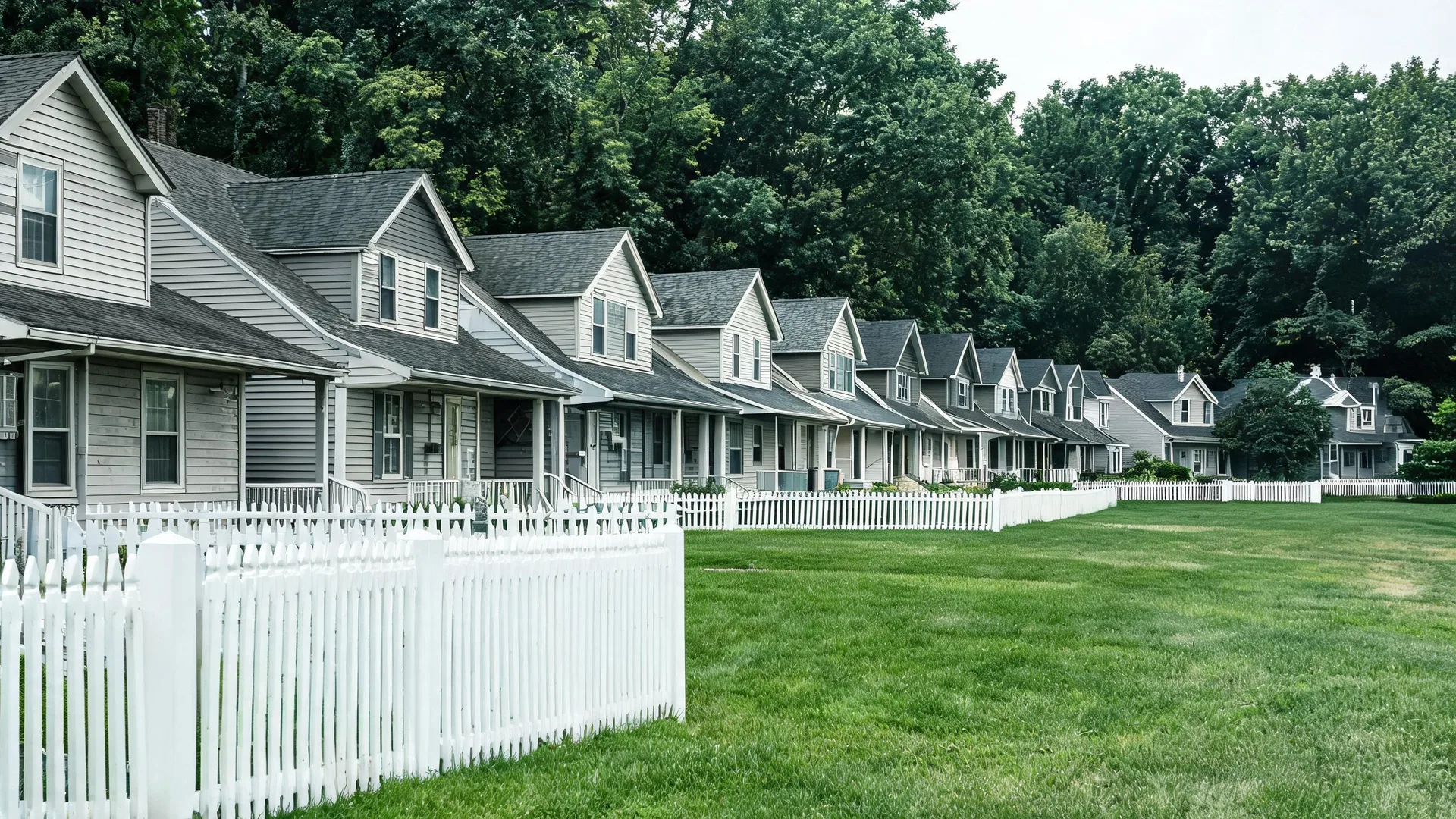





A row of similar gray and white wood-sided houses with gabled roofs behind a white picket fence, with a mowed lawn in the foreground and dense green trees behind.

Mini Split Installation in Ithaca, NY

Tell us about the job

Takes about a minute. No obligation.

New system or replacementMini-splitTompkins County, NY
Step 1 of 2

What ZIP code is the job in?

Utility gas heats 46.3% of homes in Tompkins County, more than any other fuel, with electricity next at 25.8%. A mini split adds to either setup without touching what's already there. If your home runs on gas furnace heat, the mini split takes over cooling and can carry the shoulder seasons when running the furnace feels like overkill. If you're on electric heat, a mini split often does that job more efficiently and gives you cooling too. Either way it's a separate system, not a replacement for what you have.

9 months
September through May, your system heats
2 months
July through August, it cools
18°F
the average winter night it heats against
78°F
the average summer afternoon it cools against
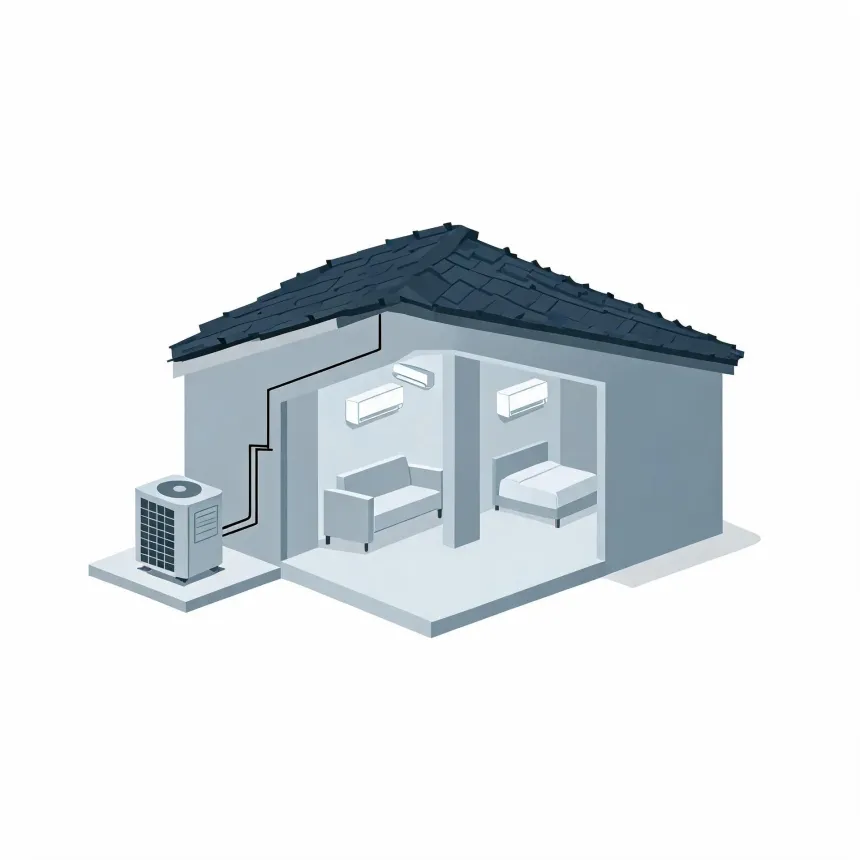
Isometric illustration of a cutaway single-story house with a dark shingled roof, showing three wall-mounted indoor air conditioning units in two rooms connected by lines to an outdoor condenser unit on a pad outside.
Your system heats September through May and cools July through August.

NOAA nClimDiv, 1991–2020 normals

Cooling in Tompkins County runs July through August.

Get the mini split in before July so it's running before the first hot day, not after.

A standard mini split handles this climate without upsizing

Half the homes here were built by 1974
Cooling runs July through August
Summer afternoons average 78°F

Cooling here only has to carry two months, July and August, with afternoon highs averaging 78°F. That's a mild load for a mini split to carry. A unit sized for this house handles those two months without strain, and the rest of the year it has little to do. Heating is the bigger job in this zone, and that stays with whatever system the home already has. So the mini split worth buying is one built to do its two jobs well, not a larger or higher-tier unit sized for weather this county doesn't see.

Any mini split installed here has to clear 14.3 SEER2 and 7.5 HSPF2

Tompkins County falls under zone 5A, and since January 2023 every split-system heat pump sold, ductless included, has to meet 14.3 SEER2 for cooling and 7.5 HSPF2 for heating. That's the floor a contractor is working from before they even start sizing the unit to your house. A federal tax credit is available on top of that for units that qualify, which narrows the field further in a useful way.

Find a contractor
A man in a dark long-sleeved shirt and brown pants walks up concrete steps toward a dark blue front door, carrying a canvas tool bag with tools in it, beside a potted shrub.
A white outdoor air conditioner condenser unit mounted on metal wall brackets against gray horizontal siding, with a blue sky and white clouds behind it.

Light duty, most of the year

Two months of real work a year is not much strain on a mini split. That leaves it sitting idle most of the year, so a reliable, well-installed standard unit will hold up fine without reaching for a higher tier. Put the money you'd spend chasing extra capacity into the installation instead, the sizing and the setup, since that's what decides how well it runs those two months, not a bigger compressor built for heat this county doesn't get.

Ask how they're sizing it, not just what size they're selling

A contractor should walk the room, check the windows and insulation, and run a load calculation before naming a unit. If someone quotes a size off the square footage alone, they're guessing. The right size cools and heats evenly without the compressor short cycling, which happens when a unit is too big for the space it's serving.
Ask where the line set and condenser are going before you ask about the indoor unit

The indoor head gets the attention, but where the refrigerant line runs and where the outdoor unit sits affects how well the whole system works. A line set with too many bends or too much length loses efficiency. A condenser boxed in against a wall or buried by snowfall will struggle. Get this settled before you pick a model.

The unit itself is a small part of what you're paying for. Most of the cost is the work around it. That means running the line set between indoor and outdoor units, wiring a dedicated circuit, mounting the condenser on a pad or bracket, and sealing the wall penetration where the lines pass through. A straight, short line set costs less to install than one that has to snake around framing or climb several floors. Multi-zone systems, where one outdoor unit feeds several indoor heads, add cost for each extra zone and for the control wiring that keeps them running independently. Where the condenser ends up matters too. A spot with clear electrical access costs less to finish than one that needs new conduit run a long way. None of this shows up on a price tag for the equipment, but it's most of what a contractor is actually pricing when they quote the job.

Install day starts with the line set, not the indoor head. The contractor runs refrigerant lines and a condensate drain between where the indoor unit mounts and where the condenser sits outside, then drills a single hole through the wall for all of it to pass through. That penetration gets sealed afterward so no air or water gets in around the lines. The condenser goes on a pad or wall bracket outside, leveled so the compressor inside it runs the way it's built to. Once the lines are connected at both ends, the system gets evacuated with a vacuum pump to pull out moisture and air before any refrigerant moves through it. Skip that step and the system can run with trapped moisture in the lines, which causes problems down the road that don't show up on day one.