A tabby cat sleeps on a large bed in a dark, modern bedroom equipped with a wall-mounted air-conditioning unit.

Mini Split Installation in Glens Falls, NY

Tell us about the job

Takes about a minute. No obligation.

New system or replacementMini-splitWarren County, NY
Step 1 of 2

What ZIP code is the job in?

Gas and oil both heat homes here

Utility gas heats 44.3% of homes in Warren County, and fuel oil heats another 20.2%. Neither one is a mini split. A mini split works alongside a furnace or boiler rather than replacing it outright, handling the shoulder months or specific rooms.

What that means for this install

If your home runs on oil or gas heat already, the ductwork or pipes are built around that system, not a mini split. The installer will size the new unit to the rooms it actually serves, and plan the line set and condenser placement around a house that was not built with one in mind.

9 months
September through May, your system heats
1 months
July through July, it cools
12°F
the average winter night it heats against
77°F
the average summer afternoon it cools against
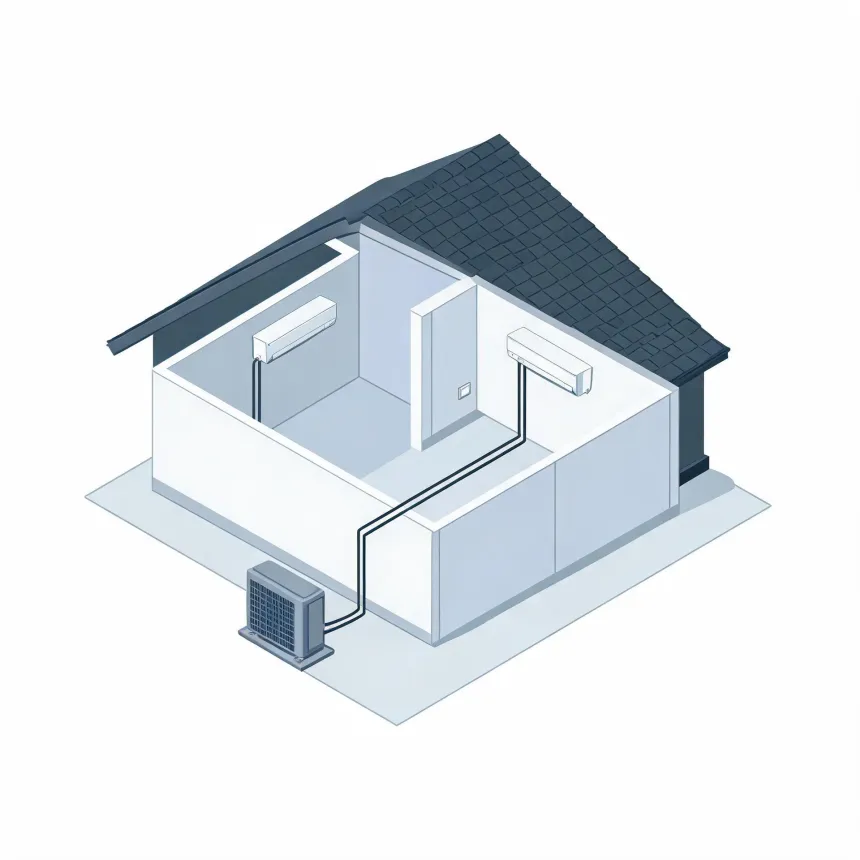
Isometric cutaway illustration of a small house with a dark shingled roof, showing two wall-mounted indoor air conditioning units in separate rooms connected by lines to an outdoor condenser unit on the ground outside.
Your system heats September through May and cools July through July.

NOAA nClimDiv, 1991–2020 normals

Half the homes in Warren County were built in 1973 or earlier.

An older home was not built with a mini split in mind, so the line set and condenser placement have to work around a house that already has its own walls, framing and layout set.

A standard mini split handles this climate without upsizing

Power costs 24.43 cents a kWh statewide
Cooling runs July through July
Summer afternoons average 77°F
One month of cooling, so June is when to get it installedCooling runs in July here. Install before then and the system is ready, not rushed.

A mini split gets sized to the rooms it serves, not guessed at from a brochure. The installer measures the room, checks the windows, the insulation, the ceiling height, and figures out how much heat the room gains in summer and loses in winter. That number drives which indoor head goes in, not the other way around. Oversize it and the unit short cycles, cooling the room fast then shutting off before it pulls the moisture out of the air, which leaves the space feeling clammy even though the thermostat says it hit the mark. Undersize it and it runs constantly, struggling on the coldest or hottest days without ever catching up. The right size runs longer, steadier cycles, and that's what actually keeps a room comfortable.

This climate doesn't call for an oversized system

Cooling runs one month a year here, and summer afternoons average 77 degrees. A mini split in Warren County isn't fighting extreme heat for months at a time, so a standard unit is built for this job without upsizing. Less strain over the life of the system means a repair is more often worth doing when something does go wrong.

Find a contractor
A man in a dark shirt and tan pants carries a canvas tool bag up stone steps toward a dark blue front door, with a potted shrub beside the entry.
A white mini-split air conditioner outdoor condenser unit mounted on metal brackets against a beige stucco exterior wall, with a blue sky and scattered clouds in the background.

What a quote leaves out matters as much as what it includes

A mini split sold on a brochure number rarely matches the one that ends up on the wall. Contractors quote different things. Some price the equipment and labor together. Some leave out the electrical work to bring power to the condenser. Some assume a short line set and charge extra once they see the actual path. Ask what's included before comparing quotes against each other. Ask who pulls the permit, because that inspection is what confirms the refrigerant lines were evacuated and charged correctly, not just connected. Ask what happens if the load calculation calls for a bigger head than the brochure model shows, since the number on a spec sheet is a starting point and not the final word. A contractor who walks the room and measures before quoting is pricing the job in front of them. One who prices from a phone call is pricing a guess.

The number of indoor heads drives the job

A single room needs one indoor head and one outdoor condenser, which is the simplest version of this install. Add a second or third room and the outdoor unit has to be sized for all of them combined, with separate line sets run to each head. More heads means more wall or ceiling space opened up, more line hidden or boxed in, and more time on the refrigerant work to get each one charged right.

Where the line set has to travel sets the labor

The indoor head and outdoor condenser connect through a line set that carries refrigerant between them, and that line has to go somewhere. A short, straight run through an exterior wall is quick work. A run that has to cross the attic, drop through a closet, or snake around framing to reach the condenser takes longer and needs more material. The installer walks the path before quoting the job, because the distance and the obstacles in between change how much work the install actually is.

The efficiency rating on a mini split's label tells you how much heat it moves for the electricity it uses, and a higher rating moves more heat per unit of power than a lower one. That number matters most in the rooms where the system runs the longest, since a unit that sits idle most of the day never gets the chance to show what the rating promises. Climate matters too. A high rating earns its keep where a system runs hard for months on end, pulling double duty on heating and cooling. Where the load is lighter, the gap between a mid-range unit and a high-end one shows up less in how the house feels and more in the equipment cost up front. The rating also assumes the unit is sized and installed correctly. An oversized or undersized head will not hit its rated efficiency no matter what the label says, because that number is measured under steady, correctly matched conditions, not short cycling or straining to keep up.

Installation starts with confirming the head location and the condenser spot that were worked out ahead of time. The crew mounts the indoor head on its bracket, sets the outdoor condenser on a pad or wall bracket, and runs the line set between them through whatever wall or ceiling path was planned. That line carries the refrigerant lines, the drain line and the electrical whip together. Once everything is connected, the line gets evacuated with a vacuum pump to pull out air and moisture before any refrigerant moves through it. Skip that step and moisture left behind causes problems later, so a good installer does not rush it. The system gets charged, then run through both heating and cooling before the job is called done.