Electricity here runs 36.97 cents a kilowatt-hour
That is higher than what most counties in the country pay. A mini-split runs on electricity alone, so every degree it works for shows up on that rate.
Takes about a minute. No obligation.
That is higher than what most counties in the country pay. A mini-split runs on electricity alone, so every degree it works for shows up on that rate.
With power priced like this, the difference between a unit that sips and one that doesn't shows up on your bill every month, not just on the install invoice. The muggy summers here mean this system will run plenty, so what you install matters more than it would somewhere power costs less.
NOAA nClimDiv, 1991–2020 normals
Cooling here runs June through September.
Get the mini-split in by May and it's ready on day one, not booked behind every other install in Brooklyn.




Kings County sits in climate zone 4A, a mixed zone that asks real work of both heating and cooling. That's why federal rules set a floor for any new mini-split sold here. A unit manufactured from 2023 onward has to pull at least 14.3 Btu of cooling from every watt-hour it uses, and deliver at least 7.5 Btu of heat the same way. Those are minimums, not targets, so any system on the market already clears them. Where units start to differ is how far past that floor they go, and that's what shows up in what the system costs you to run.
The rate is already set, and it isn't low. What you install decides how much of it you use every month after this one. Getting the installation scheduled now means that choice is made before summer puts the system to work.
Find a contractorAn old house means old wiring, old wall framing, sometimes a boiler doing all the heat already. Whoever installs this needs to see the actual walls and the actual panel before deciding where the lineset runs and whether the electrical can take the new load. A tight quote without that walkthrough is a guess. Ask for the in-person visit before the price, not after.
A mini-split needs a small hole for the lineset and a mounting spot for the indoor head. If what's being replaced is window units or electric baseboard, those can come out once the new system is running. If there's a furnace or boiler handling heat, that stays exactly where it is. The mini-split just adds a line it didn't have before.
A mini-split's outdoor compressor holds refrigerant, and that refrigerant can't just go in the trash. It has to be recovered by someone licensed to handle it before the unit is scrapped. Ask whoever installs the new system what happens to the old one. A contractor who does this regularly already has a way to take it off your hands the same day.
Every mini-split quote lists a cooling number and a heating number, and both matter here since the system does both jobs. Ask what size is being proposed and how they got that number. It should come from a room by room load calculation, not a guess based on square footage or whatever was there before. Too big and the unit short cycles, cooling the room fast but never running long enough to pull the moisture out of the air. Too small and it runs flat out on the hottest and coldest days and still falls behind. Ask too how many indoor heads run off one outdoor compressor, since a single zone system and a multi zone system wear differently and fail differently when a part gives out.
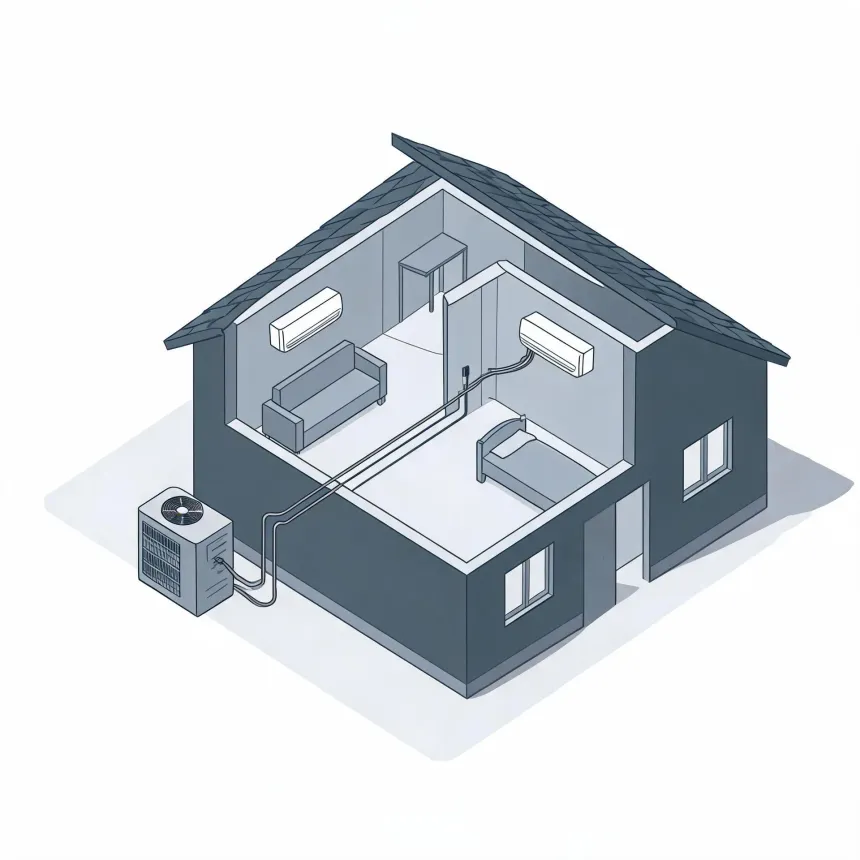
Installation starts with the outdoor unit, and where it sits matters. It needs clearance on all sides for air to move through the coil, and it can't sit right under a window that gets opened. Running the lineset comes next, the set of refrigerant tubing and wiring that connects the outdoor compressor to the indoor head. That line runs through a wall, usually through a hole no bigger than a few inches across, then gets sealed against weather on the outside. Once the indoor head is mounted and the lines are connected, the system gets evacuated with a vacuum pump before any refrigerant moves, pulling out moisture and air that would otherwise ruin the compressor. Only after that does the system get charged and tested, run in both modes to check it heats and cools before anyone calls the job done.