






A two-story red brick house with black shutters and a gray roof sits behind a mowed lawn, framed by large deciduous trees, with a dry-stacked stone wall running across the foreground.

Mini Split Installation in Brewster, NY

Tell us about the job

Takes about a minute. No obligation.

New system or replacementMini-splitPutnam County, NY
Step 1 of 2

What ZIP code is the job in?

Electricity in New York runs 24.43 cents per kilowatt-hour, well above what most of the country pays. A mini split is built to work with that. It moves heat instead of generating it, so it gets more warmth or cooling out of every dollar of power than a baseboard heater or a window unit. In Brewster that difference shows up on every bill, not just the ones when the system runs hardest. The efficiency rating on the unit you choose matters more here than it would somewhere power is cheap.

8 months
October through May, your system heats
3 months
June through August, it cools
21°F
the average winter night it heats against
81°F
the average summer afternoon it cools against
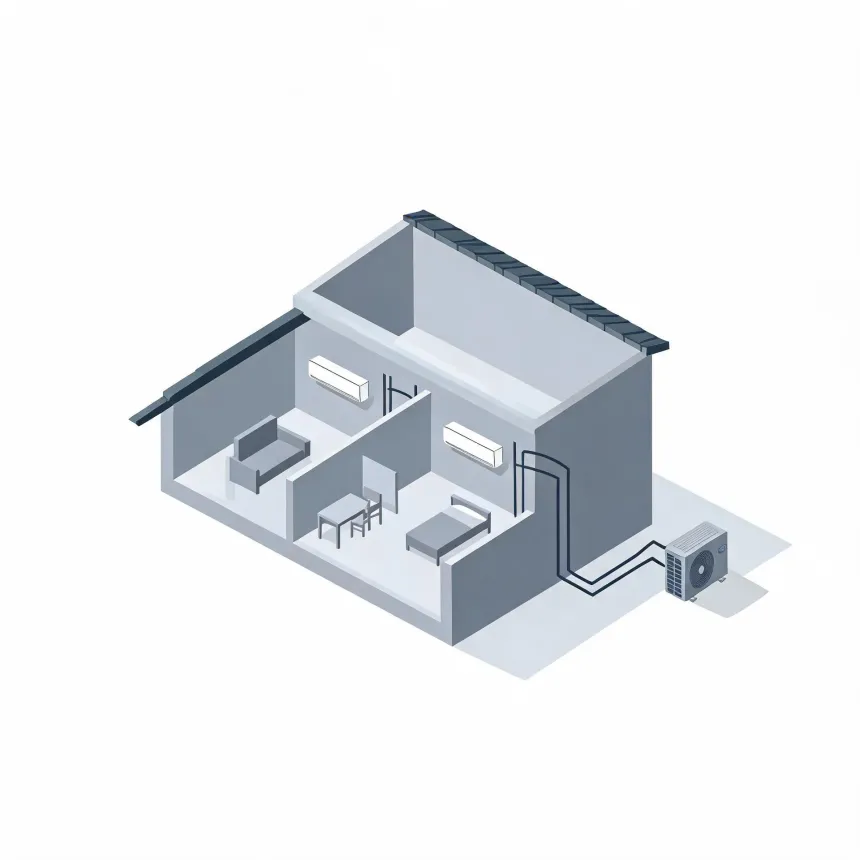
Isometric cutaway illustration of a gray house showing two wall-mounted indoor air conditioning units in separate rooms with furniture, connected by line sets to an outdoor condenser unit on a pad outside.
Your system heats October through May and cools June through August.

NOAA nClimDiv, 1991–2020 normals

Cooling in Putnam County runs June through August.

May is the month to have a mini split in place, before the first warm week puts it to work.

Half the homes here were built by 1968, and a mini split has to connect to what that house already has

Half the homes here were built by 1968
Climate zone 5A
Power costs 24.43 cents a kWh statewide
Brewster doesn't ask much of a mini splitThree months of cooling a year, afternoons near 81°F

Most homes in Putnam County heat with fuel oil or kerosene, 57.4% of them. Utility gas reaches only 9.8%. That split matters for a mini split, because the system doesn't replace your furnace, it works alongside it. On the coldest nights the oil furnace carries the load, and the mini split handles the shoulder seasons and the rooms that never heat evenly. For the 23.3% of homes already on electric heat, a mini split can take over more of the job year round, since there's no second fuel system to hand off to.

A mini split installed in Brewster has a minimum to meet, and a credit to help you clear it

Putnam County falls in zone 5A. Any mini split installed here has to meet the federal minimum for this type of system. That's 14.3 SEER2 for cooling and 7.5 HSPF2 for heating. New units are built to clear that floor. A federal tax credit is available on qualifying equipment, and it can help offset going above the minimum instead of settling at it.

Find a contractor
A man in a cap, long-sleeved shirt and work pants walks up porch steps toward a dark gray paneled front door, carrying a canvas tool bag, with a potted shrub to the right.
A beige split-system air conditioner outdoor condenser unit mounted on metal wall brackets atop a stucco wall.

The old unit doesn't linger

The old system doesn't get hauled out the day the new one goes in. A contractor will run it right up until the mini split is mounted and charged, then disconnect it. If it's a window unit or an older ductless system, that's straightforward, it unplugs or unbolts. If the home has central air or a furnace tied into the same space, the refrigerant has to be recovered properly before any line gets cut, that's a legal requirement, not a courtesy. Old refrigerant can't just be vented. Once it's out, the equipment itself is mostly metal and gets scrapped or recycled rather than thrown out whole. If the old system shared ductwork with a furnace that's staying in place, the contractor will cap or seal off whatever the mini split doesn't need, so the furnace isn't pulling air through a dead branch. None of this is work you do after the fact. It gets planned into the install itself, because the new system usually needs the space, the wall space, the breaker, or the line set path, that the old one was using.

Ask how many zones it covers, not just how many it has

A mini split system can run one indoor head or several off the same outdoor unit, and each head is its own zone with its own thermostat. More zones sound better, but every zone splits the outdoor unit's capacity. A contractor should be able to say what each room needs and show the math adds up to what the outdoor unit can actually deliver, not just that the number of heads matches the number of rooms you want covered.
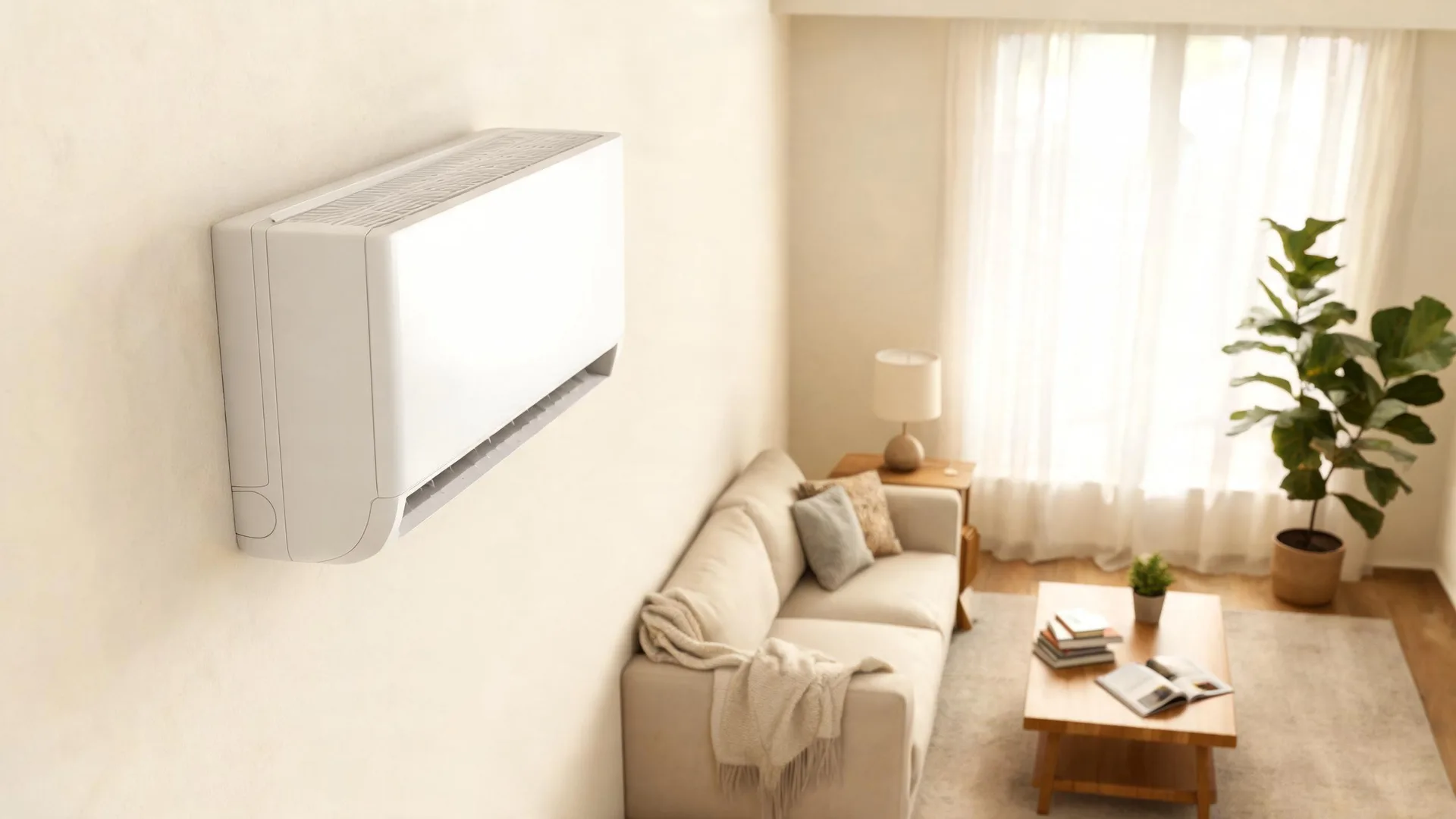
Ask what happens to the line set and the wall

Every indoor head needs a line set run to the outdoor unit, usually through a hole drilled in an exterior wall, and a condensate line to drain moisture from cooling. Where that hole goes, how the lines are hidden or covered, and where the condensate drains all affect how the finished job looks and whether it drains properly for years. Get this answered before the work starts, not after the lines are already run.

Sizing a mini split starts with a load calculation, not a tape measure around the room. A contractor works out how much heat a space loses in winter and gains in summer, based on the windows, the insulation, the ceiling height, which way the walls face. Square footage alone can't tell you that. Rooms the same size can need different amounts of capacity depending on what's around them. Too big and the unit cools the room fast, shuts off, and leaves the air damp because it never ran long enough to pull moisture out. Too small and it runs constantly, never quite catching up on the hardest days, and wears out faster for the trouble. The right size runs longer, steadier cycles instead of short bursts. A unit sized off a chart or a guess doesn't get any of that right.

Install day starts with the outdoor unit, not the indoor one. It needs a pad or wall bracket set level, clear of fence lines and drip edges, with room for air to move through the coil. From there a hole gets drilled through the exterior wall for the line set, the refrigerant lines, the power wire and the condensate drain all run together, usually wrapped in one sleeve. The lines get connected at both ends, then the whole system gets pulled down to a vacuum before any refrigerant moves, this pulls out moisture and air that would otherwise ruin the compressor. Only after the vacuum holds does the contractor open the line and charge the system. The indoor head goes up on its mounting plate, gets leveled, and the condensate line gets tested by pouring water into the pan and watching it drain. Nothing gets powered on and called finished until that drain is confirmed and the system runs through both a cooling and heating cycle.